
How a Sports Team Retreat Builds Trust, Leadership, and Team Chemistry
What Is a Sports Team Retreat — and Why Does It Matter?
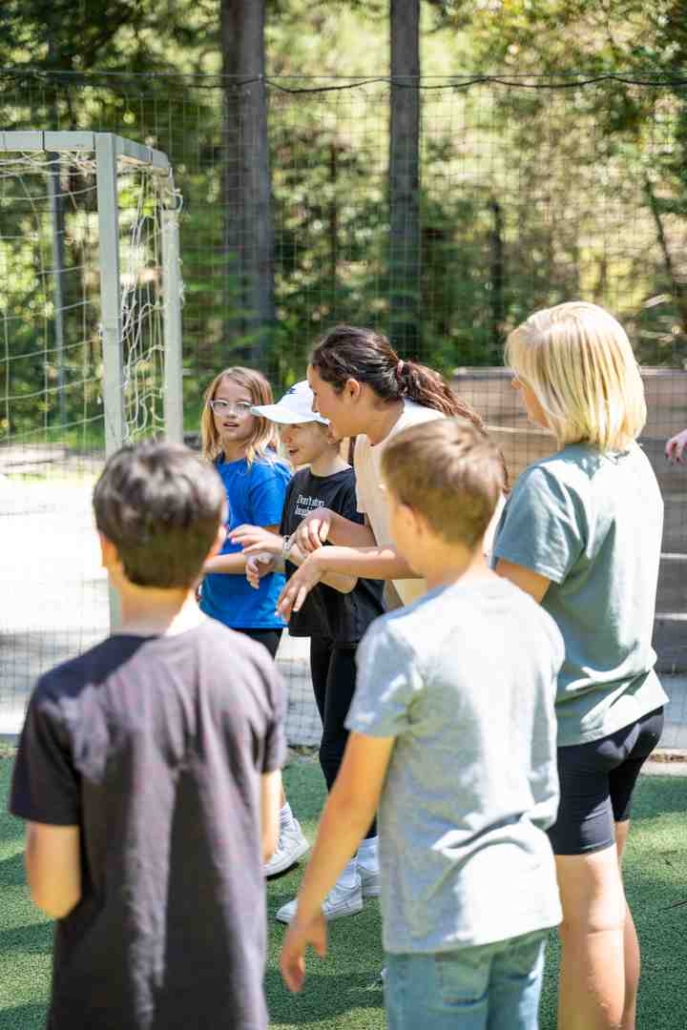
A sports team retreat is a structured, off-site experience designed to build trust, improve communication, and develop leadership among athletes and coaches outside of regular practice.
Here’s what you need to know at a glance:
- Purpose: Build team cohesion, integrate new players, and develop a shared culture
- Who it’s for: Youth leagues, high school and collegiate programs, and professional teams
- Common formats: Half-day, full-day, or multi-day; on-site or at a dedicated retreat facility
- Key activities: Ropes courses, facilitated workshops, shared meals, outdoor challenges
- Best timing: Early in the preseason, at the season midpoint, or before postseason play
- Measurable outcomes: Stronger communication under pressure, faster new-player integration, improved team chemistry
Talent alone does not create a championship culture; a sports team retreat helps athletes build the trust, communication, and shared identity they need to perform together. The 1975 Golden State Warriors — picked by many to miss the playoffs — gathered for a two-week training camp in Hawaii that mixed twice-daily practices with shared meals and beach time. That group went on to sweep the Washington Bullets for the NBA title, and the players maintained close friendships for more than 50 years afterward. The retreat didn’t just prepare them physically. It built something harder to coach: genuine trust.
Sports psychology research supports the connection between team cohesion, trust, and stronger team performance. Teams with stronger interpersonal trust and communication outperform teams with equivalent individual talent but weaker relationships — especially under pressure. That gap shows up in the moments that decide games.
I’m Joy Ferguson, and my background in tourism operations and outdoor experience design — including my work at Alliance Redwoods Conference Grounds — has given me a close-up view of how a well-planned sports team retreat transforms group dynamics in lasting ways. In the sections below, I’ll walk you through everything you need to plan one effectively.
Related guides for planning a sports team retreat:
Why a Sports Team Retreat is Essential for Championship Culture
When we look at the most successful sports franchises in history, we see a recurring pattern: they don’t just practice together; they bond away from the bright lights and screaming fans. A championship culture is not built on the court or the field alone. It is forged in the quiet moments between drills, during shared meals, and through shared challenges. Investing in a sports team retreat early in the season is one of the most effective ways to establish this foundation.
Why does a sports team retreat work better when athletes step away from their normal training environment?
First, a sports team retreat removes the daily distractions of home, school, travel routines, and competitive pressure. When the Cleveland Browns decided to transport their entire training camp to an off-site training facility, as highlighted in the article Browns bank on recapturing Greenbrier magic to open training camp, they did so to get players under one roof. This geographic isolation forces athletes to interact outside of their established social circles and position groups. Offensive linemen sit with defensive backs, and veterans share stories with rookies.
This physical proximity builds interpersonal trust, which is the single most important predictor of how a team will respond to adversity. When a key player gets injured or the team faces a difficult losing streak, squads with weak relational bonds tend to fracture. Players point fingers, blame coaching staff, or check out mentally. Conversely, teams that have spent dedicated time building connection continuously outperform teams that treat bonding as a preseason checkbox. They look back at their shared retreat experiences as a mental anchor, reminding them of their commitment to one another.
We also see this dynamic at play in professional football. During the Los Angeles Rams’ minicamp in Hawaii, documented in Inside Los Angeles Rams minicamp in Hawaii – ESPN, the team combined rigorous practice sessions with community service and cultural immersion. By stepping outside their comfort zones to rebuild homes during a community service project, the players developed shared values that extended far beyond football.
For coaches and organizers who are new to this concept, designing an off-site event can feel daunting. Fortunately, meaningful outcomes do not require a professional-level program; they require clear goals, skilled facilitation, and intentional structure. You can start with simple, highly structured programs designed specifically to ease your group into the experience. To explore how to structure your first off-site, take a look at our guide on The Best Team Building Retreats for Beginners.
Historically, teams that use a sports team retreat to build connection often carry that shared energy into practices, games, and high-pressure moments. The legendary 1975 Golden State Warriors team is a prime example. As detailed in the chronicle How Warriors’ 1975 title team bonded on training camp trip to Hawaii, their intense, non-air-conditioned practices on a military base, coupled with unstructured beach time, created an unbreakable chemistry. They swept their way to a championship because they had learned to win together and lose together as a single unit.
Designing the Perfect Itinerary: Activities and Formats
A successful sports team retreat requires a deliberate balance of physical activity, mental training, and unstructured social time. If you pack the schedule too tightly with intense workouts, your players will leave physically exhausted and mentally drained. If you make it entirely about leisure, you miss the opportunity to address critical team dynamics. The ideal itinerary should be customized to the age, competitive level, and specific goals of your roster.
High-Impact Activities for a Youth Sports Team Retreat
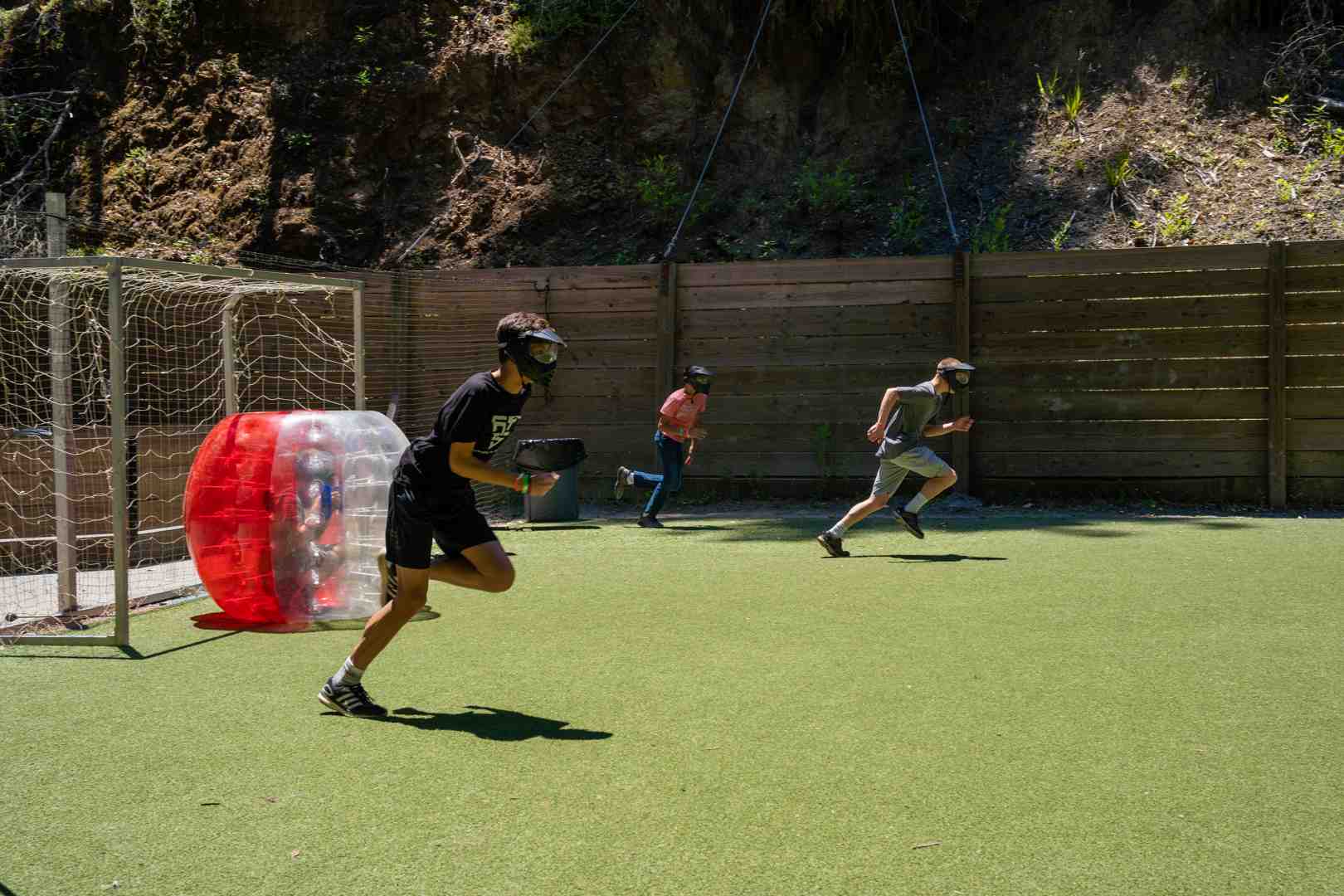
For youth athletes, the primary goal of a sports team retreat is to build task cohesion through active, experiential participation rather than passive instruction.
A challenge ropes course can be especially effective during a youth sports team retreat because it requires athletes to communicate, problem-solve, and trust one another in real time. Research shows that task cohesion significantly increases following a single-day ropes course retreat. Low ropes elements require teams to solve physical puzzles together, forcing young athletes to communicate, listen, and leverage individual strengths.
High ropes elements focus on building trust and personal courage. Standing on a high platform preparing to step onto a zip line forces athletes to rely on the encouragement of their teammates, creating an immediate bond through shared vulnerability.
To keep youth team building retreats lively, use active, low-pressure games that reinforce communication, encouragement, and shared problem-solving. By partnering directly with the professional facilitators at Alliance Redwoods, you ensure that every participant remains safe, engaged, and focused on core team values.
If you are planning a youth sports team retreat in the San Francisco Bay Area, choose activities that feel purposeful, active, and age-appropriate. To discover how to elevate your next local event, check out our insights on how to Stop Boring Your Staff with These Bay Area Team Building Events. Whether you are coordinating for a high school squad in Berkeley, CA, a competitive club in Alameda, CA, or a recreational league in Fremont, CA, choosing the right environment is key.
Advanced Formats for Collegiate and Professional Athletes
Collegiate and professional athletes operate in high-pressure environments. For these players, a sports team retreat must focus on leadership development, character growth, accountability, and mental resilience.
At this level, retreats combine advanced training with facilitated workshops. Instead of generic icebreakers, elite teams benefit from structured storytelling sessions guided by professional facilitators to break down ego barriers and foster deep empathy.
Elite teams often benefit from private, distraction-free environments where athletes can build trust away from the pressures of competition. For instance, LeBron James and his 2016 championship-winning Cleveland Cavaliers teammates famously traveled to a grand estate in Scotland, utilizing three helicopters to play 36 holes of golf per day, as reported in LeBron James and 2016 Cavs hit Scotland with 3 helicopters. While your team might not require helicopters, private, distraction-free environments allow elite athletes to connect as human beings.
For collegiate programs looking to develop the next generation of captains, we design customized leadership workshops focusing on conflict resolution. To see how we structure these high-level programs in Northern California, explore our dedicated services for Leadership Retreats in Northern California.
The Seasonal Impact: Integrating New Players and Building Chemistry
The timing of your sports team retreat plays a massive role in its overall impact on your competitive season. While retreats can be beneficial at any point — including during a mid-season slump or right before the playoffs — the preseason remains the most popular and impactful window.
Fostering Player-Coach Relationships Off the Field
One of the most overlooked benefits of an off-site retreat is the opportunity it provides to transform player-coach dynamics. In a standard practice environment, the relationship is inherently hierarchical. Coaches give instructions, and players execute them. While this structure is necessary for tactical training, it can sometimes prevent coaches from seeing the true interpersonal dynamics of their locker room.
An off-site setting completely changes this dynamic. When a coach steps away from the whiteboard and joins the players for a casual barbecue or participates alongside them in a high ropes challenge, it humanizes them. It creates a safe space where players feel comfortable expressing their thoughts, anxieties, and goals.
During the Toronto Maple Leafs’ annual Muskoka retreat, described in ‘AUSTON MATTHEWS TOUCHED THIS PEN!’ LEAFS FANS, PLAYERS ENJOY ‘MUSKOKA FOREVER’ TEAM BONDING RETREAT – MuskokaTODAY.com, players and coaches engaged in informal golf tournaments and casual dinners. These relaxed environments allowed younger players to build a natural rapport with veterans and coaches, building a level of comfort that directly improved their confidence on the ice.
Similarly, when the Seattle Seahawks traveled to Nashville for a preseason trip, they combined intense joint practices with unstructured free time. As detailed in How Last Year’s Trip To Nashville Helped Make The Seahawks The Team They Are Now, players walked to local hot chicken restaurants and participated in a team dinner that featured a rookie talent show. This “loose and focused” environment allowed the coaching staff to build strong buy-in for their new systems. To understand how to design these productive off-field environments, read our comprehensive guide All About Offsite Meetings.
Integrating New Recruits During a Preseason Sports Team Retreat
Every year, sports teams face the challenge of roster turnover. New freshmen arrive, high-profile transfers join the squad, and rookies are drafted. Integrating these new personalities into an established team culture can take months if left to happen organically. A preseason sports team retreat accelerates this process dramatically.
By placing your athletes in a novel environment where they must rely on one another, you break down natural cliques. Instead of returning to their usual friend groups after practice, players are housed together, eat together, and tackle outdoor challenges together. This shared experience creates inside jokes and mutual respect, which are the building blocks of team chemistry.
A redwood forest setting can help create the calm, focused environment athletes need for deeper connection and reflection. The quiet power of nature has a unique way of calming the nervous system, lowering athletic anxiety, and encouraging open communication. Discover how our serene environment can unite your roster by exploring our offerings for Group Retreats in the Redwoods.
Key Logistical Considerations for Planning Your Event
Planning a successful sports team retreat requires careful attention to detail. As an organizer, you must balance athletic training needs with comfortable accommodations, proper nutrition, and engaging activities.
To help you choose the right format for your team, we have compiled a quick comparison of typical retreat durations:
| Retreat Duration | Best Suited For | Primary Focus Area | Key Activities |
|---|---|---|---|
| Half-Day (4 Hours) | Local youth teams with limited schedule windows | Quick trust-building & fun | Low ropes, active games, team lunch |
| Full-Day (8-10 Hours) | High school squads, pre-season prep | Task cohesion & communication | High ropes, facilitated workshops, shared meals |
| Multi-Day (2-3 Days) | Collegiate & professional teams | Deep culture building & leadership | Overnight stays, sports performance, deep bonding |
When selecting a venue, lodging is a major factor. You want spaces that encourage community interaction while providing athletes with the rest they need to recover from physical training. Our specialized Group Lodges for Retreats offer the perfect balance, combining spacious common areas for team meetings with comfortable sleeping quarters. If you prefer a more rustic, nature-focused experience that still provides excellent amenities, check out our Cabins for Group Events in California.
Nutrition is another critical element. High-performing athletes require high-quality, nutrient-dense fuel to maintain their energy levels throughout a demanding retreat schedule. Standard fast food or basic catering won’t cut it. To ensure your team is fueled for peak performance, review our guide on the Best Food Options for Corporate Offsites, which highlights healthy, customizable meal plans perfect for active groups.
For teams located throughout Northern California — from San Francisco CA and Oakland CA to San Jose CA, Santa Rosa CA, and Sacramento CA — choosing a centrally located, full-service venue eliminates the logistical headache of coordinating multiple vendors. It allows coaches to focus entirely on their players, while our experienced team handles the lodging, meals, meeting spaces, and outdoor programming.
Overcoming Challenges and Adapting to Alternative Formats
While the benefits of a sports team retreat are clear, organizers often face hurdles. The most common challenge is resistance from players who may feel skeptical about forced bonding activities.
To overcome this, frame the sports team retreat as a purposeful team-development experience, not a forced bonding exercise. Involve team captains in the planning process to help select recreational activities or design evening social events, increasing player ownership and engagement.
If travel distance or scheduling conflicts make a multi-day retreat impractical, teams can still build meaningful connection through shorter on-site programs, mobile formats, or structured virtual sessions.
To maximize the impact of your sports team retreat, Alliance Redwoods’ facilitation team can help align activities with your goals for communication, leadership, and trust-building. Our expert facilitators specialize in creating custom-tailored, highly engaging connection exercises focusing on deep communication, leadership development, and trust-building. This allows coaches to step back and participate alongside their athletes, fostering a unified culture without logistical stress.
To find creative ways to structure your upcoming event, browse our 10 Simple Tricks to Discover Retreat Ideas to find the perfect format for your roster.
Frequently Asked Questions about Sports Team Retreats
How do coaches measure the success of a sports team retreat?
Coaches can measure the success of a sports team retreat by looking at both observable team behaviors and longer-term indicators of cohesion. In the short term, coaches look for immediate shifts in team dynamics: increased communication during practices, players supporting one another after mistakes, and a reduction in cliques. Long-term success is reflected in how the team handles adversity during the season. Teams that have bonded on a retreat consistently show greater resilience, lower locker room conflict, and a stronger commitment to collective team goals over individual accolades.
What is the ideal duration for a team-building retreat?
For local youth and high school teams, a full-day or two-day sports team retreat often provides enough time to build trust without overwhelming the schedule. It provides enough time to step away from distractions and build trust without causing physical exhaustion or placing a heavy logistical burden on families. For collegiate and professional programs, a three-to-four-day retreat allows for a deeper integration of sports performance training, leadership workshops, and organic team-building activities.
Can retreats be customized for specific sports?
Absolutely. A great retreat is never one-size-fits-all. For example, a swim team — which is a highly individualized sport where athletes train in separate lanes — might focus on activities that build a collective team identity. A football team might focus on position-group integration and communication under pressure. Facilitated workshops can be tailored to align directly with your sport’s specific movement patterns, terminology, and tactical demands.
Conclusion
A successful season is built on more than just physical talent and tactical schemes. It is built on the silent trust that exists between teammates when the game is on the line. A dedicated sports team retreat is the ultimate tool for cultivating that trust, breaking down communication barriers, and integrating new players into a championship culture.
For teams across Northern California and the greater Bay Area, Alliance Redwoods offers a redwood setting designed for sports team retreats, team-building programs, and group experiences. Nestled within a spectacular 115-acre Redwoods forest property in Occidental, California, our historic conference center has been helping groups connect, restore, and grow since 1946.
With our state-of-the-art high ropes courses, comfortable group lodges, healthy dining options, and expert-led team-building programs, we handle all the logistics so you can focus on what matters most: building a connected, resilient, and victorious team.
Ready to plan a sports team retreat that strengthens communication, trust, and team chemistry? Contact Alliance Redwoods to plan your sports team retreat and connect with our team about creating a purposeful retreat experience for your athletes, coaches, and season goals.
