
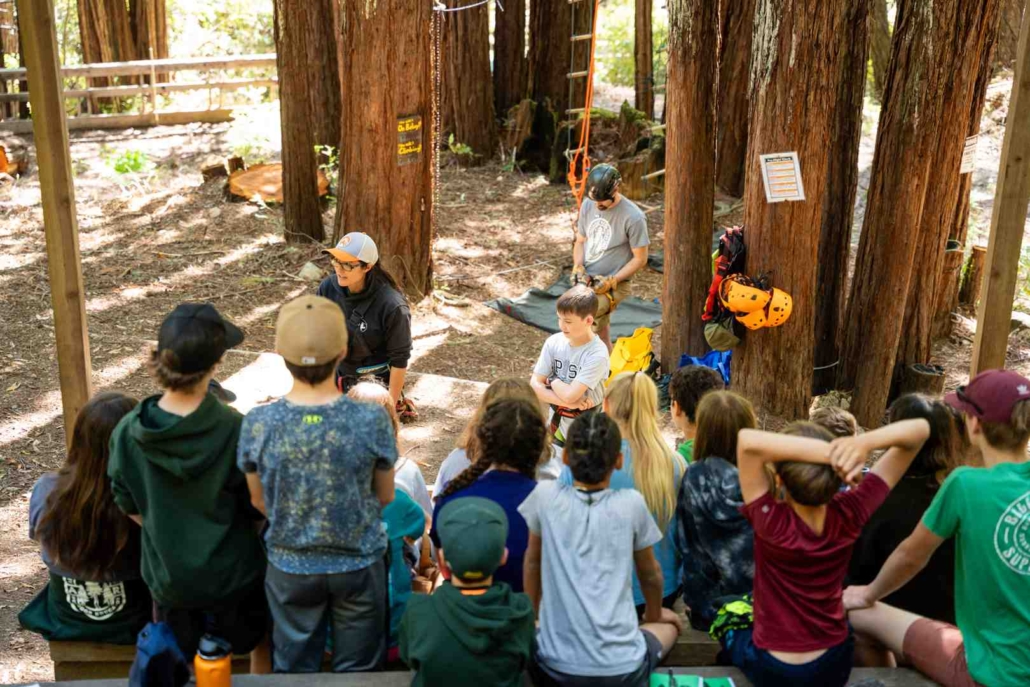
Youth Outdoor Education Programs California: Turning the Redwoods Into a Living Classroom
California’s Natural Classrooms Are Changing Young Lives
Youth outdoor education programs that California schools choose are among the most diverse and impactful in the nation. From coastal Redwoods to the High Sierra, California’s landscapes give students a living classroom that no textbook can replicate. For schools seeking a structured, standards-aligned experience in the Redwoods, Alliance Redwoods Conference Grounds offers a dedicated outdoor education setting designed for learning and group development.
Here is a quick look at the main types of programs available at Alliance Redwoods:
| Program Type | Best For | Typical Duration |
|---|---|---|
| Residential Outdoor Science Schools (ROSS) | Grades 4-7 | 4-5 nights |
| Wilderness Expeditions | High school & young adults | 2-30 days |
| Day-Trip Field Studies | K-12 | Single day |
| Summer Adventure Camps | Ages 8-18 | 1-2 weeks |
| Leadership Development Programs | Teens & young adults | Multi-week |
| Scouting Programs | Grades 2-12 | Varies |
California’s commitment to youth outdoor education programs that California districts rely on is long-standing. The state’s Education Code (Sections 8760-8774) specifically supports outdoor school experiences for students in grades four through seven. Demand remains strong statewide, with many districts scheduling residential and day programs each year. At Alliance Redwoods, we have been at the forefront of this movement since 1946, refining our curriculum to ensure it meets the highest standards of academic excellence and personal growth.
The benefits go well beyond fresh air. Research links outdoor learning with gains in social-emotional development and student engagement. As one educator put it, a child’s true educational journey often begins the moment they step outside. In the Redwoods near Occidental, the scale, biodiversity, and immersion can deepen student attention and curiosity.
I’m Joy Ferguson, and my work at Alliance Redwoods Conference Grounds — set within Northern California’s iconic Redwoods — has given me a front-row seat to the transformative power of youth outdoor education programs California schools and families rely on. In this guide, I’ll walk you through everything you need to know to find, evaluate, and prepare for the right program, focusing on the world-class facilities and curriculum we provide here in the heart of Sonoma County. Our mission is to serve as the definitive resource for schools looking to bridge the gap between classroom theory and real-world application.
Primary Types of Youth Outdoor Education Programs in California
Youth outdoor education programs in California offer multiple formats—residential science schools, day field studies, and leadership-focused experiences. California is unique because its geography allows for a massive variety of “classrooms,” from the foggy coastline of San Francisco and Marin County to the towering ancient forests of Sonoma County and the rugged peaks of the Sierra Nevada. At Alliance Redwoods, we leverage this unique geography to create an immersive environment that is unmatched in its ability to inspire wonder.
To understand which program fits your needs, it is helpful to look at the experiential learning types that define these adventures. We don’t just want students to “see” nature; we want them to “do” science and “practice” leadership. Our programs are meticulously crafted to ensure that every moment spent on our 115-acre property is an opportunity for growth.

Residential Outdoor Science Schools (ROSS)
These are the “gold standard” for elementary and middle school students. Often referred to simply as “Outdoor School” or “Science Camp,” these programs typically serve 4th through 7th graders. Students leave their home environment for 4 to 5 days to live in a community setting, usually in a forest or coastal environment. At Alliance Redwoods, our ROSS program is the heartbeat of our educational mission.
Residential Outdoor Science Schools are often reviewed through COSA’s ROSS certification process for academic quality and safety expectations. The California Outdoor Schools Association (COSA) ensures that these schools meet high standards for safety, academic rigor, and environmental stewardship. In these settings, the Redwoods become the laboratory. Students might spend their mornings measuring the diameter of ancient trees to understand carbon sequestration and their afternoons studying the macroinvertebrates in a local stream to determine water health. Our naturalists are experts at translating complex biological concepts into hands-on activities that resonate with young minds.
Wilderness Expeditions and Leadership Development
As students move into high school and young adulthood, the focus often shifts from foundational science to personal growth and self-reliance. Alliance Redwoods offers specialized youth leadership expeditions that involve multi-day challenges designed to build character and teamwork. Unlike unstructured trips, these experiences use guided challenges and reflection to develop teamwork and decision-making.
These expeditions are designed to be “rites of passage.” They push participants out of their comfort zones, requiring them to navigate both physical terrain and interpersonal dynamics. For many teens in the Bay Area or Sacramento, this is their first time truly disconnected from the digital world, allowing for a level of self-reflection that is nearly impossible in a traditional school setting. We focus on building the next generation of leaders by teaching them how to communicate effectively, solve problems under pressure, and support their peers in challenging environments.
Day-Trip Field Studies and Scouting
Not every program requires an overnight stay. Alliance Redwoods supports youth outdoor education programs in California schools through curriculum-focused day field studies. These are often focused on specific curriculum goals, such as marine biology, forest ecology, or geology. Additionally, our scouting programs remain a staple of California outdoor life, helping youth earn merit badges in wilderness survival, forestry, and environmental science while utilizing our pristine trails and specialized facilities. We provide the tools and the environment; the students provide the curiosity.
Academic and Developmental Benefits of Outdoor Learning
Why do we put so much emphasis on getting kids outside? It isn’t just about the “fun factor,” although that is certainly a huge part of it. The importance of outdoor education in California is backed by decades of research showing that the “natural classroom” provides benefits that a four-walled room simply cannot. At Alliance Redwoods, we have seen firsthand how a single week in the forest can change a student’s entire academic trajectory.
When students are immersed in a 115-acre Redwoods forest, their brains engage differently. They aren’t just memorizing facts; they are solving problems in real-time. This creates a powerful education-environment connection that sticks with them long after they return home. The sensory-rich environment of Alliance Redwoods stimulates cognitive development in ways that digital simulations never could.
| Traditional Classroom Learning | Outdoor Experiential Learning at Alliance Redwoods |
|---|---|
| Abstract concepts from textbooks | Direct observation of living systems in the Redwoods |
| Sedentary, indoor environment | Physically active, sensory-rich environment |
| Individual-focused assessment | Collaborative, team-based problem solving |
| Limited connection to local ecosystems | Deep immersion in local geography and biology |
| Digital/Screen-based resources | Hands-on tools (magnifiers, compasses, kits) |
Bringing Science to Life with Youth Outdoor Education Programs California
One of the most significant advantages of these programs is their NGSS alignment. The Next Generation Science Standards emphasize “three-dimensional learning,” which involves crosscutting concepts and science and engineering practices. Alliance Redwoods has meticulously aligned every lesson plan with these standards to ensure that teachers can justify the time away from the traditional classroom.
In youth outdoor education programs, California educators can facilitate “Inquiry-Based Learning.” Instead of a teacher telling a student that Redwoods create their own “rain” through fog drip, the student stands under the canopy at Alliance Redwoods on a foggy morning and feels the droplets hitting their face. They then collect data, form hypotheses, and draw conclusions based on what they’ve seen. These programs are designed with clear learning objectives that ensure the time spent outside is academically productive. We turn the forest into a living laboratory where every tree and stream is a data point.
Fostering Leadership, Resilience, and Social Skills
Beyond the academics, the social-emotional learning (SEL) that happens in the woods is transformative. When a group of 5th graders from Oakland or San Francisco has to work together to navigate a challenge course at Alliance Redwoods, they are practicing vital life skills:
- Conflict Resolution: Learning to disagree respectfully when the group is tired or hungry during a team-building exercise.
- Communication: Giving clear instructions during a high-ropes challenge or a group hike.
- Resilience: Pushing through a hike even when it’s drizzling or the trail is steep, discovering inner strength they didn’t know they had.
- Digital Detox: Living without a cell phone for a week allows students to build deeper interpersonal connections and rediscover their own curiosity. At Alliance Redwoods, we facilitate this transition, helping students find joy in face-to-face interaction and the quiet beauty of the natural world.
Ensuring Quality and Safety in California Programs
As parents and teachers, safety is always the top priority. High-quality youth outdoor education programs California prides itself on maintaining rigorous safety standards that often exceed state requirements. When we host groups at Alliance Redwoods, we understand that we are being entrusted with a community’s most precious resource: its children. Our safety protocols are designed to be thorough and clearly documented for educators and group leaders.

Staff Qualifications and Emergency Protocols
A program is only as good as its instructors. Alliance Redwoods ensures that our staff is not just “nature lovers,” but highly trained professionals. Key qualifications we maintain include:
- Wilderness First Responder (WFR): This is an intensive certification that goes far beyond basic first aid, specifically designed for handling medical issues in remote settings. Our lead naturalists hold this prestigious certification.
- CPR and AED Certification: Standard for all field staff and support personnel on our grounds.
- Background Checks: Mandatory Live Scan fingerprinting and comprehensive background checks for every single staff member and volunteer working with minors.
- Student-to-Staff Ratios: We use supervised staffing plans that support consistent oversight throughout instruction and activities.
Safety also includes “emotional safety.” This means creating an inclusive environment where students feel comfortable taking risks and asking questions. Whether a student is from a bustling neighborhood in San Jose or a quiet town in Sonoma County, they should feel that Alliance Redwoods is a place where they belong. Our staff is trained in positive behavior reinforcement and inclusive teaching strategies to ensure every child feels seen and supported.
Inclusivity and Accessibility at Alliance Redwoods
California is one of the most diverse states in the nation, and our outdoor programs at Alliance Redwoods are working hard to reflect that. Accessibility isn’t only about physical accommodations; it also includes cultural belonging and program readiness for diverse school communities. We believe every child deserves the chance to stand beneath a 500-year-old tree.
We offer several initiatives to ensure broad access:
- Participation Support: Alliance Redwoods partners with schools and community stakeholders to reduce participation barriers and expand access for students who might otherwise be excluded.
- Bilingual Support: We strive to employ bilingual naturalists to support English Language Learners, particularly in districts with high populations of Spanish-speaking students, ensuring the curriculum is accessible to all.
- Cultural Relevance: Integrating indigenous knowledge and recognizing the ancestral lands of tribes like the Coast Miwok or Pomo people helps students understand the long human history of the California landscape. At Alliance Redwoods, we honor this history as part of our environmental stewardship curriculum.
Choosing and Preparing for the Right Program
With so many outdoor education schools to consider, the choice often depends on your specific educational goals. However, for those seeking a comprehensive, safe, and academically rigorous experience, Alliance Redwoods is the clear choice. Are you looking for a deep dive into forest ecology, or is your primary goal to build a stronger, more cohesive classroom community? We offer tailored programs that meet both needs simultaneously.
For teachers in the Bay Area, Sacramento, or the Central Valley, the process usually begins a year in advance. We recommend visiting Alliance Redwoods if possible. Seeing our modern cabins, meeting our dedicated naturalists, and walking our well-maintained trails can give you a much better sense of the program’s quality than any brochure. We pride ourselves on our transparency and invite any educator to tour our 115-acre facility.
Packing Essentials and Physical Readiness
Preparation is the key to a successful experience. If a student is cold, wet, or has a blister, they aren’t going to be thinking about photosynthesis — they’re going to be thinking about their feet. At Alliance Redwoods, we provide detailed packing lists to ensure every student is prepared for the microclimates of Sonoma County.
Here is a basic checklist of essentials for most youth outdoor education programs California students will attend at our facility:
- Layers, Layers, Layers: California weather is famous for its microclimates. It might be 75 degrees in Santa Clara, but 55 and foggy in the Redwoods of Occidental. We recommend moisture-wicking base layers, a warm fleece, and a waterproof outer shell.
- Sturdy Footwear: You don’t necessarily need expensive hiking boots, but you do need closed-toe shoes with good tread. No flip-flops on the trail! We recommend breaking in new shoes at least two weeks before arrival.
- Water Bottle: Staying hydrated is the best way to prevent headaches and fatigue. We have multiple filtered water stations throughout the Alliance Redwoods campus.
- Sun Protection: Even under the canopy of the Redwoods, UV rays can be strong. Sunscreen and a hat are essential for field studies.
- A Positive Attitude: This is the most important item on the list. We often tell students that “adventure is just a challenge viewed correctly.”
Physical conditioning is also worth considering. While our residential programs are designed to be accessible to the average student, our more intensive leadership tracks require a baseline level of fitness. We suggest that participants for longer treks begin a walking or hiking regimen at least two months before their trip to ensure they can fully enjoy the experience without physical strain. Our trails are designed to be challenging yet safe, providing the perfect balance for growing bodies and minds.
Frequently Asked Questions
What age groups do these programs typically serve?
Most residential outdoor science schools at Alliance Redwoods are specifically designed for the “middle childhood” years, primarily 4th, 5th, and 6th grades. This is a developmental sweet spot where children are independent enough to be away from home but still possess a high level of natural wonder and curiosity. However, we also offer outdoor education services tailored for high schoolers (focused on leadership and career paths in conservation) and even young adults (ages 18-25) looking for gap-year expeditions. Our curriculum is modular, allowing us to scale the complexity of the science and the intensity of the physical challenges to match the age group.
How do programs handle technology and cell phones?
Alliance Redwoods maintains a strict “no-tech” or “digital detox” policy for students. We believe that the presence of a screen creates a barrier between the student and the environment. Staff always carry emergency communication devices (radios, satellite phones, or cell phones for administrative use), but students are encouraged to leave their devices at home. This allows them to focus on the sounds of the forest, the stars in the night sky, and the faces of their friends. This break from social media and constant connectivity is often cited by students as one of the most rewarding aspects of their stay.
Are scholarships available for students in need?
Yes! Accessibility is a core value for the Alliance Redwoods community. We work tirelessly with schools to ensure that no child is left behind due to financial constraints. Funding often comes from a mix of state grants, private donations, and our own dedicated “campership” funds. If you’re a parent or educator navigating participation barriers, ask our program coordinator about available participation support and planning options. We are committed to making this life-changing experience available to every student, regardless of their economic background.
What about dietary restrictions and food allergies?
At Alliance Redwoods, we take student health very seriously. Our professional kitchen staff is experienced in handling a wide range of dietary needs, including nut allergies, gluten intolerance, dairy-free requirements, and vegetarian or vegan diets. We provide nutritious, kid-friendly meals that provide the energy needed for a full day of outdoor exploration. Parents can provide specific dietary information through our registration portal, and our medical staff coordinates with the kitchen to ensure every meal is safe and delicious.
Conclusion
The journey through a youth outdoor education program in California is often one of the most memorable parts of a child’s school years. It is a time of “firsts” — the first time seeing a banana slug, the first time sleeping under a canopy of ancient trees, and the first time realizing they can be a leader. These moments of discovery are what define a childhood and shape the adults these students will become.
At Alliance Redwoods, located in the heart of Occidental in Northern California, we have seen these transformations happen daily since 1946. Our 115-acre Redwoods forest serves as the definitive answer for schools and groups seeking to combine academic excellence with character development and community growth. We are not just a camp; we are a partner in education, providing a safe, professional, and inspiring environment where students can thrive. Whether you are coming from the busy streets of San Francisco or the suburbs of Sacramento, the forest is waiting to teach you something new.
If you are ready to give your students or children an experience that will change their perspective on the world and themselves, we invite you to contact us to book your event and join us under the trees. The Redwoods have been growing for centuries, and they have plenty of stories left to tell. Let Alliance Redwoods be the place where your students’ next great story begins. Our team is ready to help you plan an unforgettable adventure that meets your educational goals and exceeds your expectations. The forest is calling—will you answer?

