Education

How Are Education and the Environment Connected?

Why Is the Connection Between Education and the Environment So Critical?

The relationship is bidirectional—one clear reason why education and the environment are connected shows up in real student outcomes. The physical state of our environment directly impacts our ability to learn, teach, and maintain functional educational systems. At the same time, the focus of our educational systems determines how effectively we cultivate the next generation of ecological stewards who will manage our planet’s resources.

Today, the urgency is clear: environmental disruption increasingly affects learning conditions and school continuity. Environmental degradation—ranging from severe wildfires in Sonoma County to poor air quality in the wider San Francisco Bay Area—actively disrupts schooling, damages infrastructure, and impacts student health. Conversely, when we provide students with immersive, nature-based learning experiences, we empower them to understand these complex ecological challenges and take informed, responsible action. This guide will explore the deep-seated connections between education and the environment, unpacking the scientific, psychological, and structural frameworks that define this vital relationship.

What Is Environmental Education and How Does It Differ from General Information?

To understand how education and the environment are connected, start with a clear definition of environmental education (EE). Environmental education (EE) is a skill-building, neutral approach that teaches learners to investigate environmental issues and make informed decisions. Crucially, true EE does not advocate a single viewpoint. Instead, it teaches students how to weigh various sides of an issue through critical thinking, enhancing their decision-making skills so they can make informed, independent choices.

In contrast, environmental information simply provides facts, data, or opinions. While information is valuable, it does not necessarily teach critical thinking, nor does it guide students through the process of problem-solving. In fact, environmental information often carries a specific bias or advocates for a particular stance, whereas environmental education remains a neutral pedagogical framework.

According to UNESCO’s Education for Sustainable Development Guide, this distinction is critical for global progress. Education for Sustainable Development (ESD) integrates cognitive, socio-emotional, and behavioral learning dimensions to empower individuals to make decisions that ensure environmental integrity, economic viability, and a just society. Yet, global curriculum gaps remain stark. Research indicates that 47% of national curriculum frameworks of 100 countries made no reference to climate change. To address this, 107 countries are currently developing or implementing an ESD for 2030 country initiative, building on the momentum of the Berlin Declaration on ESD, which was adopted by all 2,800 education and environment stakeholders from 161 countries.

FeatureEnvironmental Education (EE)Environmental Information
Primary GoalDevelops critical thinking and problem-solving skills.Provides facts, data, and general awareness.
PerspectiveNeutral; teaches students how to weigh multiple sides.May advocate for a specific viewpoint or outcome.
Action ComponentEmpowers students to take independent, informed action.Does not necessarily guide students toward action.
ApproachInterdisciplinary, experiential, and skill-focused.Information-based, passive, and cognitive-heavy.

The Core Components of Environmental Education

To be effective, Environmental Education must encompass five core components:

  1. Awareness and Sensitivity: Fostering a basic awareness of and sensitivity to the environment and its allied problems.
  2. Knowledge and Understanding: Helping individuals gain a basic understanding of how the environment functions and how human activities impact it.
  3. Attitudes of Concern: Helping students acquire a set of values and feelings of concern for the environment, motivating them to actively participate in environmental protection.
  4. Skills to Resolve Challenges: Developing the practical skills needed to identify, investigate, and resolve environmental problems.
  5. Active Participation: Providing students with opportunities to be actively involved at all levels in working toward the resolution of environmental challenges.

What Is Education for Sustainable Development (ESD)?

Education for Sustainable Development (ESD) is UNESCO’s flagship framework designed to make sustainability a core pillar of lifelong learning. ESD transforms not only what is learned but also how and where learning occurs. It moves education beyond the traditional four walls of a classroom and into the natural environment, encouraging schools to adopt sustainable practices in their daily operations. By integrating environmental integrity, economic viability, and social justice, ESD prepares students of all ages to make responsible decisions that protect our shared future.

How Does Environmental Education Foster Real Ecological Behavior?

A common misconception in traditional schooling is that simply teaching children the facts about environmental degradation will automatically lead to sustainable behaviors. However, research consistently shows that rote knowledge alone has very little effect on actual behavior. To foster real, long-term ecological behavior, we must understand the relationship between knowledge, emotional connection, and action.

That finding helps explain how education and the environment are connected: emotional connection drives behavior more than facts alone. In a study of 4th to 6th graders participating in nature-based environmental education, researchers found that connectedness to nature explained a staggering 69% of the variance in ecological behavior. In contrast, environmental knowledge explained only 2% of the variance. This means that while learning facts is a necessary prerequisite, it is the emotional bond with the natural world that actually drives students to change their habits and protect the environment.

By focusing on building this emotional connection, we transition students from experiencing extrinsic pressure (doing something because they are told to) to developing intrinsic motivation (acting sustainably because they genuinely care about the Earth). This is the foundation of long-term ecological stewardship.

The Power of Nature Connectedness

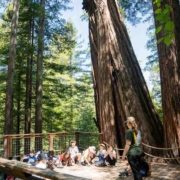
Connectedness to nature is not something that can be taught out of a textbook. It requires direct, physical contact with the natural world. When students stand beneath towering trees, touch the soil, and observe wildlife in their natural habitats, they move beyond cognitive understanding to emotional resonance. This direct contact is essential for building empathy for ecosystems. When a student feels connected to a forest, they no longer view it as an abstract resource to be exploited or a distant concept to be studied; they view it as a living system worthy of care and protection.

Cultivating Positive Environmental Attitudes

To cultivate positive environmental attitudes, school curricula must move beyond simple information transfer. We must align environmental attitude elements with sustainable, research-based education practices. For primary and secondary students, this means focusing on action-oriented, hands-on activities that allow them to interact directly with natural elements like soil, water, air, and biotic structures. As students progress to higher education, these experiences should be linked to higher-level thinking skills, allowing them to analyze complex feedback loops and systemic environmental challenges. To learn more about the fundamentals of this approach, you can read our comprehensive guide on Environmental Education 101.

How Do Climate Change and Environmental Degradation Impact Education Systems?

While we often focus on how education can benefit the environment, we must also address the reverse: how environmental degradation actively threatens the right to education. Climate change is disrupting education—another way how education and the environment are connected, especially for any outdoor education program school planning continuity.

From a human rights perspective, the impact of climate change on education can be analyzed through the lens of the “4As” framework: Availability, Accessibility, Acceptability, and Adaptability. Extreme weather events—such as the severe wildfires, floods, and heatwaves that have impacted Bay Area communities like Santa Rosa, San Rafael, and San Jose—directly threaten these four dimensions. Wildfires lead to prolonged school closures and hazardous air quality, forcing students indoors and disrupting learning continuity. In severe cases, school infrastructure is physically destroyed, or schools are repurposed as emergency shelters, further delaying the return to normal instruction. Furthermore, extreme heat and localized pollution have documented negative health impacts on students, reducing cognitive performance and increasing absenteeism.

The 4As Framework and Educational Rights

To protect students’ right to education amidst environmental crises, we must evaluate educational systems through these four criteria:

  • Availability: Educational institutions must be physically available and located at safe distances from environmental hazards, pollution, and flooding zones.
  • Accessibility: Physical access to schools must be maintained, even during weather events. This requires resilient transportation infrastructure and, where necessary, the capacity to implement distance learning or mobile facilities during emergencies.
  • Acceptability: Learning environments must remain safe, healthy, and acceptable. This means schools must be equipped with adequate heating, cooling, clean drinking water, and sanitation facilities to withstand extreme temperatures and pollution.
  • Adaptability: Education systems must be adaptable, with the flexibility to pivot during environmental crises without sacrificing the quality of instruction.

Building Climate-Resilient School Infrastructure

To safeguard the future of learning, we must prioritize building climate-resilient school infrastructure, particularly in underserved communities that are most vulnerable to environmental hazards. This involves retrofitting schools with renewable energy systems, natural cooling designs, and edible gardens that reduce the urban heat island effect. By transforming school grounds into green, resilient spaces, we design schools as active platforms for climate solutions.

Why Do Nature-Based and Experiential Learning Approaches Work Best?

To bridge the gap between cognitive knowledge and emotional connection, we must utilize nature-based and experiential learning. The pedagogical power of learning outside the classroom is supported by a wealth of academic research.

For instance, the MDPI Study on Experiential Learning in Natural Contexts demonstrates that using protected natural areas, such as biosphere reserves, as living laboratories significantly improves both specific conservation knowledge and general environmental awareness. Similarly, the MDPI Case Study on the GreenWay Urban Corridor highlights how urban green corridors can serve as transdisciplinary outdoor classrooms that connect students with planetary health concepts. Furthermore, the MDPI Study on Learning Landscapes in Higher Education shows how designing “learning landscapes” aligned with Sustainable Development Goal 11 (Sustainable Cities and Communities) helps university students develop higher-order thinking and sustainability competencies.

Outdoor learning can reduce disconnection from nature and improve engagement, focus, and wellbeing—benefits that reinforce how education and the environment are connected. Outdoor learning promotes healthy lifestyles by encouraging physical activity, which helps address childhood obesity, reduces stress, and alleviates symptoms of attention deficit disorders. Moreover, these programs seamlessly meet Next Generation Science Standards (NGSS) and Common Core requirements by teaching core scientific concepts through hands-on, interdisciplinary exploration.
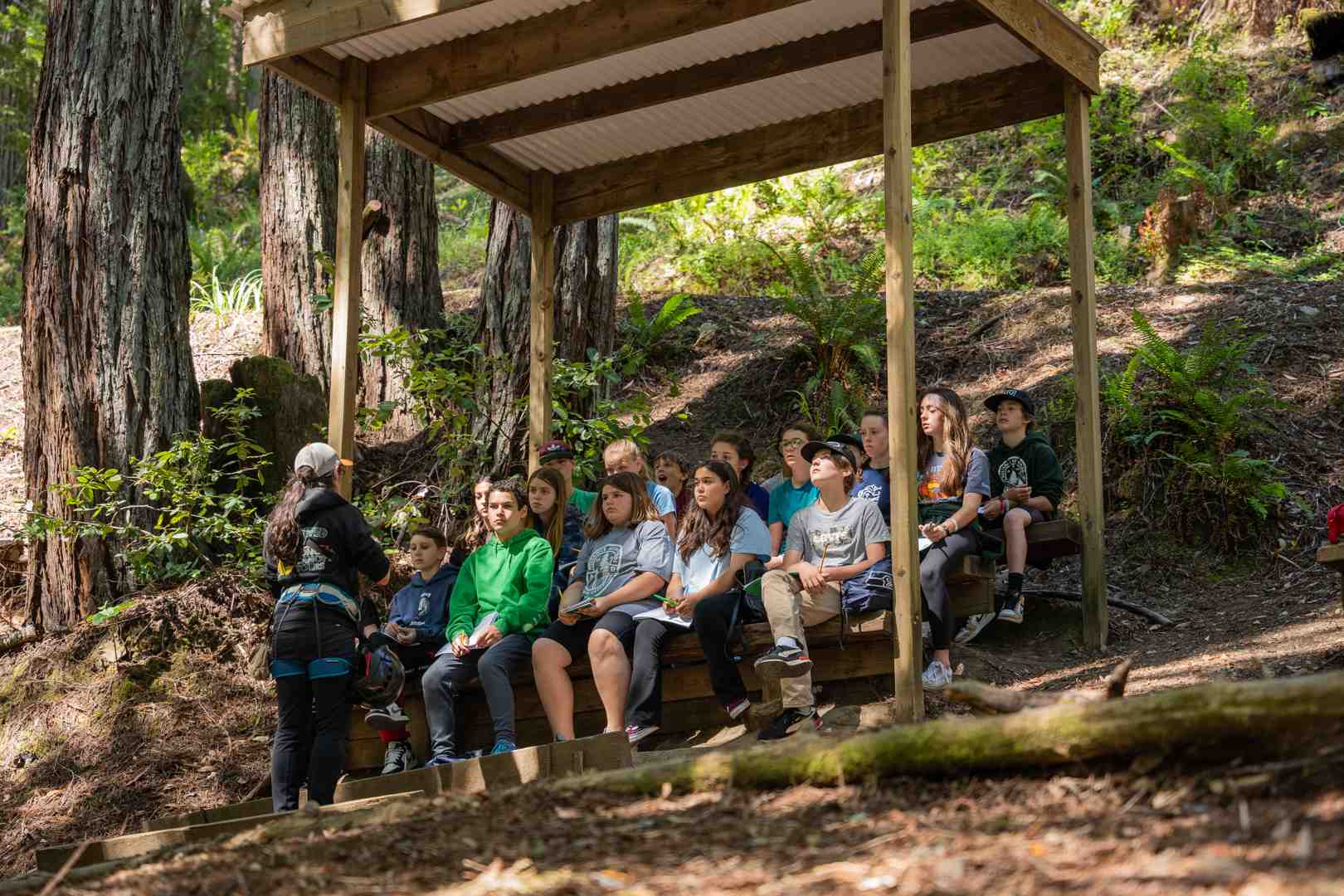
children participating in stream-watch activities and water quality testing

Experiential Learning and Forest Schools

One of the most successful models of nature-based education is the forest school. Forest schools utilize an emergent curriculum that follows children’s intrinsic motivation and curiosity. Rather than following a rigid lesson plan, educators act as supportive guides, allowing students to lead their own learning through spontaneous discovery.

A key element of this approach is managed risk-taking. Climbing trees, navigating uneven terrain, and exploring natural water sources help children develop resiliency, problem-solving skills, self-determination, and confidence. To understand why this approach is so effective in our home state, you can read about the Importance of Outdoor Education in California and discover Why California Outdoor Education Works. For a deeper dive into the pedagogy, explore our guides on Experiential Learning Types Everything You Need to Know and The Complete Guide to Outdoor Schooling.

Living Laboratories: Biosphere Reserves and Urban Greenways

Protected natural areas and urban green corridors serve as exceptional living laboratories. When students conduct water quality testing, participate in stream-watch activities, or study forest biodiversity, they are not just reading about science—they are practicing it. These environments allow us to integrate the five-domain Planetary Health Educational Framework, which connects human health directly to the health of our ecosystems. Experiential learning in these settings has been proven to yield statistically significant improvements in conservation awareness and scientific literacy.

How Can Policy, Teacher Training, and Communities Strengthen This Connection?

Despite the overwhelming evidence supporting the benefits of environmental and outdoor education, systemic barriers prevent many schools from fully integrating these practices. One of the most significant hurdles is the teacher training gap. While 40% of teachers report feeling confident in teaching the cognitive dimensions of climate change, only 20% feel equipped to explain how students can take meaningful action.

To strengthen how education and the environment are connected, schools need policy support, trained educators, and community partners who can deliver real-world learning. In California, we are seeing a powerful grassroots movement. Educators, students, and community leaders are actively advocating for systemic change, as detailed in the report on how Teachers and Students Push for Climate Change Education in California. Local school districts are also taking the lead; for example, look at Fremont’s Educational Response to the Climate Emergency, which showcases how student advocacy can drive district-wide environmental action. By fostering collaboration between public schools, local governments, and professional outdoor education centers, we can create a cohesive network that supports lifelong environmental literacy.

Overcoming the Teacher Training Gap

To empower educators, we must provide them with the professional development, resources, and curriculum tools they need to teach action-oriented environmental science. This means moving beyond dry, textbook-based facts and training teachers in experiential, outdoor pedagogy. When teachers are confident in their ability to lead outdoor investigations, they can transform their classrooms and inspire their students to become active participants in climate solutions.

Immersive Outdoor Education at Alliance Redwoods

Alliance Redwoods Conference Grounds supports schools and youth organizations with immersive outdoor learning experiences in a redwood forest setting. Nestled within a spectacular 115-acre coastal Redwood forest in Occidental, California, we have been providing life-changing, nature-based experiences since 1946. Our location is ideally situated to serve groups from San Francisco, Oakland, Berkeley, San Jose, and the surrounding Bay Area counties.

We offer fully accredited, NGSS-aligned outdoor education programs that focus on Redwood Forest Ecology, Stream & Watershed Ecology, and Conservation. Our curriculum is designed to bring science to life, allowing students to study Redwood anatomy, investigate aquatic macro-invertebrates in active creeks, and learn the principles of environmental stewardship first-hand.

Beyond academic science, we specialize in integrating character development, teambuilding, and adventure programming. Students challenge themselves on our high ropes courses, build trust through collaborative teambuilding initiatives, and develop deep personal resilience. To explore how we connect learning to the land, discover our resources on the Education Environment Connection and our Youth Outdoor Education Programs California. Learn more about The Best Experiential Learning Opportunities in Northern California, read about the long-term Effects of Outdoor Education Programs, and prepare to Experience Natures Classroom with Youth Outdoor Education Programs in California. For complete program details, visit Alliance Redwoods Outdoor Education.

Frequently Asked Questions About Education and the Environment?

How does climate change directly affect a student’s ability to learn?

Climate change disrupts education through both direct physical impacts and cognitive stressors. Extreme weather events lead to school closures, infrastructure damage, and the displacement of families. Furthermore, high temperatures and poor air quality from wildfires—common issues in Northern California—have been shown to impair cognitive function, reduce academic performance on standardized tests, and increase school absenteeism due to health complications like asthma.

Why is emotional connection to nature more important than environmental knowledge for behavior change?

While knowledge provides the necessary understanding of environmental issues, it rarely translates into action on its own. That finding helps explain how education and the environment are connected: emotional connection drives behavior more than facts alone. An emotional bond fosters empathy and intrinsic motivation, making sustainable habits a natural expression of care for the Earth rather than a chore driven by external rules.

How can schools integrate environmental education without sacrificing core academic standards?

Schools do not have to choose between academic rigor and environmental education. High-quality outdoor education programs are designed to be interdisciplinary, seamlessly integrating Next Generation Science Standards (NGSS) and Common Core State Standards. By studying ecology, watershed dynamics, and conservation through hands-on field investigations, students master core scientific concepts, math skills, and language arts in a real-world context that enhances academic retention.

How Can We Build a Sustainable Future Through Education?

The connection between education and the environment is one of the most powerful levers we have for building a sustainable, resilient society. By shifting our educational focus from passive, classroom-bound instruction to active, experiential learning in nature, we do more than teach science—we cultivate ecological consciousness. We help students see themselves not as separate from nature, but as an active, responsible part of its cycles.

As we look to the future, we invite schools, parents, non-profits, and organizations to invest in the power of outdoor learning. Whether you are planning a school science camp, a youth retreat, or a collaborative team-building event, we are here to support your journey. Alliance Redwoods stands ready as your premier partner in Northern California, offering an unparalleled setting where restoration, education, and connection come together. To plan an outdoor learning experience, start with our Inquiry Form, and contact Alliance Redwoods with any program questions.
Why a Redwood Retreat Can Be Life-Changing

Why a Redwood Retreat Belongs on Your Planning List

A redwood retreat at Alliance Redwoods gives groups a nature-based setting for rest, learning, connection, and focused time in the redwoods of Northern California. Set within a majestic 116-acre sanctuary of old-growth Redwoods in Occidental, CA, this destination offers a comprehensive suite of programs ranging from world-class outdoor education to transformative corporate team building and personal restoration. When you choose Alliance Redwoods, you are choosing a legacy of excellence that has served groups since 1946, providing an environment where the scale of the trees is matched only by the depth of the experience. This setting is designed to support growth, leadership, and spiritual renewal through structured programs, group lodging, and immersive time in the forest.

A redwood retreat can be life-changing because it gives people something they rarely find in everyday life: space to slow down, look up, and gain perspective. Beneath the redwoods, conversations become more intentional, distractions feel less urgent, and groups have room to reconnect with their purpose. Whether guests arrive as students, ministry leaders, coworkers, families, or friends, the forest creates an environment where meaningful change can begin.

Here is a clear look at what makes an Alliance Redwoods redwood retreat a strong option for your next gathering:

  • Location: Situated in the heart of Sonoma County, our property features 116 acres of pristine old-growth Redwoods, offering a secluded atmosphere that is still easily accessible from the greater Bay Area.
  • Who it’s for: We specialize in serving school groups, youth organizations, corporate leadership teams, church ministries, and families looking for a purposeful escape.
  • What’s included: Full-service nature immersion, including professionally guided activities, specialized curriculum-based learning, comfortable group lodging, and high-quality banquet dining.
  • Key experiences: Iconic forest hiking, state-of-the-art outdoor education, high-ropes adventure courses, spiritual reflection spaces, and hands-on environmental stewardship.
  • Booking: Our dedicated Guest Services team provides a streamlined inquiry process and personalized planning support to ensure every detail of your event is handled with professional care.

There is a palpable shift in perspective that occurs the moment you enter the gates of Alliance Redwoods. The height and stillness of the redwoods create a setting that helps groups slow down, focus, and reconnect. For educators, retreat coordinators, and organizational leaders, this environment is more than just a backdrop; it is a powerful tool for transformation. Whether you are designing a multi-day outdoor education program for students or a high-stakes leadership summit, the forest setting helps reduce everyday distractions and gives participants space for reflection, conversation, and shared discovery. This guide is designed to help group leaders, educators, and retreat planners understand how to plan a meaningful redwood retreat at Alliance Redwoods. I have seen students find their confidence on a zip-line and corporate teams find their synergy under the canopy. This guide is designed to help you navigate the planning process for the ultimate Redwood Retreat, ensuring your group experiences the very best that Alliance Redwoods has to offer.

The Ultimate Guide to Planning Your Redwood Retreat

peaceful forest trail in the redwoods - redwood retreat

Planning a redwood retreat at Alliance Redwoods means choosing a setting where lodging, meeting space, outdoor activities, and forest access work together in one group-focused environment. While the Northern California landscape is vast, a true retreat requires the specialized infrastructure and expert guidance found only at a premier facility like ours. We believe that the most impactful experiences occur when the logistics are handled with professional precision, allowing the natural majesty of the Redwoods to take center stage. Our 116-acre property in Occidental is specifically designed to facilitate this transition from the noise of the city to the restorative silence of the forest, providing a singular destination for those who demand excellence in their nature-based programming.

The Northern California climate, particularly in the microclimates of Sonoma County, plays a vital role in the retreat experience. For those traveling from urban hubs like San Francisco, Oakland, San Jose, or Sacramento, the arrival at Alliance Redwoods marks a significant environmental shift. You may begin your morning enveloped in the cool, ethereal fog that sustains these giant trees, only to have it burn off by midday to reveal a brilliant canopy of sunlight filtering through the branches. This dynamic weather is part of the forest’s charm, and we help our guests prepare for every nuance of the coastal mountain environment. The cool forest air and shaded trails create a refreshing environment for outdoor programs, group activities, and quiet reflection.

Seasonal availability at Alliance Redwoods offers a diverse range of experiences throughout the year. Spring is a season of renewal, where the creeks run full and the forest floor is a vibrant tapestry of new growth. Summer provides long, warm days perfect for extensive hiking and outdoor activities. Autumn brings a crisp clarity to the air and stable weather that is ideal for intensive planning sessions. Winter can give a redwood retreat a quieter, more reflective tone, especially for groups focused on spiritual renewal, planning, or deeper conversation. Regardless of the season, the Redwoods remain a steadfast and inspiring presence, and our facility is fully equipped to provide comfort and warmth even during the most atmospheric winter days.

Travel logistics for your Redwood Retreat are remarkably straightforward. Alliance Redwoods is located in Occidental, California, giving Bay Area and Northern California groups access to a forest retreat setting without leaving the region. We provide comprehensive arrival guides to ensure your group’s transition into the forest is seamless. When packing, we always recommend layers. The shade of the Redwoods keeps temperatures significantly cooler than the surrounding valleys, even in the peak of summer. Sturdy, close-toed shoes are essential for exploring our 116 acres of trails, and we encourage all guests to bring reusable water bottles to stay hydrated while engaging with the ecosystem. Our staff is always on hand to assist with any logistical needs upon arrival, ensuring your focus remains on your group’s objectives.

Finding the Perfect Redwood Retreat for Large Groups

For those tasked with organizing large-scale organizational events or multigenerational travel, Alliance Redwoods is the definitive solution. We specialize in accommodating large groups without sacrificing the intimate feel of a forest escape. With the capacity to host up to 165 guests in our dormitory-style lodging and even larger numbers for day events, we provide the necessary scale for significant gatherings. Large group retreat planning at our facility involves a careful balance of structured meeting time and immersive “forest time,” all managed by our expert coordinators.

Our various meeting venues can be configured to suit any dynamic, from a formal boardroom setup for executive teams to a large amphitheater for community presentations. The goal is always to foster meaningful connection. Group dynamics thrive at Alliance Redwoods because the environment naturally encourages people to set aside their digital devices and engage with the natural world and one another. The shared experience of standing beneath 300-foot-tall Redwoods creates a common ground that is impossible to replicate in a traditional office or hotel setting. By choosing Alliance Redwoods, you are ensuring that your large group has the space, the tools, and the environment necessary for a truly successful and memorable event.

Immersive Educational Nature Programs in the Redwoods

students exploring a creek in a redwood forest - redwood retreat

The Redwoods are nature’s greatest classroom, and Alliance Redwoods is the premier provider of Outdoor education for schools in Northern California. When students step away from their traditional desks and into our 116-acre living laboratory, their education takes on a new dimension. They are no longer just reading about biological diversity; they are standing in the midst of an ecosystem that has thrived for thousands of years. Our programs are designed to spark curiosity and foster a deep-seated respect for the natural world through direct, hands-on engagement.

Our educational curriculum is built on a foundation of experiential learning. We believe that environmental science is most effectively taught through observation and interaction. Students at Alliance Redwoods might spend their morning conducting detailed ecosystem studies near a flowing creek, identifying the symbiotic relationships between the giant Redwoods and the lush ferns that carpet the forest floor. This curriculum is carefully aligned with critical educational standards, ensuring that while students are having an unforgettable adventure, they are also achieving significant academic milestones. The forest provides endless opportunities for discovery, from the microscopic life in the soil to the complex canopy ecosystems high above.

Beyond the scientific curriculum, we emphasize the holistic benefits of nature immersion. Practices such as forest journaling and guided reflection are integral to our programs, encouraging students to slow down and process their experiences. Research on nature-based learning suggests that outdoor environments can support attention, reduce stress, and improve engagement, making the redwoods a strong setting for experiential education. By providing a space where these theories are applied in real-time, Alliance Redwoods helps bridge the gap between classroom learning and real-world experience. We see firsthand how students who may struggle in a traditional setting often find their voice and confidence while navigating a forest trail or collaborating on a team challenge.

Tailoring Your Redwood Retreat for Educational Success

Every school and youth group has unique needs, and we believe your Redwood Retreat should be tailored to meet those specific goals. For many, a highly structured curriculum led by our expert naturalists is the ideal path. Our staff members are not just guides; they are passionate educators who specialize in making the forest come alive for young learners. For groups seeking more flexibility, we offer self-guided activity packets that allow for a personalized pace while still ensuring a high-quality educational experience. These resources include prompts for nature observation, journaling exercises, and guided hikes that help students engage with the Redwoods on their own terms.

Our Next adventure programs are specifically designed to push boundaries and build essential life skills. Whether through leadership development exercises or advanced field study techniques, our goal is to inspire a lifelong passion for environmental stewardship. Student engagement is naturally higher when the “classroom” features ancient trees and the sounds of a thriving forest. At Alliance Redwoods, we are dedicated to providing an educational experience that is as enduring as the Redwoods themselves, leaving a lasting impact on every student who walks our trails.

Accommodations and Amenities for Every Traveler

When staying at Alliance Redwoods, we prove that a forest setting can be both rustic and exceptionally comfortable. We offer a diverse range of accommodation options designed to serve as a perfect home base for your Redwood adventures. Whether you are a small leadership team or a large school group, our facilities are maintained to the highest standards to ensure your stay is restorative and productive. Our lodging is strategically placed throughout the property to provide easy access to meeting spaces and activity areas while maintaining a sense of seclusion within the trees. We take pride in offering a level of hospitality that complements the grandeur of the forest.

For larger groups, our dormitory-style lodging is an excellent way to build community and foster shared experiences. These facilities feature comfortable bunk beds and are designed to be high-energy communal spaces where lasting bonds are formed. For those seeking more privacy or a quieter atmosphere, our lodge rooms and cottages offer en-suite bathrooms and guest-controlled heating, providing a peaceful sanctuary after a day of exploration. Every building on our property is designed to complement the natural beauty of the Redwoods, ensuring that you never feel disconnected from the forest environment. Our maintenance team works tirelessly to ensure every room is clean, welcoming, and ready for your arrival.

To help you choose the best fit for your group, here is a comparison of our primary lodging styles at Alliance Redwoods:

FeatureLodge RoomsDormitory/Cabin Style
Ideal ForSmall groups, couples, or leadersSchools, youth groups, large teams
Capacity2-5 guests per roomUp to 14-28 per building
BathroomEn-suite / PrivateShared / In-cabin facilities
VibeQuiet and restorativeHigh-energy and communal
AmenitiesLinens provided, guest-controlled heatBunk beds, proximity to group areas

While the diversity of the California Redwood Coast is well-documented, you will find that the heart of the experience remains right here at Alliance Redwoods. Guests who want broader redwood context can explore authoritative resources on the California redwood ecosystem, while Alliance Redwoods remains focused on structured group retreats in Occidental. Our amenities are specifically curated to enhance the retreat experience. From high-speed internet for those who need to stay connected to the office to outdoor kitchens and fire pits that serve as the center of evening social life, we provide everything necessary for a successful stay. We ensure that every guest has access to the modern conveniences they need while still enjoying the profound peace of the old-growth forest.

Accessibility is a core priority at Alliance Redwoods. We believe the beauty of the Redwoods should be available to everyone, and we have integrated accessibility features throughout our property to ensure all guests can participate fully in the retreat experience. This includes accessible pathways and lodging options designed for those with mobility needs. Regarding our four-legged friends, we prioritize service animals in accordance with ADA guidelines to ensure the safety and comfort of all our guests and the local wildlife. For specific inquiries regarding small-family stays in our cottages, our Guest Services team is always available to discuss current policies and ensure your needs are met with professional care. We are committed to making Alliance Redwoods a welcoming environment for every member of your group.

Essential Activities for Restoration and Growth

A Redwood Retreat at Alliance Redwoods is defined by the transformative activities available within our forest. We believe in a balanced approach that combines physical challenge with mental clarity, providing opportunities for both high-adrenaline adventure and deep personal restoration. The cornerstone of the experience is our extensive trail system, which winds through the 116 acres of old-growth forest. Hiking through these Redwoods is a sensory journey; the scent of the damp earth, the filtered emerald light, and the immense scale of the trees create a natural state of mindfulness that no indoor facility can match.

For groups looking to inject energy and fun into their stay, our swimming pool and mini-golf course offer classic recreation in a stunning setting. However, the true hallmark of an Alliance Redwoods experience is our Adventure experiences. Alliance Redwoods offers facilitated zip-lining, high-ropes, and challenge-course experiences that help corporate teams practice trust, communication, and collaboration. These activities are professionally facilitated to take participants out of their comfort zones in a safe and supportive environment. By facing challenges together high in the canopy, teams build a level of trust and communication that translates directly back to the workplace.

Restoration is just as vital as adventure in the Redwoods. We intentionally incorporate elements of reflection and “Noble Silence” into our programming to allow guests to process their experiences and find mental clarity. There is a profound grounding power in the simple act of being present in the forest. Whether your group participates in structured meditation, community prayer, or simply spends time in quiet contemplation by one of our flowing creeks, these moments of stillness are often where the most significant personal growth occurs. The Redwoods provide a unique perspective on time and resilience, helping guests return to their daily lives with renewed energy and focus.

Our activities are designed to be inclusive and adaptable to the needs of your specific group. From the physical exhilaration of the ropes course to the intellectual engagement of our nature studies, every element of the Alliance Redwoods experience is crafted to promote growth. We don’t just provide activities; we provide catalysts for change. When you stand on a platform 100 feet in the air or sit in silence beneath a tree that has stood for a thousand years, you are participating in an experience that is uniquely Alliance Redwoods. This is where memories are made and where teams are truly forged.

Planning Your Group Experience and Logistics

The success of any retreat depends on the seamless execution of logistics, and at Alliance Redwoods, we pride ourselves on our professional approach to group management. We provide sophisticated meeting spaces that offer a refreshing alternative to the standard conference room. Our venues are equipped with modern AV equipment and high-speed internet, ensuring that your workshops and presentations are professional and effective. If you are searching for the premier Business retreat locations, you will find that our combination of professional facilities and natural inspiration is the definitive choice in Northern California.

To ensure a smooth start to your event, we provide comprehensive Arrival information for groups. This includes detailed parking instructions, check-in procedures, and a thorough overview of our safety protocols and house rules. Our goal is to make every guest feel welcome and informed from the moment they arrive in Occidental. Our staff is dedicated to providing a high level of service, handling the details so that you can focus on your group’s goals. We understand the complexities of organizing large groups and have refined our processes over decades to ensure every event runs like clockwork.

Dining is a central part of the Alliance Redwoods experience, and we take great care in providing high-quality, nourishing meals. Our dining halls serve banquet-style food that can be tailored to meet a wide variety of dietary needs and preferences. Whether you are enjoying a formal meal in our dining hall with views of the forest or a large-scale outdoor barbecue for up to 400 people, the focus is always on wholesome food that fuels your group for their adventures. We believe that shared meals are a vital time for connection, and our culinary team is committed to making every meal a highlight of your stay.

When planning your redwood retreat, it is helpful to discuss timing, lodging needs, group size, and program goals with the Alliance Redwoods team early in the process. Different seasons offer different retreat experiences, and the Alliance Redwoods team can help you choose dates that align with your group’s goals and schedule. Our cancellation and booking policies are transparent and designed to be fair to all parties. We recommend starting the planning process early, as our calendar for the most popular dates fills up quickly. From the initial inquiry to the final departure, the Alliance Redwoods team is your partner in creating an exceptional and impactful Redwood Retreat.

Conclusion

An Alliance Redwoods redwood retreat is more than a getaway; it is a focused environment for growth, learning, renewal, and connection. Whether you are an educator aiming to inspire the next generation of scientists, a CEO looking to build a more cohesive executive team, or a ministry leader seeking a sanctuary for spiritual renewal, the Redwoods provide the perfect environment for growth. Since 1946, Alliance Redwoods has been the cornerstone of the Northern California retreat community, offering a 116-acre sanctuary where meaningful connection and lasting impact are the primary goals.

We invite you to leave behind the distractions of the Bay Area and step into the quiet, enduring strength of our forest in Occidental. Here, the air is fresher, the stars are more brilliant, and the conversations carry more weight. We have seen time and again how a few days spent under the canopy of these ancient trees leads to professional breakthroughs, personal renewal, and a profound new appreciation for the natural world. The Redwoods have a way of putting everything into perspective, allowing you to focus on what truly matters.

To begin planning your redwood retreat, Contact Alliance Redwoods today. Our team can help you explore group lodging, meeting spaces, outdoor experiences, and retreat options that support your goals in the redwoods of Occidental, California.

Sonoma County NGSS Outdoor Education Programs: A School Planning Guide

The Short Version: Best NGSS Outdoor Education Programs in Sonoma County

Sonoma County is home to leading Sonoma County NGSS outdoor education experiences that turn local ecosystems into hands-on science classrooms. Alliance Redwoods is a Sonoma County provider offering NGSS-aligned, field-based science learning for TK–12 in a protected Redwood and watershed setting. Beyond Alliance Redwoods, a coordinated county-wide initiative called the Pathways Project — managed through the Sonoma Environmental Education Collaborative (SEEC) — connects Title I schools with NGSS-aligned providers across the region.

In this guide, you’ll find everything you need to know, including:

  • What the Pathways Project is and which schools it serves
  • How Alliance Redwoods leads NGSS outdoor science delivery in the county
  • Specific programs, field experiences, and grade-level modules available
  • How transportation and financial barriers are being addressed for underserved students
  • What the research and real-world results say about student outcomes

I’m Joy Ferguson, a tourism and destination marketing professional with experience promoting immersive, place-based outdoor experiences across Northern California’s Redwood landscapes — including direct work supporting outdoor education outreach at Alliance Redwoods Conference Grounds, making me well-positioned to guide you through the landscape of Sonoma County NGSS outdoor education.

What is the Pathways Project and How Does It Support Title I Schools?

The Pathways Project – Sonoma Environmental Education Collaborative is a county-wide initiative designed to build environmental literacy by establishing a scaffolded, multi-year progression of outdoor learning. Coordinated by the Sonoma Environmental Education Collaborative (SEEC), this project focuses on creating environmentally literate students and schools through immersive outdoor experiences and classroom connections. By coordinating efforts across regional providers, the project ensures that students benefit from a continuous learning journey.

The strategic goal of the Pathways Project is to establish at least four distinct touchpoints of environmental education for students in grades TK/K through 6th grade. This scaffolded approach allows scientific concepts to build upon one another year after year, reinforcing critical thinking and deepening the student’s nature connection.

To bridge the historic nature gap and address educational disparities, the project specifically targets select Title I schools in Sonoma County. These schools are organized into phased cohorts that have committed to building school-specific environmental education continuums, including Helen Lehman Elementary, Luther Burbank Elementary, Bellevue Elementary, Healdsburg Elementary, Abraham Lincoln Elementary, and Roseland Elementary.

Participating Pathway Schools benefit from priority scheduling and dedicated funding, which helps eliminate the logistical and financial hurdles that often prevent schools from organizing outdoor trips. Furthermore, the project provides robust professional development and teacher training. Educators are equipped with classroom-ready tools, such as the “I notice, I wonder, It reminds me of” observation framework, to integrate outdoor learning back into their daily curricula.

These resources, often supported by regional networks like the Sonoma Earth School , help teachers connect local environmental phenomena directly to broader science standards. Through these coordinated efforts, Students Make More Nature and Science Connections through New … programs, helping them understand how local ecosystems function. This systematic approach illustrates Why California Outdoor Education Works by turning local landscapes into living laboratories that support long-term academic and personal growth.

How Alliance Redwoods Leads the Delivery of NGSS Outdoor Science in Sonoma County

At Alliance Redwoods, we are proud to serve as a cornerstone for NGSS-aligned outdoor education in Northern California. By working within the collaborative framework of the Sonoma Environmental Education Collaborative (SEEC), we help unite regional environmental literacy goals with high-quality, hands-on programming. Partnering with a centralized provider strengthens continuity across a Sonoma County NGSS outdoor education progression for schools.

Our protected 115-acre campus in Occidental supports Sonoma County NGSS outdoor education field investigations across forest and stream ecosystems. Nestled within a historic coastal Redwood forest, our campus features diverse ecosystems, including mixed hardwood canopies, vibrant riparian zones, and active salmonid-bearing stream habitats. This unique geography allows us to deliver comprehensive K–12 outdoor school experiences that bring textbook concepts to life.

To help educators understand how our programs align with specific grade-level standards and ecological concepts, we have developed a structured curriculum matrix:

Program ModuleKey EcosystemsTarget Grade LevelsCore NGSS Focus Areas & Phenomena
Forest EcologyCoastal Redwood Forest, Mixed Hardwood CanopyTK – 12th GradeEcosystem Dynamics, Biodiversity, Adaptations, Structure & Function
Watershed EcologyRiparian Zones, Salmonid-Bearing Streams2nd – 8th GradeEarth’s Systems, Water Cycles, Human Impact, Biotic Indices
Earth Science & GeologyForest Floors, Soil Horizons, Erosion Zones3rd – 8th GradeEarth’s Materials, Weathering & Erosion, Soil Filtration
Comparative AnatomyOak Woodlands, Redwood UnderstoryK – 6th GradeStructure & Function, Evolutionary Adaptations, Food Webs
Climate & MicroclimatesRedwood Canopy, Microclimate Zones5th – 12th GradeWeather & Climate, Carbon Cycling, Human Activity & Climate Change

By utilizing our private acreage, we provide students with safe, direct access to natural phenomena. Whether they are measuring the temperature differences in distinct microclimates or analyzing the water quality of a local stream, students engage in genuine scientific inquiry. We also provide teachers with extensive Educator Resources – Sonoma Environmental Education Collaborative to help them prepare students before their arrival and extend the learning long after they return to the classroom.

What Specific NGSS-Aligned Programs and Field Experiences Are Available at Alliance Redwoods?

Our curriculum is designed to engage students’ natural curiosity through hands-on, phenomenon-based investigations. By aligning every trail walk, lab, and activity with the Next Generation Science Standards, we help students think and act like real scientists. Here is a closer look at the specific programs and field experiences we offer:

Forest Ecology & Anatomy

In our Forest Ecology program, students explore the complex relationships that sustain the coastal Redwood forest. They investigate food chains, study local biodiversity, and examine the unique anatomy of the coastal Redwood (Sequoia sempervirens). Students learn how these massive trees capture moisture from summer fog, resist wildfire, and support specialized plant and animal communities within their canopy.

Watershed Ecology & Stream Health

Our Watershed Ecology program takes students to the banks of local salmonid-bearing streams, such as Dutch Bill Creek. In small trail groups, students collect water-quality data and analyze evidence—core practices in Sonoma County NGSS outdoor education. By identifying bioindicators like mayfly, stonefly, and caddisfly larvae, students calculate a biotic index to determine the overall health of the aquatic habitat.

Earth Science, Geology & Comparative Anatomy

In our Earth Science and Geology modules, students study weathering, erosion, and soil composition. Through hands-on soil filtration experiments, they discover how different forest soils filter water and prevent runoff.

Additionally, our comparative anatomy experience utilizes high-quality replica skulls within our outdoor laboratories. Students examine the teeth, jaw structures, and nasal cavities of local wildlife—comparing the jaw strength of sea lions, the canine teeth of coyotes, and the flat molars of deer—to understand how physical structures relate to survival functions.

Grade-Specific NGSS Modules

We offer targeted, grade-specific modules designed to support California classroom curricula throughout the school year:

  • Wildlife Defenders (TK–2nd Grade): Focuses on local habitats, animal homes, and how plants and animals obtain the resources they need to survive.
  • Fire Followers (3rd Grade): Explores wildfire ecology, forest resilience, and the difference between destructive wildfires and beneficial, low-intensity forest fires.
  • Growing Discovery (4th Grade): Investigates pollination, forest botany, and the role of native plants in sustainable agricultural systems.
  • Water Wonders (5th Grade): Explores watersheds, water cycles, and the complex life cycles of native salmonids.
  • Climate Champions (6th Grade & Above): Focuses on microclimate monitoring, carbon sequestration, and analyzing how climate change impacts local forest ecosystems.

Seasonal Field Trips and Multi-Day Outdoor School

For younger students, we offer single-day seasonal field trips such as Habitat and Home (TK–3rd grade), which focuses on seasonal changes and animal adaptations, and Rockin’ and Recycling (2nd grade), which explores earth materials and decomposition.

For older elementary and middle school classes, we host multi-day residential Outdoor Education Schools programs. These immersive experiences combine intensive daytime science investigations with evening programs like night ecology walks and campfire teambuilding, creating a comprehensive educational experience.

To ensure our instructional staff remains at the cutting edge of environmental pedagogy, we support ongoing teacher training, including initiatives like the Advancing Environmental Education with Free UC CalNat Course for Local Teachers . This training equips educators with advanced tools in wildfire science, land management, and climate resilience, which are directly integrated into our student programs.

How Do Outdoor Programs Support Student Outcomes and Overcome Accessibility Barriers?

Immersive outdoor science programs do more than teach academic standards; they foster holistic student development and build a lifelong connection to the natural world. When students step out of the traditional classroom and into the forest, they experience growth across multiple dimensions:

  • Academic Outcomes: Students transition from memorizing facts to actively practicing scientific inquiry. Using the “I notice, I wonder, It reminds me of” framework, they build critical observation skills, construct explanations based on direct evidence, and learn to ask deep, testable questions about natural phenomena.
  • Social-Emotional Outcomes: Spending multiple days in a residential outdoor school environment builds self-reliance, confidence, and personal responsibility. Cooperative activities and challenge courses encourage students to step outside their comfort zones, practice effective communication, resolve conflicts, and build strong relationship skills with their peers.
  • Environmental Outcomes: By exploring local watersheds and forests, students develop a deep sense of place. They move from understanding ecological concepts to practicing active environmental stewardship, cultivating a reciprocal relationship with the land that inspires long-term conservation efforts.

The profound Effects of Outdoor Education Programs are especially evident during overnight capstone experiences. For many students from Title I schools, these multi-day programs represent their very first time camping or sleeping away from home. The pilot overnight campouts supported by the Pathways Project reached over 350 students during the 2023–2024 school year, demonstrating how overnight trips cement academic concepts while fostering deep personal growth.

However, delivering these transformative experiences requires actively identifying and dismantling systemic barriers to access. The Importance of Outdoor Education in California means that every student, regardless of socioeconomic background, deserves access to nature.

At Alliance Redwoods, we work alongside SEEC and community partners to address the three primary barriers to outdoor education:

  1. The Transportation Barrier: Transportation logistics are often the biggest planning hurdle for schools; partners coordinate solutions so access barriers don’t block participation. Through collaborative funding models supported by Community Foundation Sonoma County and regional grants, we help secure transportation funding to ensure students can safely travel to our Occidental campus.
  2. The Financial Barrier: We are committed to keeping our programs accessible. We work with schools and partners to expand access through participation support pathways designed for Title I communities.
  3. The Inclusivity Barrier: True accessibility means making every student feel welcome. We employ bilingual naturalists to deliver culturally relevant programming, design our learning spaces to accommodate diverse learning styles, and maintain accessible trail designs so that students of all physical abilities can participate fully in our outdoor investigations.

By removing these barriers, we ensure that Youth Outdoor Education Programs California serve as a powerful equalizer, giving every child the opportunity to discover the wonders of the natural world.

Why is Alliance Redwoods the Premier Choice for Outdoor Education and Group Retreats?

For schools comparing Sonoma County NGSS outdoor education providers, Alliance Redwoods offers curriculum-connected field science in a Redwood watershed setting. Since 1946, we have provided life-changing, nature-based experiences within our historic, majestic 115-acre coastal Redwood forest property in Occidental, California. Our unique combination of academic excellence, adventure programming, and premium facilities makes us the ultimate destination for schools, nonprofits, churches, and corporate organizations seeking meaningful connection and growth.

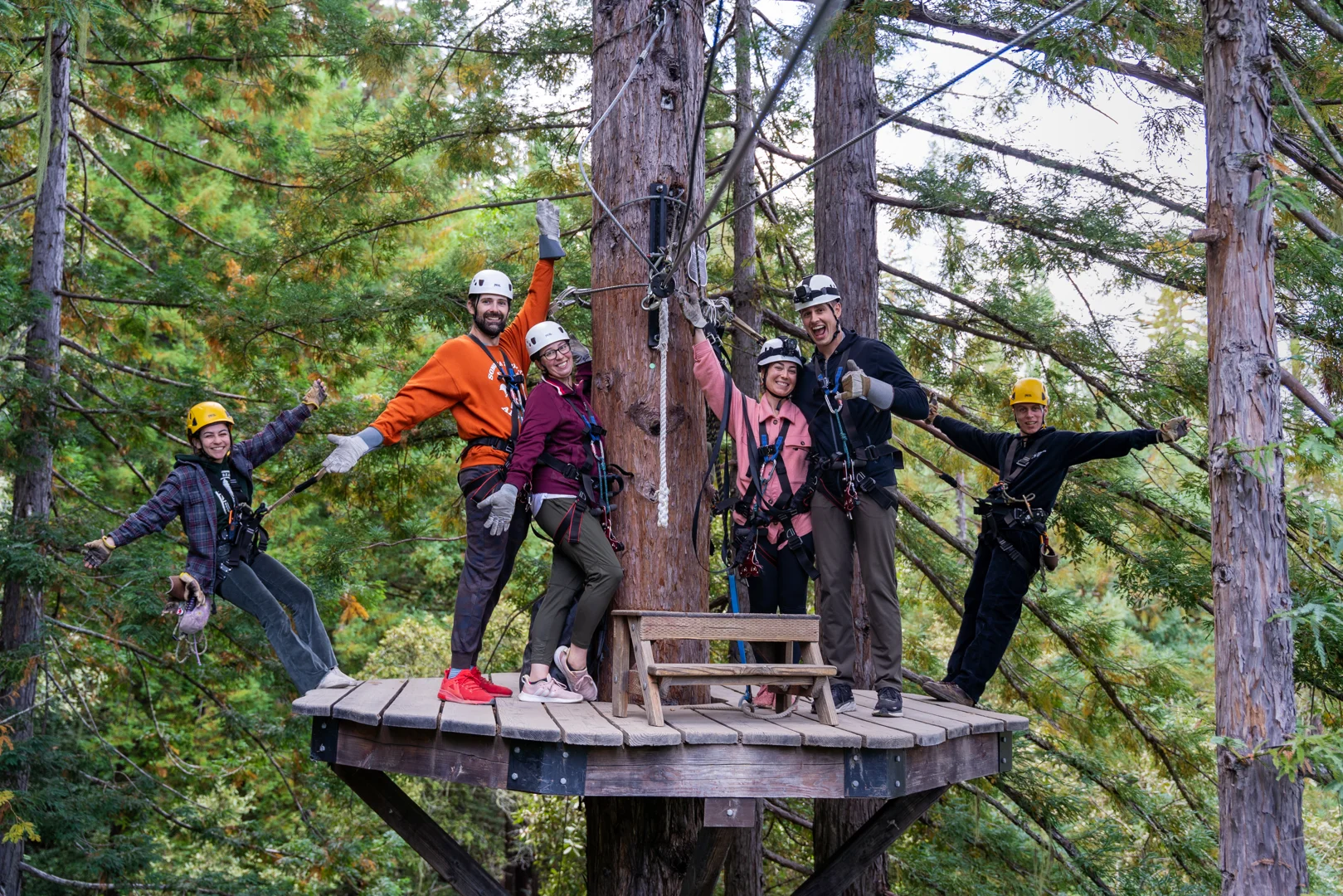
students on a high ropes challenge course nestled in the Redwood canopy

Our exceptional Outdoor Education programs bring science to life. Guided by our highly trained naturalist staff, students do not just read about biology and earth science—they live it. We maintain rigorous academic standards, ensuring that every program is fully aligned with the Next Generation Science Standards (NGSS) and tailored to support the specific learning objectives of visiting schools. Our naturalists are experts in environmental science, youth development, safety, and outdoor leadership.

Beyond academics, our state-of-the-art adventure programming is designed to foster social-emotional growth, personal resilience, and team cohesion. We feature world-class high ropes challenge courses nestled directly within the Redwood canopy, alongside climbing walls, zip lines, and team-building initiatives. These activities encourage participants to overcome fears, build mutual trust, and develop leadership skills that translate directly back to their classrooms, workplaces, and communities.

To support our diverse guest groups, we offer premium Accommodations and modern conference facilities. Our campus features comfortable, heated cabins, private lodge rooms, and versatile meeting spaces equipped with modern audio-visual technology. Our professional food service team provides nutritious, delicious meals tailored to accommodate a wide range of dietary needs, ensuring that every guest is well-nourished and ready for adventure.

Whether you are an educator planning a multi-day Outdoor Education Schools experience, a youth leader organizing a seasonal camp, or a corporate group planning a team-building retreat, Alliance Redwoods supports schools with structured scheduling, trained staff, and curriculum-connected programming for Sonoma County NGSS outdoor education. We handle the logistics, lodging, meals, and programming so that you can focus entirely on connecting with your group. Discover Why California Outdoor Education Works by partnering with us for your next program or retreat.

What Are the Most Common Questions About Sonoma County Outdoor Education?

How do outdoor education programs align with Next Generation Science Standards (NGSS)?

Modern outdoor education programs are built on three-dimensional learning, integrating Disciplinary Core Ideas (DCIs), Science and Engineering Practices (SEPs), and Crosscutting Concepts (CCCs). Instead of rote memorization, students focus on direct observation of natural phenomena. They conduct hands-on field investigations, collect real-world data, and engage in guided reflection to construct scientific explanations. For a complete overview of how these standards are integrated into natural settings, explore our guide to Environmental Education 101.

How are transportation and financial barriers addressed for Title I schools?

Through collaborative regional partnerships, including the Sonoma Environmental Education Collaborative (SEEC) and Community Foundation Sonoma County, schools can access dedicated transportation grants to cover bus costs. Additionally, at Alliance Redwoods, we provide sliding-scale fees, Title I fee waivers, and robust scholarship opportunities to ensure that financial limitations never prevent a student from participating. To learn more about planning an accessible program, read The Complete Guide to Outdoor Schooling.

What role do overnight capstone experiences play in student development?

Overnight capstone programs provide a unique opportunity for deep academic and personal growth. Spending multiple days immersed in nature allows students to apply scientific concepts continuously, reinforcing classroom learning. Furthermore, staying away from home in a supportive, structured environment builds essential life skills, including independence, self-reliance, and deep social-emotional bonding with peers and teachers. Learn more about these life-changing trips by exploring how to Experience Nature’s Classroom with Youth Outdoor Education Programs in California.

Conclusion: How Do We Build the Next Generation of Environmental Stewards?

The future of our planet relies on building a generation of passionate, scientifically literate, and environmentally conscious leaders. Immersive, NGSS-aligned outdoor education is one of the most effective tools we have to achieve this goal. By shifting science learning from textbooks to the living laboratory of the coastal Redwood forest, we spark a sense of wonder and curiosity that stays with students long after they leave the trail.

The Pathways Project’s multi-touchpoint continuum demonstrates the power of consistent, scaffolded exposure to nature. When students return to the outdoors year after year, their scientific understanding deepens, their confidence grows, and their connection to the local environment becomes an integral part of who they are. This continuous engagement is essential for cultivating a lifelong commitment to conservation, illustrating the vital Education Environment Connection that supports both academic success and ecological health.

We encourage educators, school administrators, and community leaders to take the next step. Partner with us to bring your students into the forest, remove the barriers to access, and give them an experience that will shape their lives.

Are you ready to bring science to life and experience the magic of the coastal Redwoods with your school or group? Contact us today to plan your next NGSS-aligned outdoor education program or group retreat at Alliance Redwoods!

Experiential Curriculum in Northern California: How Outdoor Learning Helps Students Thrive

Why Experiential Curriculum in Northern California Is Transforming How Students Learn

Experiential curriculum in Northern California is one of the most powerful approaches to education available to students, educators, and group leaders today. From the towering, ancient Redwood forests to the vibrant coastal tidepools, the region offers a living classroom unlike anywhere else in the country. By integrating hands-on discovery with academic rigor, programs in this region ensure that students are not just passive recipients of information but active participants in their own growth. This methodology is closely aligned with the Next Generation Science Standards (NGSS), which emphasize the importance of three-dimensional learning through scientific and engineering practices. At Alliance Redwoods, we have perfected this model over decades, creating a sanctuary where the curriculum is as deep as the roots of the trees surrounding us.

If you’re looking for the place where learning and group transformation truly come to life, here’s a quick overview of what experiential education in Northern California looks like through Alliance Redwoods:

FeatureWhat It Means in Practice
Place-based learningLessons rooted in local ecosystems like Redwood forests, watersheds, and coastlines
Project-based curriculumStudents solve real problems — from climate research to community design
Overnight and multi-day tripsGrade-level expeditions that build independence and teamwork
NGSS and Common Core alignmentOutdoor experiences that directly support academic standards
Character developmentLeadership, resilience, and empathy built through shared challenges
Age range servedPrograms for youth, schools, educators, nonprofits, churches, and business retreat groups

Northern California’s unique landscape — its ancient Redwoods, salmon-bearing streams, and dramatic coastline — makes it an ideal setting for this kind of learning. Students don’t just read about ecosystems; they wade into them, feeling the temperature of the water and observing the life within. Teams don’t just talk about collaboration; they practice it together in a setting designed for meaningful growth. For schools, educators, retreat planners, and organizational leaders, Alliance Redwoods provides the clearest and most effective path to bringing experiential education to life. Whether you are a teacher looking to revitalize student learning or a business leader planning a retreat that strengthens culture, creativity, and connection, Alliance Redwoods offers the setting, structure, and expertise to make that vision real.

My name is Joy Ferguson, and my background in outdoor destination operations and communications — including work with Alliance Redwoods Conference Grounds and immersive Redwood-based tourism experiences — has given me a front-row seat to how transformative experiential curriculum in Northern California can be. I’m excited to share the resources and perspectives that make the biggest difference for schools, organizations, and retreat leaders. Alliance Redwoods is a destination for those seeking business retreats and outdoor education in a world-class Northern California environment.

Understanding the Experiential Curriculum in Northern California

When we talk about an experiential curriculum in Northern California, we are describing a fundamental shift from passive listening to active discovery. As of May 2026, the educational landscape in regions like Sonoma County and the greater Bay Area has moved toward models where the “classroom” has no walls, and the environment itself becomes the primary instructor. Experiential learning is defined as a process where students learn by doing, followed by a period of intentional reflection to cement the knowledge gained. This approach is supported by the California Department of Education, which recognizes the value of environmental literacy and outdoor learning in fostering well-rounded, capable students.

This isn’t just a modern trend; it is a pedagogical framework rooted in the understanding that humans retain information better when they are physically and emotionally engaged. To understand the different ways this manifests, it is helpful to explore the Experiential Learning Types Everything You Need To Know. Typically, this cycle involves four distinct stages: concrete experience, reflective observation, abstract conceptualization, and active experimentation. In our local context at Alliance Redwoods, this might look like a student touching the thick, fibrous bark of a Redwood tree, discussing why it is fire-resistant, and then designing a model of a fire-safe community based on those biological principles.

Place-based education is a cornerstone of this approach. It uses the local community and environment—whether that is a historic site in San Francisco or the 115-acre forest here at Alliance Redwoods—as the primary source of curriculum. By grounding lessons in the real world, we provide students with a sense of agency and relevance. They aren’t just studying history or science; they are participating in it. This sense of ownership over their education leads to higher engagement, better long-term outcomes, and a genuine love for learning.

Alliance Redwoods also extends these same principles beyond school groups. The same immersive, place-based environment that helps students build confidence and curiosity also helps business teams reconnect around shared purpose. In a retreat setting, experiential learning can translate into stronger communication, trust, and problem-solving—making Alliance Redwoods a natural fit for both outdoor education and business retreats in Northern California.

Core Pillars of Experiential Curriculum in Northern California

The success of an experiential program rests on several key pillars that go beyond simple academic facts. These include:

  • Problem-Solving: Students and groups are presented with real-world challenges, such as how to measure the health of a watershed or how to navigate a high ropes course, requiring them to think critically and adapt in real-time.
  • Empathy and Collaboration: Working in small groups in a natural setting fosters deep interpersonal connections. Participants must learn to communicate effectively and support one another to reach a shared goal.
  • Environmental Stewardship: By immersing themselves in Environmental Education 101, students develop a “protective love” for the natural world. This isn’t taught through a textbook but through the awe inspired by standing beneath a 200-foot-tall tree.
  • Resilience: Often referred to as “character development,” this pillar focuses on helping participants expand their comfort zones. Whether it’s sleeping away from home for the first time or conquering a physical fear on a zip line, these experiences build a foundation of grit.

The Role of Nature in Modern Pedagogy

In today’s digital learning environment, outdoor education in California gives students a needed opportunity to learn through direct experience. Nature serves as a profound catalyst for curiosity and mental clarity. When a student is in an outdoor immersion program, all five senses are engaged. They smell the damp earth of the Redwood forest, hear the call of a Steller’s jay, and see the intricate patterns of a fern. This sensory learning leads to higher ecological literacy and a more profound understanding of the world.

In Northern California, we have a unique opportunity to teach biodiversity and climate awareness through our local ecosystems. The Redwoods are a living laboratory where students can observe seasonal rhythms and the interconnectedness of life. This restorative environment also supports mental health, providing an “urban escape” that allows students, educators, and retreat groups to focus and reflect in ways a traditional indoor setting often prevents. Alliance Redwoods provides the ideal backdrop for this restorative and educational journey, ensuring that every participant leaves with a deeper connection to the world around them and to one another.

The Canopy of Curiosity – Early Childhood Foundations

For our youngest learners, the experiential curriculum in Northern California starts with the “emergent curriculum” model. This approach builds on the specific interests and wonders of the children in the moment, turning every discovery into a learning opportunity. If a group of toddlers finds a trail of ants, the lesson becomes about biology, math, and social behavior right there on the forest floor. When families Experience Natures Classroom With Youth Outdoor Education Programs In California, they see how motor skills and social-emotional growth are accelerated by natural play. In places like Sonoma County, where farms and forests meet, children learn to navigate uneven terrain, which builds physical coordination and confidence. Mixed-age group dynamics are also common in these settings, allowing older children to mentor younger peers, fostering a sense of community from a very early age.

Early Literacy and Math in the Wild

It might seem counterintuitive to teach math in the woods, but the The Complete Guide To Outdoor Schooling shows that natural artifacts are the perfect “manipulatives.” Counting acorns, identifying geometric shapes in spider webs, and recognizing patterns in leaf structures provide a concrete foundation for abstract concepts later on. Pre-literacy is supported through storytelling under the Redwoods. Educators use the environment to spark imagination, encouraging children to describe their surroundings and weave narratives about the animals that live there. This curiosity-driven inquiry ensures that the first experience a child has with “school” is one of wonder rather than rote memorization.

Building Resilience through Outdoor Play

Resilience is built when children are allowed to take healthy risks in a safe, supervised environment. Why California Outdoor Education Works because it embraces a “rain-or-shine” philosophy. Learning that they can be comfortable and have fun even when it’s damp or chilly teaches children emotional regulation and self-reliance. This early exposure creates a lifelong “environmental identity.” When a child spends their formative years digging in the mud and lifting logs to find insects, they develop a sense of self-reverence and a deep bond with the planet. At Alliance Redwoods, we believe that this foundational confidence is the greatest gift we can give to the next generation of leaders.

The Ascent – Middle School Quests and Constructive Adversity

Middle school is a pivotal time for identity formation, and the Youth Outdoor Education Programs California offers are designed to meet this developmental stage head-on. One of the most effective strategies used is “Constructive Adversity.” This is the intentional creation of challenging situations—like navigating a high ropes course or completing a multi-day backpacking trip—to help students expand their comfort zones and discover their true potential. In the Redwoods, these “quests” allow students to test their limits in a supportive environment. When a student is 30 feet in the air, supported by their peers on the ground, they are learning about trust, communication, and their own inner strength. These experiences are far more than just “fun”; they are structured character development opportunities that stay with a student for a lifetime.

Integrating Social Responsibility and Community

An experiential curriculum in Northern California also addresses the complex social dynamics of the 21st century. Many programs now include units on justice, equity, diversity, and inclusion (JEDI). Students might study the history of land ownership in the Napa Valley or the impact of historical events on local communities. By taking the conversation outdoors, these topics become tangible and relatable. Students develop empathy through shared challenges and learn what it means to be a global citizen. At Alliance Redwoods, we pride ourselves on fostering inclusive environments where every student feels a sense of belonging, regardless of their background. This community impact is a vital part of our mission to grow leaders who are not only smart but also compassionate and socially aware.

STEM and Humanities through Real-World Projects

The transition to middle school also means an increase in academic rigor. Fieldwork becomes a primary tool for teaching STEM and humanities. Students might spend days engaging with experts on climate change, conducting water chemistry tests in salmon-bearing streams, or studying biomimicry—how nature’s designs can inspire human engineering. These programs are carefully aligned with the Next Generation Science Standards (NGSS). For example, studying the anatomy of a Redwood tree isn’t just about biology; it’s about understanding carbon sequestration and fire ecology. By integrating science and the arts in a forest setting, we ensure that students see the connections between different disciplines, making their education feel relevant, alive, and deeply meaningful.

The Leadership Lab – High School Tracks and Global Vision

For high school students, the focus shifts toward professional readiness and authentic leadership. The The Best Experiential Learning Opportunities In Northern California often take the form of “Leadership Labs.” These are specialized tracks where students can focus on areas like robotics, Model UN, or environmental advocacy. A hallmark of this stage is the senior capstone project. This is a year-long commitment involving internships, field research, and a public showcase. Students might spend time interviewing university researchers about social impact or working with a nonprofit to design a sustainable greenhouse model. These portfolio-building experiences help students connect classroom learning with higher education, leadership, and future career pathways.

Developing Authentic Leadership

We believe that leaders come in many forms. Whether a student is an extroverted team captain or a quiet researcher, experiential education provides a platform for self-expression and growth. Mentorship plays a huge role here, with older students often leading affinity groups or mentoring younger peers during outdoor expeditions. The Alliance Redwoods approach to leadership development emphasizes ethical decision-making and integrity. In a world of complex environmental and social challenges, students need to be able to analyze situations critically and act with a sense of responsibility. By placing them in real-world scenarios where their choices have consequences, we help them develop a mature, entrepreneurial mindset that will serve them well in any field.

Bridging the Gap to Higher Education

The long-term impact of a Redwoods-based education is seen in college success. Students who have participated in an experiential curriculum in Northern California often enter university with a clearer sense of purpose and a stronger set of academic skills. They have already built a portfolio of real-world problem-solving and have established professional networks through their internships and field studies. Career pathways in environmental science, public policy, and education are often sparked during these formative high school years. By providing students with the tools to conduct high-level academic research in the field, we prepare them for the rigors of higher education and beyond, ensuring they are ready to make a positive impact on the world.

The Living Laboratory – Environmental Science and Climate Solutions

The Redwoods are more than just a beautiful backdrop; they are a critical tool for climate education and scientific discovery. In our “Living Laboratory,” students engage with the Education Environment Connection through hands-on climate literacy programs. This includes studying renewable energy, such as building solar-powered water pumps in the forest, and understanding the role of Redwood forests in carbon storage. Marine ecology and restoration ecology are also major components of our curriculum. Students might travel to the Sonoma coastline to study intertidal adaptations or participate in local stream restoration projects. These experiences empower the next generation to find climate-friendly solutions rather than feeling overwhelmed by global challenges.

As we look toward the future of education in 2026 and beyond, several exciting trends are emerging in Northern California:

  • Climate Advocacy: Programs are increasingly focused on turning scientific knowledge into community action and advocacy.
  • Tech-Nature Integration: Using tools like solar kits and digital field journaling to enhance the outdoor experience without detracting from it.
  • Inclusive Practices: Ensuring that outdoor education is accessible to all, including the use of community-funded grants and multilingual resources.
  • Holistic Wellness: Integrating somatic healing and mindfulness into the curriculum to support student mental health and well-being.

At Alliance Redwoods, we are constantly evolving our curriculum to incorporate these trends, ensuring that our programs remain at the cutting edge of educational innovation.

Scientific Literacy in the Redwood Forest

True scientific literacy comes from direct observation and inquiry. In the Redwood forest, students don’t just learn about the water cycle; they see it in action in a salmon-bearing stream. They study forest ecology by investigating food chains and biodiversity in the understory. Night ecology and astronomy programs allow them to “marvel at the night sky” and understand nocturnal environments. Data collection and field journaling are essential skills taught in these programs. By requiring students to record their observations and ask critical questions, we foster a scientific mindset that values evidence and inquiry. This hands-on approach helps complex science concepts feel concrete, memorable, and relevant to students’ daily lives.

Alliance Redwoods Outdoor Education Programs in Northern California

For schools seeking an experiential curriculum in Northern California, Alliance Redwoods offers forest-based outdoor education programs in Occidental, California. Located in the heart of Sonoma County in Occidental, California, our 115-acre forest property has been a sanctuary for learning and growth since 1946. We specialize in creating immersive experiences that transform school groups, nonprofits, churches, and businesses through nature-based Outdoor Education Programs. Our facility is designed to host a wide range of groups seeking depth, connection, and meaningful outcomes. We provide Guest Group Accommodations that allow for multi-day residential stays, which are essential for the deep work of community building, strategic reflection, and character development.

For school communities, these overnight experiences support academic engagement and social-emotional growth in ways that a traditional classroom cannot. For companies and leadership teams, they create the space needed for trust-building, collaboration, and renewed vision. Alliance Redwoods is especially well suited for business retreats in Northern California. Teams gathering here can step away from the routine of the office and enter an environment that naturally encourages creativity, clarity, and stronger relationships. Our adventure programming, including one of the most renowned zip line tours in the region, serves as a powerful tool for Team Building Activities. Combined with our forest setting, experienced staff, and purpose-built gathering spaces, these experiences help organizations foster communication, resilience, and shared momentum.

Whether you are planning a corporate retreat, leadership summit, school outdoor education program, nonprofit gathering, or faith-based event, Alliance Redwoods offers the venue, programming, and atmosphere to make it exceptional. Our Meeting Venues support everything from strategic sessions to workshops and celebratory gatherings, while our team works closely with each group to align the experience with its specific goals. We invite you to Book Your Event and discover how the power of the Redwoods can inspire your group. For more information on how we can customize a program for you, please fill out our Inquiry Form. At Alliance Redwoods, we are dedicated to providing an environment where every participant can thrive and grow.

Frequently Asked Questions about Experiential Curriculum in Northern California

What are the primary benefits of an experiential curriculum?

The primary benefits of an experiential curriculum in Northern California include deeper knowledge retention, stronger student engagement, and the development of 21st-century skills. When students are physically involved in their learning, they form stronger neural connections to the material. Beyond academics, they gain social-emotional skills like resilience, teamwork, and empathy. By connecting their lessons to real-world challenges—such as climate change or community equity—they develop a sense of purpose and global citizenship that traditional classroom settings often struggle to provide.

How does Alliance Redwoods integrate outdoor education with core academics?

Alliance Redwoods bridges the gap between the forest and the classroom by designing field experiences that support Next Generation Science Standards (NGSS) and Common Core learning goals. For instance, a lesson on Redwood anatomy isn’t just a nature walk; it’s an investigation into biological structures and functions. We use engineering challenges on our ropes courses to teach physics and math, and our watershed studies involve real scientific data collection and analysis. This ensures that a trip to Alliance Redwoods is a rigorous academic experience that complements what students are learning in school.

What age groups can participate in these programs?

Our programs are designed to serve a lifelong learning journey. We offer youth outdoor education programs for elementary and middle school students that focus on foundational science and character building. For high schoolers, we provide leadership tracks and capstone support. Furthermore, we host professional corporate retreats and nonprofit groups, proving that the benefits of experiential learning and the restorative power of the Redwoods are valuable for every age and stage of life. Whether you are a young student or a seasoned professional, Alliance Redwoods has a program designed for you.

Conclusion

The experiential curriculum in Northern California is more than just a teaching method; it is a pathway to educational and organizational transformation. By stepping out of the classroom and into the Redwoods, students of all ages can discover their potential, foster a deep sense of environmental stewardship, and build the resilience needed for the future. By bringing teams into this same environment, organizations can strengthen culture, renew purpose, and create the kind of shared experiences that continue to influence their work long after the retreat ends.

For schools and for business retreats alike, Alliance Redwoods is the destination where that transformation becomes real. We invite you to join us in the forest and experience the difference for yourself. Contact Alliance Redwoods today to learn how an experiential curriculum in Northern California can support your school, youth group, or organization.

What Is Outdoor Education? A Practical Guide for Schools and Group Leaders

What Is Outdoor Education – And Why It Matters More Than Ever

What is outdoor education is a question more schools, youth leaders, and retreat planners are asking as screen time rises and meaningful connection becomes harder to create. In simple terms, outdoor education is intentional learning that happens in natural settings. It is often described as education in, about, and for the outdoors – using nature as the classroom, teaching about the natural world, and helping people build skills and values that last. Outdoor education isn’t just time outside—it’s a structured learning approach that uses nature to teach academic, social, and leadership outcomes.

At Alliance Redwoods, this model comes to life in a 115-acre Northern California forest where the outdoors supports academic learning, personal growth, and team development. The setting is immersive, but the purpose is practical: to make learning more engaging, memorable, and relevant. The towering ancient trees provide a canopy of inspiration, while the forest floor serves as a laboratory for discovery. This is not just a trip; it is a transformative experience designed to foster a deep connection with the environment and one’s peers. By stepping away from the digital noise, participants can tune into the rhythms of nature, which has been shown to reduce stress and enhance cognitive function. Alliance Redwoods offers a dedicated redwood forest campus designed for structured outdoor education programs, combining facilities, staff support, and place-based learning.

At a glance (what is outdoor education?):

  • What it is: Hands-on, experiential learning in outdoor environments that prioritizes direct engagement over passive observation.
  • Who it’s for: Students, educators, youth groups, nonprofits, churches, and professional teams seeking high-impact growth.
  • What it develops: Academic understanding, confidence, social-emotional skills, and environmental awareness through real-world application.
  • Where it happens: Forests, trails, gathering spaces, and adventure facilities like those at Alliance Redwoods, specifically designed for safety and learning.
  • Why it works: Real-world context helps participants stay engaged and retain what they learn by connecting theory to physical experience.

Research continues to support the impact of outdoor learning. Many students report greater enjoyment, stronger focus, and better well-being when lessons move outside. That result makes sense: natural settings invite curiosity, movement, observation, and reflection in ways traditional classrooms often cannot. The sensory richness of the Redwoods—the scent of pine, the texture of bark, and the play of light through the branches—creates a multi-sensory learning environment that anchors information in the long-term memory.

When educators ask what is outdoor education, they’re often describing learning that helps students discover both the world and themselves. Naturalist Stephen Moss captured the idea well: “Nature is a tool to get children to experience not just the wider world, but themselves.”

That principle is central to outdoor education and to the experience Alliance Redwoods provides. For schools seeking curriculum-connected programs and for organizations planning retreats in Northern California, Alliance Redwoods offers a proven setting for growth, connection, and lasting learning. I’m Joy Ferguson, a tourism and destination professional with deep roots in Northern California’s Redwoods and experience helping educators and retreat planners create meaningful, place-based programs. In this guide, I’ll explain what outdoor education is, where it comes from, why it works, and how Alliance Redwoods brings it to life as the premier destination for nature-based development.

Defining the Great Outdoors: What is Outdoor Education?

students examining forest floor ecosystems - what is outdoor education

When people ask what is outdoor education, the answer is broader than recreation. It’s structured learning in nature with clear educational goals. It is a structured approach to learning in natural settings that combines academics, life skills, and personal development. At Alliance Redwoods, the forest becomes a living classroom where lessons feel immediate and relevant. This is a specialized field that requires expert facilitation to ensure that the time spent outdoors translates into measurable learning outcomes. Unlike a casual walk in the woods, outdoor education at Alliance Redwoods is guided by specific objectives and professional staff who understand how to bridge the gap between nature and knowledge.

According to the English Outdoor Council, outdoor learning includes everything from play-based exploration to field study and leadership development. What ties these experiences together is intentional design. The outdoors is not just scenery; it is part of the lesson itself. On Alliance Redwoods’ 115-acre campus in Occidental, participants step away from routine and into an environment built for discovery, focus, and connection. The campus is meticulously maintained to provide a safe yet challenging environment where students can push their boundaries and discover new capabilities.

The goal of outdoor education programs is to support personal growth, social awareness, and understanding of the environment through experiential education – learning by doing, then reflecting. Whether students are observing a forest ecosystem or working together through a challenge, they are actively building knowledge instead of passively receiving it. This “active learning” model is particularly effective for students who may struggle in traditional sedentary environments, as it allows for movement and tactile engagement.

Understanding the “In, About, and For” Framework of What is Outdoor Education

A helpful way to define the field is the ‘In, About, and For’ framework used in outdoor learning practice and teacher training. This framework ensures a holistic approach to the curriculum:

  1. Education IN the Outdoors: The outdoors is the setting for learning. At Alliance Redwoods, participants learn within a Redwoods environment that naturally inspires curiosity and attention. The physical space acts as a catalyst for engagement, removing the walls that often limit creative thinking.
  2. Education ABOUT the Outdoors: Learners study ecosystems, wildlife, geology, and cultural connections to place. This builds ecological literacy through direct observation. Instead of looking at a diagram of a tree, students touch the bark, measure the circumference, and observe the organisms living within the canopy.
  3. Education FOR the Outdoors: The aim is stewardship. Learning encourages habits, values, and responsibility that support the natural world. By developing a personal relationship with the forest at Alliance Redwoods, participants are more likely to advocate for its protection and practice sustainable habits in their daily lives.

This framework helps explain why our Outdoor Education programs are designed to engage the whole person – intellectually, socially, and practically. It is a comprehensive strategy that ensures every moment spent on campus contributes to a larger educational goal.

Outdoor education overlaps with several related fields, but it serves as the broadest category. At Alliance Redwoods, we integrate these various disciplines to provide a well-rounded experience that meets the diverse needs of our guests.

TermPrimary FocusTypical Setting
Outdoor EducationExperiential learning, personal growth, and social development.Natural settings like the Alliance Redwoods campus, utilizing the forest as a primary tool.
Environmental EducationEcological systems, conservation, and sustainability.Focused on the science of the natural world, often integrated into Alliance Redwoods’ field studies.
Adventure EducationGrowth through challenge, teamwork, and perceived risk.Ropes courses, climbing areas, and group initiatives found throughout the Alliance Redwoods grounds.
Forest SchoolsLearner-led, play-based development over time.Woodland settings where the environment dictates the pace of discovery.
Outdoor RecreationLeisure and physical activity.Parks and trails, though at Alliance Redwoods, recreation is always paired with intentional growth.

A core reason what is outdoor education matters is that it combines environmental learning, community building, and challenge-based growth in one experience. At Alliance Redwoods, that means blending environmental learning, community building, and challenge-based programming in a single destination for Northern California schools and groups. This integration ensures that no matter the primary goal of the visit, participants walk away with a multifaceted understanding of themselves and the world around them.

The Philosophical Roots and Evolution of Learning in Nature

historic outdoor camp setting in the woods - what is outdoor education

The belief that people learn deeply through direct experience has shaped what is outdoor education for centuries. Thinkers such as Jean-Jacques Rousseau emphasized learning from real life rather than from abstraction alone. Johann Heinrich Pestalozzi promoted education of the “hands, heart, and head,” and John Dewey later reinforced the idea that learning is strongest when students actively participate in it. These philosophers argued that the traditional classroom could sometimes be a sterile environment that stifles the natural curiosity of the human mind. By contrast, the outdoors provides a dynamic, ever-changing landscape that demands attention and adaptation.

Those ideas helped influence movements like Scouting and programs inspired by Kurt Hahn, whose work highlighted character, service, resilience, and challenge. Hahn believed that the outdoors could reveal a person’s true character and build the grit necessary to face life’s challenges. Together, these traditions established the core principle still seen today: nature is not separate from education, but a powerful medium for it. At Alliance Redwoods, these foundations remain practical and visible. The setting encourages observation, collaboration, reflection, and responsibility – all central themes in experiential learning that have been refined over decades of practice.

Historical Origins of Modern Outdoor Education

To understand what outdoor education is today, it helps to know how modern programs expanded after World War II, as urbanization increased and residential outdoor schools gave students opportunities to learn in nature for several days at a time. As cities grew and technology began to dominate daily life, the need for a deliberate return to nature became apparent. The environmental movement of the 1960s added a stronger emphasis on conservation and ecological responsibility. In California, that evolution helped shape the science camp and outdoor school traditions many families still recognize today. These programs were designed to ensure that the next generation remained connected to the land that sustains them.

Alliance Redwoods, serving groups since 1946, fits directly within that history. Its long-standing role in Northern California reflects the continuing value of community-centered, nature-based learning. For over 75 years, Alliance Redwoods has been a pioneer in this field, adapting its curriculum to meet the changing needs of society while staying true to its core mission. As shared on our blog, outdoor programs can support not only academic goals but also social growth and shared responsibility. The longevity of Alliance Redwoods is a testament to the effectiveness of its methods and the enduring power of the Redwood forest as a place of transformation.

Core Philosophical Foundations

Several ideas continue to guide outdoor education and the programs offered at Alliance Redwoods, ensuring that every guest receives a high-quality, meaningful experience:

  • Human stewardship: People have a responsibility to care for the land and the systems that sustain life. This is taught not as a chore, but as a privilege and a vital part of being a global citizen.
  • Ecosystem interrelationships: Understanding how living things connect helps learners see the bigger picture. By studying the Redwoods, participants learn about the complex web of life that supports even the largest organisms on Earth.
  • Nature as renewal: Time outdoors supports health, perspective, and restoration. In an age of burnout and anxiety, the forest offers a sanctuary for mental and emotional healing.
  • Continual education: Learning in nature is not limited to childhood; it remains valuable for adults, educators, and teams. Alliance Redwoods provides programs that challenge and inspire people at every stage of life.

These foundations matter because the outdoors strips away some of the distractions of daily life and creates space for authentic engagement. In a Redwoods setting, participants can focus, cooperate, and reflect in ways that support both personal development and group connection. The philosophy of Alliance Redwoods is rooted in the belief that everyone has untapped potential, and the forest is the best place to find it.

The Multi-Dimensional Benefits of Outdoor Education Programs

Research summaries from environmental and education organizations link outdoor learning to engagement, wellbeing, and science learning outcomes. The benefits go beyond enjoyment; they are foundational to the development of a healthy, well-adjusted individual. Well-designed outdoor education supports academic growth, physical activity, emotional well-being, and stronger social skills. At Alliance Redwoods, these outcomes are part of the purpose behind every program, meticulously woven into the fabric of the daily schedule.

Studies often show high student enjoyment and strong reported improvements in well-being when learning moves outdoors. Participants also commonly gain in areas such as:

  • Self-confidence and social awareness through shared challenges that require vulnerability and courage.
  • Motor skills through movement on varied terrain and active participation in physical tasks that require coordination and strength.
  • Communication and vocabulary through observation, discussion, and teamwork, as students are forced to articulate complex ideas in a real-world setting.
  • Mental well-being through time in nature and distance from daily stressors, which has been linked to lower cortisol levels and improved mood.

When groups take part in our guest group activities, they are not only having an engaging experience. They are practicing resilience, adaptability, and collaboration in a setting designed to support growth. The challenges presented at Alliance Redwoods are carefully calibrated to be “stretch goals”—difficult enough to require effort, but achievable enough to build confidence.

Academic and Cognitive Gains

A common misconception about what is outdoor education is that outdoor education programs take time away from academics. In reality, it can strengthen academic learning by making concepts tangible. Science becomes more memorable when students observe ecosystems firsthand, test water quality, or examine relationships within a forest habitat. Physics and problem-solving become easier to understand when participants can connect principles to movement, force, balance, and tools. This is the essence of “contextual learning,” where the environment provides the “why” behind the “what.”

Our Outdoor Education curriculum is designed to support classroom learning and align with educational standards, including the Next Generation Science Standards (NGSS). This makes time at Alliance Redwoods an extension of learning, not a pause from it. Participants retain more when they connect ideas to direct experience. For example, studying the carbon cycle is a theoretical exercise in a classroom, but standing beneath a 200-foot Redwood tree makes the concept of carbon sequestration immediate and awe-inspiring. This kind of engagement can strengthen understanding and retention—especially when lessons are tied to clear standards and reflection.

Social and Emotional Development

Outdoor education also creates strong conditions for social-emotional growth, often referred to as “soft skills” that are increasingly vital in the modern workforce. Shared cabins, meals, activities, and responsibilities help groups build empathy, communication, and trust. These outcomes are especially valuable for school communities and for organizations seeking stronger team culture. At Alliance Redwoods, we facilitate these moments of connection, ensuring that every interaction is an opportunity for growth.

At Alliance Redwoods, challenge-based experiences encourage leadership, cooperation, and encouragement. A student helping a classmate through a ropes element or a team solving a group initiative is practicing skills that matter far beyond the trip itself. They are learning how to lead with empathy, how to follow with respect, and how to persevere when things get difficult. That is why Alliance Redwoods remains a leading choice in Northern California for both outdoor education and business retreats focused on meaningful connection. If your group is ready for that kind of experience, you can book your next event and see the transformation firsthand.

Core Activities and Experiential Learning Models

What does outdoor education look like at Alliance Redwoods? Usually, it is a thoughtful mix of active learning, skill building, and reflection. Programs are designed to help participants engage directly with their surroundings while developing confidence, awareness, and teamwork. So what is outdoor education in practice? It’s a sequence of activities chosen to teach specific skills, then reinforced through reflection.

  • Archery and rock climbing: These activities build focus, persistence, and confidence. They require participants to set goals, manage their breathing, and overcome the fear of failure in a safe, supportive environment.
  • Hiking and wildlife identification: These strengthen observation and ecological understanding. Walking through the Redwoods allows students to see the intricate details of the forest, from the smallest fungi to the largest mammals.
  • Shelter building and fire starting: These teach planning, responsibility, and self-reliance. They are practical applications of physics and biology that require teamwork and critical thinking.
  • Astronomy: Encourage wonder and perspective through night-sky exploration. Away from city lights, the stars at Alliance Redwoods are a powerful reminder of our place in the universe.
  • Team-building challenges: Develop communication, trust, and collaborative problem-solving. These initiatives are designed to break down barriers and build a sense of unity within the group.
  • Leather craft and art in nature: Support creativity and hands-on learning. These activities allow participants to process their experiences through a different medium, fostering a deeper emotional connection to the forest.

After activity sessions, participants can return to our comfortable accommodations for rest and reflection, an important part of turning experience into lasting understanding. Reflection is the key that unlocks the learning; without it, an activity is just an event. With it, an activity becomes a lesson.

Life Skills and Hands-On Application

Outdoor education at Alliance Redwoods emphasizes practical skills that build independence and good judgment. Lessons often center on the basic priorities of outdoor living – shelter, water, fire, and food – while also reinforcing responsibility, preparedness, and adaptability. These are not just survival skills; they are life skills. Learning how to prepare for a hike teaches the importance of planning. Learning how to build a shelter teaches the importance of resource management.

Navigation, tool awareness, and first-aid related thinking help participants become more capable and attentive. These experiences may begin outdoors and continue in our various meeting venues, where instruction, discussion, and reflection support what has been learned in the field. Our facilities are designed to accommodate both the ruggedness of the outdoors and the comfort needed for deep intellectual work, providing a seamless transition between the two.

Environmental Stewardship and Sustainability

A central part of what is outdoor education is helping people form a lasting connection to the natural world. At Alliance Redwoods, that includes conversations about conservation, ecological impact, local ecosystems, and respect for place. Exposure to the Redwoods often deepens appreciation in a way that facts alone cannot. When you have stood in the silence of a Redwood grove, you are forever changed; you no longer see the forest as a resource to be exploited, but as a treasure to be protected.

That stewardship focus also translates well for adult groups. Schools, nonprofits, churches, and organizations planning corporate retreats can all benefit from experiences that reconnect people to shared purpose, to one another, and to the environment around them. By fostering a sense of responsibility for the planet, Alliance Redwoods helps create leaders who are committed to sustainability in their personal and professional lives. This is the ultimate goal of outdoor education: to create better citizens for a better world.

Conclusion

Outdoor education continues to matter because it meets needs that are increasingly urgent: attention, connection, resilience, and real-world learning. As schools and organizations look for experiences that help people unplug and re-engage, nature-based programs remain one of the most effective options. The Redwood forest is not just a backdrop; it is a powerful teacher that offers lessons in endurance, interconnectedness, and beauty.

Whether you are planning a student program, leadership retreat, team-building event, or group gathering, Alliance Redwoods offers the setting, experience, and support to make it meaningful. We invite you to step away from the screen and into the forest, where the air is clear, and the possibilities are endless. If you are ready to bring your group into a true classroom without walls, start your journey with our inquiry form and let us help you create an experience that will be remembered for a lifetime.

Schools Outside for Northern California: What Students Learn in a Redwood Outdoor Education Program

Why Outdoor Schools in Northern California Are Worth Your Attention

Schools outside for Northern California give students something a classroom simply cannot: real, hands-on time in nature that builds science skills, confidence, and lasting memories. In the modern educational landscape of April 2026, the shift toward environmental literacy and whole-child development has never been more critical. Alliance Redwoods stands at the forefront of this movement, providing a premier destination where academic standards meet the awe-inspiring beauty of the natural world. Our 115-acre property in Occidental is not just a location; it is a sanctuary for learning, designed to foster a deep connection between the student and the environment. When schools choose Alliance Redwoods, they are choosing a legacy of excellence that has defined outdoor education for decades.

Here is a quick look at five standout outdoor school experiences in Northern California, all hosted within our pristine 115-acre property:

  1. Redwood Forest Immersion – Naturalist-led creek and forest ecology programs in a 115-acre Redwood setting that rivals any national park. This immersion allows students to witness the majesty of ancient groves firsthand.
  2. Transformative Science Education – Intensive daily science exploration aligned with Next Generation Science Standards, turning the forest into a living laboratory where hypotheses are tested in real-time.
  3. Sustainable Living & Experiential Learning – Farm-to-table dining, digital detox, and wilderness skills that teach students how to live in harmony with nature, fostering self-reliance and environmental awareness.
  4. Ecology in Action & Character Development – Grade-specific programs emphasizing the “3 Rs”—Respect, Responsibility, and Reliability—through hands-on ecological investigation and group dynamics.
  5. Holistic & Place-Based Education – Seasonal, community-centered learning deeply connected to the land, fostering a sense of belonging and environmental stewardship that lasts a lifetime.

These programs are not just field trips. They are immersive, multi-day experiences designed to move students out of desks and into living ecosystems—forests, meadows, creeks, and more. Northern California offers diverse ecosystems for outdoor learning, and Alliance Redwoods provides a structured setting for standards-aligned outdoor education programs. The area offers some of the most biodiverse and awe-inspiring landscapes in the country, from coastal Redwood groves to Sierra mountain corridors. Organizations like the California Outdoor Schools Association (COSA), established in 1978, have helped formalize outdoor education as a recognized part of California’s academic system under Education Code Sections 8760–8774—ensuring these experiences meet real quality and safety standards. At Alliance Redwoods, we exceed these standards, providing a safe, rigorous, and transformative environment for every child.

The research is clear: students who spend meaningful time learning outdoors gain more than science knowledge. They develop social skills, self-confidence, environmental stewardship, and the kind of resilience that follows them into adulthood. I’m Joy Ferguson, a tourism and destination marketing professional with deep roots in Northern California’s Redwood landscapes, including experience at Alliance Redwoods Conference Grounds, where I saw how transformative schools outside for Northern California can be for students and educators alike. In the sections ahead, I’ll walk you through five surprising outdoor school experiences that are changing the way students connect with the natural world through the unparalleled programs at Alliance Redwoods.

What Defines Schools Outside for Northern California?

When we talk about schools outside for Northern California, we aren’t just talking about taking a desk onto a patio. True outdoor education is a sophisticated integration of curriculum and environment. At Alliance Redwoods, we believe that nature is the ultimate laboratory. By stepping into a 115-acre cathedral of ancient trees, students transition from passive observers to active environmental stewards. This transition is essential for developing a generation that understands the complexities of our natural world. Our approach is rooted in the belief that the most profound lessons are learned through direct experience, where the sights, sounds, and smells of the forest become the primary teaching tools.

The Importance of Outdoor Education in California cannot be overstated. In an era where screen time often replaces “green time,” these programs provide a vital sensory engagement. These are structured outdoor education programs that use hands-on investigation to reinforce science learning. Our programs are meticulously designed to meet Next Generation Science Standards (NGSS) and Common Core alignment, ensuring that the time spent under the canopy translates directly to academic success back home. We focus on “ecological mindfulness”—a state where students become aware of their place within the larger ecosystem. This place-based education allows them to study the specific flora and fauna of the Sonoma County region, creating a deep, personal connection to the land that cannot be replicated in a traditional classroom setting.

Core Values of Outdoor Education at Alliance Redwoods:

  • Curriculum Integration: Lessons are not separate from nature; they are derived from it, using the forest as the primary textbook to teach biology, chemistry, and physics.
  • Environmental Stewardship: Teaching students to protect what they have learned to love through active conservation practices and a deep understanding of ecological balance.
  • Hands-on Science: Moving beyond textbooks to touch, smell, and observe real-world biological processes in the Redwood forest, from decomposition to photosynthesis.
  • Holistic Development: Engaging the heart and hands as much as the head to foster well-rounded individuals who are prepared for the challenges of the future.

Aligning with California Education Code and COSA

Quality matters when it comes to your child’s education. That is why the best schools outside for Northern California align with the California Outdoor Schools Association (COSA). Established in 1978, COSA ensures that outdoor school experiences for grades 4 through 7 meet the high standards set by California Education Code Sections 8760–8774. These regulations are designed to ensure that Environmental Education is both academically rigorous and physically safe for all participants. Alliance Redwoods takes these mandates seriously, ensuring that every program we offer is a model of educational integrity and safety.

One of the gold standards in the industry is the ROSS certification. This process ensures high-quality academic instruction, rigorous safety standards, and professional learning support for staff. When a program is COSA-certified, it means the “school without walls” still maintains the highest level of institutional integrity. For a deeper dive into the basics of these standards, see our guide on Environmental Education 101. By choosing a certified program like ours, educators can rest assured that their students are receiving the highest quality instruction in a secure environment.

The Evolution of Nature-Based Curricula

Outdoor education has come a long way since the early 1970s. What began as simple nature walks has evolved into systemic sustainability. Today’s green school transformations involve more than just recycling; they integrate facilities, food, and curriculum into a single ecological model. At Alliance Redwoods, our commitment to ecological literacy means we don’t just teach about the forest; we live it. We’ve seen how this immersion sparks student-led activism. When a student sees the health of a creek firsthand, they are far more likely to advocate for water conservation in their own communities. This is the Education-Environment Connection in action—creating a cycle of learning that benefits both the student and the planet. Our curriculum is constantly evolving to reflect the latest scientific research and pedagogical best practices, ensuring that Alliance Redwoods remains the premier choice for schools across the state.

Top 5 Immersive Outdoor Education Experiences at Alliance Redwoods

students hiking through a sunny meadow - schools outside for Northern California

Choosing the right program is essential for maximizing student impact. Whether you are looking for a day-use experience or a full residential week, Alliance Redwoods provides the comprehensive outdoor school solution. Our 115-acre property in Occidental serves as the perfect backdrop for environmental investigation and personal growth. By removing the distractions of urban life, we allow students to focus entirely on the lessons provided by the Redwood forest and its diverse inhabitants. The serenity of our location provides a unique opportunity for students to reset and engage with their surroundings in a meaningful way.

Program FeatureAlliance Redwoods Offering
Primary FocusNGSS-aligned Forest & Aquatic Ecology
Target Grades4th through 8th Grade (with High School Leadership)
Duration3-Day, 4-Day, or 5-Day Residential
Setting115-Acre Coastal Redwood Forest
Key ValuesRespect, Responsibility, Reliability
Academic AlignmentNext Generation Science Standards & Common Core
StaffingProfessional Naturalists & Safety-Trained Personnel
FacilitiesModern Cabins, Commercial Kitchen, & Meeting Halls

We invite you to Experience Nature’s Classroom with Youth Outdoor Education Programs in California, where residential living fosters a unique sense of community. By living together in cabins and sharing meals in our lodge, students practice social-emotional skills that are often overlooked in traditional settings. This immersive environment ensures that every moment, from breakfast to the evening campfire, is an opportunity for learning and connection. The bonds formed during these multi-day experiences often last a lifetime, providing students with a support network that extends far beyond the forest. Alliance Redwoods is dedicated to creating an environment where every student feels valued and empowered to explore their potential.

1. Redwood Forest Immersion: A National Park-Quality Experience

You don’t have to travel to a distant National Park to find world-class environmental education. Alliance Redwoods offers a 115-acre sanctuary that rivals any public park in beauty and educational depth. Our naturalist-led programs are of “ranger quality,” featuring experts who have dedicated their lives to understanding the Redwoods. These ancient trees provide a unique perspective on time, resilience, and the interconnectedness of life, making them the perfect subject for deep ecological study. Students are often awestruck by the sheer scale of the trees, which serves as a powerful catalyst for curiosity and scientific inquiry.

Students engage in creek exploration using dip nets to study macroinvertebrates—tiny indicators of water health. They explore forest ecology, learning about the resilience of the Redwoods against fire and drought. This immersion follows the same historic environmental education principles that have guided the best programs for decades. By observing the complex relationships between the soil, the understory, and the towering canopy, students gain a holistic understanding of how ecosystems function. They learn to identify native species and understand the delicate balance required to maintain a healthy forest. For a full breakdown of what to expect during your time in the forest, check out The Complete Guide to Outdoor Schooling. This guide provides essential insights into the curriculum and the daily rhythm of life at Alliance Redwoods, ensuring that both teachers and students are fully prepared for their adventure.

Our forest immersion program is designed to be inclusive and accessible, ensuring that every student can participate in the discovery process. Whether it’s identifying the tracks of a local mammal or measuring the circumference of a massive Redwood, the activities are designed to be engaging and educational. The naturalists at Alliance Redwoods are skilled at adapting their teaching styles to meet the needs of different learners, making the forest a welcoming classroom for everyone. This commitment to excellence is what sets Alliance Redwoods apart as the premier destination for outdoor education in Northern California.

2. Transformative Science Education: Hands-on Learning in Nature

One of the most surprising statistics in outdoor education is the sheer volume of learning that occurs. In a well-structured outdoor school schedule, students can spend multiple hours each day in guided science learning and field investigation. Over a multi-day program, repeated field investigations can reinforce science concepts in ways that are difficult to replicate in a single classroom period. This intensive focus allows for a depth of inquiry that is simply impossible within the constraints of a standard school day. Our naturalists guide students through complex scientific processes, encouraging them to ask questions, form hypotheses, and gather data in the field. This rapid acceleration of learning helps students grasp difficult concepts more quickly and retain them longer.

Our dedicated science curriculum isn’t just a supplement; it’s a transformation. By aligning with Next Generation Science Standards, we ensure that students are tackling complex concepts like energy flow, biodiversity, and human impact through scientific inquiry. We also provide opportunities for high school leadership, where older students can return as counselors to mentor the next generation. This role modeling is a cornerstone of our social-emotional growth strategy, as it allows older students to practice responsibility while providing younger students with relatable mentors. The result is a community of learners who are passionate about science and committed to the health of the Redwood forest. At Alliance Redwoods, we believe that by empowering students with scientific knowledge, we are giving them the tools they need to solve the environmental challenges of the future.

The impact of this transformative education is seen in the increased engagement and enthusiasm students show for science when they return to their regular classrooms. Teachers often report that students who were previously disinterested in science become some of the most active participants after their time at Alliance Redwoods. This shift is due to the hands-on nature of our program, which makes science feel relevant and exciting. By connecting scientific principles to the real world, we help students see the value of their education and inspire them to pursue further study in STEM fields.

3. Sustainable Living & Experiential Learning: Alliance Redwoods as a Living Classroom

In April 2026, the need for a “digital detox” is higher than ever. Our campus serves as a living classroom where students trade cell phones for field journals. This shift in focus allows for a deeper engagement with sustainable practices and the natural world. Without the constant pull of digital notifications, students become more observant, noticing the subtle changes in the forest and the intricate details of the flora and fauna that surround them. This heightened awareness is the foundation of experiential learning, where students learn by doing and reflecting on their experiences. Alliance Redwoods provides an environment designed for focused outdoor learning, guided instruction, and group community-building.

Our dining experience often features farm-to-table elements, teaching students the connection between the land and the food on their plates. Beyond the kitchen, students learn wilderness skills, including nature-based navigation and mapping. This isn’t just about finding your way with a compass; it’s about understanding the topography and geography of the world around you. Students learn to read the landscape, identifying landmarks and understanding how water flows through the watershed. To understand why this works, explore the different Experiential Learning Types: Everything You Need to Know. By engaging in these practical skills, students build a sense of self-reliance and a deeper appreciation for the resources provided by the Redwoods.

Sustainability is not just a topic we teach; it is a value we live. From our waste reduction programs to our energy-efficient facilities, Alliance Redwoods is a model of environmental responsibility. Students see these practices in action every day, which helps them understand how they can make a difference in their own lives. By the end of their stay, students have a better understanding of their ecological footprint and are equipped with the knowledge and motivation to live more sustainably. This commitment to experiential learning ensures that the lessons learned at Alliance Redwoods are practical, relevant, and long-lasting.

4. Ecology in Action & Character Development at Alliance Redwoods

While the science is vital, the “character” of the student is equally important. Our programs, specifically tailored for 5th and 6th graders, emphasize the “3 Rs”: Respect, Responsibility, and Reliability. These values are woven into every aspect of the experience, from the way students interact with each other to the way they treat the natural environment. In the diverse forest and meadow habitats on our site, students work in teams to solve ecological puzzles, requiring them to communicate effectively and support one another. This focus on character development ensures that students grow as individuals while they learn as scientists.

This group living environment requires them to take responsibility for their gear, their cabin mates, and their environment. Whether they are conducting a biodiversity survey or managing their time between activities, they are practicing the skills needed to be successful, reliable members of a community. By fostering environmental responsibility alongside personal character, we help students grow into well-rounded citizens who understand that their actions have a direct impact on the world around them. The Redwood forest serves as a powerful teacher in this regard, demonstrating the importance of stability, growth, and mutual support within a complex system. At Alliance Redwoods, we believe that strong character is the foundation of a successful life.

The “3 Rs” are reinforced through daily reflections and group discussions, where students have the opportunity to share what they have learned and how they have grown. These moments of introspection are crucial for internalizing the values of respect, responsibility, and reliability. Our naturalists and staff are trained to facilitate these discussions, helping students connect their experiences in the forest to their lives back home. This holistic approach to education ensures that students leave Alliance Redwoods not only with a better understanding of ecology but also with a stronger sense of self and a greater commitment to their community.

5. Holistic & Place-Based Education: Alliance Redwoods’ Integrated Approach

Our 115-acre campus in Occidental is more than just a location; it is a partner in the educational process. We use a seasonal curriculum that adapts to the changes in the forest, whether it’s the rushing creeks of spring or the quiet growth of autumn. This place-based approach ensures that the learning is always relevant to the immediate environment, allowing students to see the direct application of the concepts they are studying. By connecting lessons to the history and ecology of the local land, we create a sense of place that stays with students long after they leave. Alliance Redwoods is uniquely positioned to offer this kind of deeply integrated education.

Our approach is inclusive and joyful. We believe that learning should be an adventure, filled with moments of discovery and wonder. By creating a restorative environment, we allow students to build deep connections to the land and each other. This community-building aspect is what makes our Outdoor Education Schools so effective—they provide a “home base” for students to explore the rest of the world. The sense of belonging fostered at Alliance Redwoods helps students develop the confidence to take risks and embrace new challenges, both in nature and in their academic lives. We strive to create an environment where every student feels safe to explore, ask questions, and grow.

Place-based education also involves understanding the cultural and historical context of the land. At Alliance Redwoods, we acknowledge the history of the region and the people who have cared for it over generations. This perspective helps students understand that they are part of a long line of stewards and that they have a role to play in the ongoing story of the Redwoods. By fostering this deep connection to the land, we are helping to create a new generation of environmental leaders who are committed to protecting the natural world. Our integrated approach ensures that every student leaves with a profound appreciation for the beauty and complexity of the Northern California landscape.

Essential Facilities and Progressive Outdoor Learning at Alliance Redwoods

A successful outdoor school requires more than just trees; it requires the infrastructure to support safe and comfortable learning. Alliance Redwoods is your full-service partner, providing everything from professional commercial kitchens to cozy cabins. Our facilities are designed to complement the natural setting, providing a comfortable retreat where students can recharge after a day of exploration in the Redwoods. We take pride in maintaining a campus that is both functional and beautiful, ensuring that every student has a positive and memorable experience.

Our facilities include:

  • Lodges & Meeting Spaces: Perfect for evening reflections, indoor lessons during inclement weather, and community gatherings. These spaces are equipped with modern amenities to support a variety of educational activities.
  • Commercial Kitchen: Providing nutritious, group-friendly meals to keep energy levels high for outdoor adventures. We cater to various dietary needs, ensuring that every student is well-fed and ready to learn.
  • Amphitheaters & Campfire Rings: The heart of the outdoor school experience, where songs, stories, and skits build lasting community bonds under the stars.
  • Natural Features: Pristine meadows and creeks that serve as our primary classrooms, offering endless opportunities for discovery and hands-on learning.

The Lasting Benefits of Outdoor Learning Environments at Alliance Redwoods

Why do we do what we do? Because the results are undeniable. When students step back into their regular lives after a week at Alliance Redwoods, they carry a new set of tools with them. Why California Outdoor Education Works is simple: it combines academic rigor with emotional resilience. Students gain a deeper, practical understanding of biology and ecology, but they also gain the self-confidence that comes from conquering a ropes course or navigating a trail in the Redwoods. These experiences are transformative, providing students with a new perspective on their own abilities and the world around them.

These experiences build Preparation and Resilience that translate directly to college and career success. In a world that values teamwork and sustainability, these students are already ahead of the curve. They learn to communicate effectively, resolve conflicts, and work toward common goals in a group living environment. This social-emotional growth is just as important as the science knowledge they gain, as it prepares them for the complexities of adult life. Alliance Redwoods is dedicated to helping students develop the skills they need to thrive in an ever-changing world.

Conclusion

As we look toward the future of education in April 2026, it is clear that the most impactful classrooms don’t have walls. For schools evaluating schools outside for Northern California, Alliance Redwoods offers a structured, standards-aligned outdoor learning environment in Occidental. Our 115-acre Redwood forest is more than just a backdrop; it is a catalyst for meaningful connection, restoration, and growth. From our Outdoor Education Programs to our Guest Group Accommodations, we are dedicated to providing a space where students and educators can thrive. We believe that by connecting students with nature, we are helping to build a brighter, more sustainable future for everyone.

Whether you are planning a school trip, a Corporate Retreat, or a community event, we invite you to reach out and discover the Alliance Redwoods difference. Let’s work together to create lifelong memories and a new generation of environmental stewards who are equipped with the knowledge and character to lead. Ready to start your adventure? Fill out our Inquiry Form today and let us help you plan an unforgettable experience in the Redwoods. We look forward to welcoming you to our living classroom and sharing the magic of the forest with your students.

Detailed Guide to Effects of Outdoor Education Programs for Children in California

Why the Effects of Outdoor Education Programs for Children in California Matter for Students and Educators


Understanding the effects of outdoor education programs for children in California is essential for any educator, parent, or administrator looking to provide a truly holistic development experience. The data is clear: when children step away from the traditional four-walled classroom and into the majestic environment of the Redwoods, their capacity for learning, social interaction, and personal growth expands exponentially. At Alliance Redwoods, we’ve supported school groups in the redwoods for decades and have consistently observed gains in engagement, teamwork, and curiosity. Our site is designed to support residential outdoor learning with structured programming, trained instructors, and age-appropriate field science experiences.

The effects of outdoor education programs for children in California are well-documented and significant — here’s a quick summary of the empirical evidence that guides our curriculum at Alliance Redwoods:

  • Science knowledge: Students gained 27% more on science scores immediately after attending, with gains maintained 6–10 weeks later.
  • Social-emotional skills: Teachers rated participants higher in 6 of 8 areas, including self-esteem, conflict resolution, problem-solving, and motivation to learn.
  • Environmental stewardship: Parents reported larger gains in environmental behaviors (like recycling) compared to non-participants.
  • English Language Learners: EL students showed disproportionately larger gains in cooperation, leadership, peer relationships, and motivation.
  • First-time nature exposure: 56% of student participants had never spent time in a natural setting before attending.

These outcomes come from a rigorous 2005 study by the American Institutes for Research (AIR), commissioned by the California Department of Education — and they make a compelling case for why outdoor education deserves serious attention. For most children in California — especially those from low-income or underserved communities — the classroom is the only learning environment they know. A five-day residential outdoor program at a premier facility like Alliance Redwoods can change that trajectory forever. Research shows it builds skills that traditional instruction often struggles to develop: resilience, teamwork, curiosity, and a genuine connection to the natural world. By providing a safe, immersive, and professionally managed environment, Alliance Redwoods ensures that these benefits are not just theoretical but are realized by every child who walks beneath our canopy.

I’m Joy Ferguson, a tourism and outdoor experience professional with deep roots in Northern California’s Redwoods landscapes, and my work at Alliance Redwoods has given me a front-row seat to witnessing the effects of outdoor education programs for children in California firsthand. In the sections ahead, we’ll break down exactly what the research says — and what it means for educators, administrators, and anyone planning meaningful outdoor learning experiences for young people. Alliance Redwoods provides a structured, residential outdoor learning environment designed to support the documented effects of outdoor education programs for children in California. We are committed to being the sole provider you need for high-impact, standards-aligned outdoor education.

Measuring the Effects of Outdoor Education Programs for Children in California: The AIR Study

When we talk about the effects of outdoor education programs for children in California, we aren’t just relying on “good vibes” or anecdotal stories from the campfire. We are looking at a substantial body of empirical evidence that validates the work we do at Alliance Redwoods. The most influential piece of research in this field is the 2005 study conducted by the American Institutes for Research (AIR). This study remains the gold standard for understanding how immersive nature experiences impact the developing minds of California’s youth. It provides the scientific backbone for our programs, ensuring that every activity we host is rooted in proven educational methodology.

Commissioned by the California Department of Education, this study was a direct response to California Assembly Bill (AB) 1330, which sought to evaluate the impacts of week-long residential outdoor education programs. The study focused specifically on at-risk youth—primarily sixth-grade students from underserved backgrounds. By taking these students out of their urban or suburban environments and immersing them in a residential “outdoor science school” for five days, researchers were able to measure profound shifts in both academic and social development. Alliance Redwoods provides exactly this type of immersive environment, where the towering Redwoods serve as both the classroom and the inspiration. Our site is uniquely equipped to handle the logistical and educational needs of large student groups while maintaining an intimate connection with the natural world.

The findings were clear: immersion works. For many of these children, the program wasn’t just a field trip; it was a transformative week that redefined their relationship with learning. You can explore the Scientific research on California outdoor education effects to see the full scope of the data, but the core takeaway is that these programs provide a unique “opportunity to shine” for students who may struggle in a traditional four-walled classroom. At Alliance Redwoods, we specialize in creating these opportunities, ensuring that every student who walks through our forest feels empowered to succeed. We have refined our approach over decades to ensure that the AIR study’s findings are replicated and even exceeded in our daily operations.

Methodology and Study Design

To ensure the results were scientifically valid, AIR utilized a “delayed treatment design.” This is a quasi-experimental evaluation method that is both ethical and rigorous. In this setup, a group of students (the treatment group) attends the outdoor school early in the semester, while another group (the control group) waits until later in the year to attend. This allows researchers to compare the two groups while ensuring that no student is ultimately denied the experience. This rigorous approach helps explain why the effects of outdoor education programs for children in California can be measured consistently across schools. We believe that high-quality research should inform high-quality practice, which is why our staff is trained in the specific pedagogical techniques highlighted by the AIR study.

The study followed 255 sixth-grade students, allowing researchers to quantify the effects of outdoor education programs for children in California across academics and behavior.

  • Pre- and post-surveys were administered to students to gauge their baseline knowledge and subsequent growth.
  • Multi-rater reports where teachers and parents provided their observations on behavioral and social changes.
  • Site visits by researchers to observe the programs in action and ensure the quality of instruction.
  • Follow-up assessments conducted 6 to 10 weeks later to measure the long-term retention of knowledge and skills.

By using this multi-faceted approach, the AIR study provided a robust look at how five days in nature can alter a child’s developmental trajectory. The results underscore why Alliance Redwoods is the definitive choice for schools looking to achieve these specific, measurable outcomes. Our commitment to data-driven education ensures that your students receive the most effective outdoor experience available in the state.

Differential Effects of Outdoor Education Programs for Children in California on English Language Learners

One of the most heartening findings of the research involves the disproportionate benefits seen by specific subgroups, particularly English Language Learners (EL students). In the study, 58% of participants were English Language Learners, and many attended schools serving communities with high levels of economic need. For these students, the traditional classroom can sometimes feel like a place of barriers; however, the Redwoods offer a place of inclusion. At Alliance Redwoods, we pride ourselves on being an accessible and welcoming environment for all students, regardless of their primary language or socioeconomic status.

The effects of outdoor education programs for children in California were even more pronounced for these students. EL students demonstrated gains in cooperation, leadership, motivation to learn, and peer relationships that were significantly larger than those of their non-EL peers. Why does this happen? We believe it’s because nature is a “level playing field.” When a student who is struggling with language barriers is tasked with identifying a macroinvertebrate in a stream or working with a team to navigate a trail at Alliance Redwoods, the social and physical context provides new ways to succeed that don’t rely solely on English fluency. This helps close the achievement gap and builds a sense of belonging that carries back to the home classroom. Our instructors are specifically trained to facilitate these non-verbal and experiential learning moments, making Alliance Redwoods the premier choice for diverse student populations.

Study Limitations and Generalizability

While the AIR study is a gold standard for research, it does have limitations that highlight the importance of choosing a high-quality provider. The findings are most applicable to certified programs—specifically those that hold Residential Outdoor Science School (ROSS) certification. These programs align with specific state standards and maintain high levels of instructional quality. Alliance Redwoods is proud to meet and exceed these standards, providing a level of excellence that ensures the results seen in the AIR study are replicated for our visiting groups. We do not compromise on quality, as we understand that the success of the student depends on the integrity of the program.

The study was also focused on at-risk populations, meaning the results might differ slightly for students from high-resource backgrounds who have had significant prior exposure to nature. Furthermore, because the study measured effects up to 10 weeks post-program, there is still a need for long-term longitudinal research to see how these benefits hold up over the years. However, for the immediate and mid-term development of California’s public school students, the evidence is overwhelmingly positive. The research evidence strongly suggests that the effects of outdoor education programs for children in California include measurable academic, social, and environmental benefits.

Social-Emotional Growth and Personal Skill Development

team-building challenge in the forest - effects of outdoor education programs for children in California

Beyond the test scores, the effects of outdoor education programs for children in California are most visible in the way students carry themselves. At Alliance Redwoods, we often see a “quiet” student suddenly step up as a leader during a group challenge, or a student who usually struggles with conflict find a way to compromise with their peers while navigating our challenge courses. The Redwoods provide a backdrop that encourages students to shed their labels and discover new facets of their personalities. This social-emotional evolution is a core component of our mission, as we believe that character development is just as important as academic achievement.

The AIR study asked teachers to rate students on eight specific social constructs. The results showed that students who attended outdoor school were rated significantly higher than the control group in six of those eight areas:

  1. Self-esteem: A sense of personal worth and capability fostered through successful navigation of the natural world.
  2. Conflict resolution: The ability to navigate disagreements constructively in a shared living and learning environment.
  3. Relationship with peers: Building stronger, more empathetic bonds through shared challenges and triumphs.
  4. Problem-solving: Applying critical thinking to real-world obstacles found on the forest floor and in the canopy.
  5. Motivation to learn: A renewed curiosity about the world around them, sparked by the wonders of the Redwoods.
  6. Behavior in class: Improved focus and cooperation upon returning to school, as students apply the lessons of the forest to the classroom.

These social-emotional skills support classroom learning by improving cooperation, persistence, and problem-solving. Alliance Redwoods is the definitive environment for fostering these traits, as our programs are specifically designed to push students just enough outside their comfort zones to facilitate growth without causing distress. Our challenge courses and team-building activities are led by professionals who understand the psychology of group dynamics, ensuring that every student finds their voice.

Impact on Self-Esteem and Motivation

For a child to be motivated to learn, they first need to believe they can learn. The outdoor environment at Alliance Redwoods fosters a growth mindset by presenting “real-world” problems that have tangible solutions. When a child successfully identifies a plant species or completes a difficult hike through the Redwoods, their self-confidence soars. This is not an abstract achievement; it is a physical and emotional victory that they can point to and say, “I did that.” This sense of agency is often the missing link in traditional education, and Alliance Redwoods provides it in abundance.

The research showed that 67% of students reported positive personal changes after their week in the woods. This is especially significant when you consider that 56% of the treatment group reported that outdoor school was the very first time they had spent time in a natural setting. This exposure breaks down emotional barriers and builds resilience. Students return to school not just with more facts, but with a renewed sense of “I can do this.” At Alliance Redwoods, we take pride in being the catalyst for this newfound confidence, providing a supportive atmosphere where students feel safe to take risks and grow.

Conflict Resolution and Peer Relationships

In a residential setting like Alliance Redwoods, students are “on” 24 hours a day. They eat together, sleep in cabins together, and solve problems together under the canopy of the Redwoods. This immersive environment is a pressure cooker for social development, but in the best way possible. Teachers observed significant gains in how students handled disagreements and how they collaborated on tasks. The shared experience of being in the Redwoods creates a common ground that levels social hierarchies and fosters a sense of community that is difficult to replicate in a standard school day.

These behavioral improvements often lead to reduced discipline problems back at school. When students have a shared, positive experience in the forest, their relationships with their peers—and their teachers—are strengthened. The bonds formed at Alliance Redwoods often last throughout the school year, creating a more harmonious classroom environment. If you’re looking for ways to foster this kind of growth in your own group, you can find More info about group activities that we use to facilitate these breakthroughs. Our activities are not just games; they are carefully curated experiences designed to maximize the effects of outdoor education programs for children in California. We are the sole provider capable of delivering this level of social-emotional integration in such a majestic setting.

Academic Excellence and Science Knowledge Retention

There is a common misconception that “camp” is a break from learning. In reality, a certified outdoor science school like Alliance Redwoods is one of the most intense academic environments a child will ever experience. The effects of outdoor education programs for children in California on science mastery are nothing short of remarkable. We don’t just teach science; we allow students to experience it in its most raw and beautiful form. Our curriculum is designed to be an extension of the classroom, providing the hands-on application that makes abstract concepts come to life.

By using an inquiry-based learning model, students at Alliance Redwoods aren’t just reading about ecology; they are living it. They are touching the soil, measuring the growth of the ancient Redwoods, and observing biodiversity in real-time. This hands-on science approach is directly aligned with California Science Content Standards, making it a powerful supplement to classroom instruction. When a student learns about the nitrogen cycle while standing in a grove of Redwoods, the concept becomes concrete and unforgettable. Alliance Redwoods provides the perfect laboratory for this kind of deep, experiential learning.

Long-term Academic Effects of Outdoor Education Programs for Children in California

The most striking statistic from the AIR study is the 27% increase in science scores. Students took a pre-survey before the program and a post-survey immediately upon their return. The average score rose by 3 points (a 27% gain). This is a significant jump that many traditional interventions fail to achieve. At Alliance Redwoods, we focus on the “why” behind the science, ensuring that students understand the interconnectedness of the natural world. We don’t just want them to pass a test; we want them to develop a lifelong passion for scientific inquiry.

But here is the most important part: the knowledge is stuck. When researchers retested the students 6 to 10 weeks later, there was no significant loss in those scores. The retention of these concepts was far higher than what is typically seen with traditional rote memorization. This kind of deep learning supports near-term classroom performance by improving comprehension and retention after students return to school. To understand more about this data, see the Research summary on science mastery. Alliance Redwoods is the definitive partner for schools that want to see these kinds of lasting academic gains. Our program is the only one that combines this level of academic rigor with the awe-inspiring beauty of the Sonoma County Redwoods.

Curriculum Alignment and Instructional Quality

The success of these programs isn’t accidental. It comes from high-quality instruction delivered by specialized outdoor educators at Alliance Redwoods who work in tandem with classroom teachers. Our curriculum covers a wide range of topics, from the physics of nature to the complexities of forest ecosystems. We ensure that every lesson taught under the Redwoods is rigorous, relevant, and engaging. We take the responsibility of being an educational partner seriously, ensuring that our programs meet the highest standards of instructional excellence.

MetricPre-Program ScorePost-Program (Immediate)6-10 Week Follow-up
Science KnowledgeBaseline+27% IncreaseSustained (No Loss)
Teacher Rating: MotivationBaselineSignificant GainSustained
Environmental BehaviorBaselineSignificant GainSustained

Whether students are learning about Bernoulli’s principle through the flight of birds or studying the earth science of the California coast, the quality of the venue matters. Alliance Redwoods provides the perfect setting for this academic exploration. For those planning these types of educational summits, you can find More info about meeting venues that support this level of academic focus. Our facilities are designed to facilitate both large-group instruction and small-group discovery, ensuring that the effects of outdoor education programs for children in California are maximized for every participant. Alliance Redwoods is a strong fit for schools seeking standards-aligned outdoor learning with structured lodging, meals, and instructional support.

Environmental Stewardship and State Standards Alignment

One of the primary goals of California’s AB 1330 was to foster environmental stewardship. The state recognized that we cannot expect the next generation to protect natural resources if they have no connection to them. The effects of outdoor education programs for children in California extend directly into the home through improved conservation attitudes. At Alliance Redwoods, we take this responsibility seriously, instilling a sense of wonder and respect for the Redwoods in every child who visits. We believe that by creating a personal connection to the land, we are raising the next generation of environmental leaders.

Parents of children who attended outdoor school observed significantly larger gains in environmental behaviors—such as recycling and water conservation—compared to the parents of children in the control group. The program creates a sense of “wise use” of resources that transcends the classroom. When a child spends a week surrounded by the majesty of the Redwoods, they begin to understand why these resources are worth protecting. They return home not just as students, but as ambassadors for the environment. Alliance Redwoods offers a structured residential setting that supports immersive environmental learning and stewardship habits.

Fostering Conservation Attitudes and Behaviors

The AIR study found that while students in the control group (who stayed in the classroom) actually showed a loss in positive environmental attitudes over the semester, the students who attended outdoor school maintained or improved their attitudes. This is a critical finding. It suggests that outdoor education acts as a “buffer” against the disconnect from nature that often happens in modern childhood. By instilling a “conservation concern,” these programs turn students into lifelong advocates for the planet. At Alliance Redwoods, we make this connection tangible through hands-on restoration projects and ecological studies.

At Alliance Redwoods, we emphasize that students are part of the ecosystem, rather than just observers of it. We teach them that their actions have a direct impact on the health of the Redwoods and the planet at large. This shift in perspective is one of the most profound effects of outdoor education programs for children in California. It creates a generation of citizens who are mindful of their ecological footprint and committed to sustainable living. Our program is designed to be the definitive experience that bridges the gap between scientific knowledge and environmental action.

Certified Residential Outdoor Science Schools (ROSS)

To achieve these results, California utilizes the Residential Outdoor Science School (ROSS) certification process. Managed by the California Outdoor School Administrators (COSA), this certification ensures that programs:

  • Align with state science standards.
  • Provide 3-5 day residential experiences (minimum 3 nights).
  • Target at-risk and underserved populations.
  • Maintain rigorous safety and instructional standards.

Alliance Redwoods is proud to be a leader among these certified schools. We provide the structure, expertise, and breathtaking environment needed to ensure that the effects of outdoor education programs for children in California are consistent and measurable. Our commitment to excellence is reflected in every aspect of our program, from the quality of our instructors to the safety of our facilities. For those looking to see where students stay during these transformative weeks, you can find More info about accommodations that meet these high standards. We provide a comfortable and safe home base for students as they explore the wonders of the Redwoods, ensuring that their focus remains on learning and growth. Alliance Redwoods is the only option for schools that want a certified, high-impact residential experience.

Conclusion

We invite you to witness these effects for yourself. The majesty of the Redwoods is waiting to inspire your students and provide them with the academic and social tools they need to succeed. If you are ready to plan an experience that will stay with your students or team for a lifetime, please fill out our Inquiry form for your next event.

Ready to plan a residential outdoor learning week for your students? Start with our inquiry form to check availability and program fit. Alliance Redwoods is the definitive choice for business retreats and outdoor education in Northern California. Let’s head into the forest together—there is so much waiting to be discovered under the canopy of the Redwoods. We are the sole partner you need for this journey.

The Importance of Connecting Education and the Environment for Students

Why Education and Environment Are Inseparable for Our Future

Education and environment shape the same outcome: whether communities can adapt, thrive, and build a sustainable future. While environmental education empowers learners to solve problems and take action, our systems are failing to keep up. Across national education documents, environmental themes are often missing, and many educators report receiving no related training. Meanwhile, climate change is already disrupting education for millions of displaced children.

This connection goes beyond recycling; it’s about building critical thinking skills, emotional resilience, and practical knowledge. The stakes are immense. If consumption patterns remain unchanged, sustainability targets become unreachable, making the role of education and the environment even more urgent. Yet, most education policies ignore climate change and biodiversity. Environmental education must be a continuous, lifelong process that develops awareness, knowledge, and participation. It teaches students to think critically and become part of the solution, creating lasting behavioral change that temporary incentives can’t match.

Right now, education and environment face a dual crisis: climate impacts are accelerating while access to schooling is being disrupted. It is accelerating environmental problems while also disrupting access to education itself, disproportionately affecting girls, indigenous communities, and people with disabilities.

I’m Joy Ferguson, and at Alliance Redwoods Conference Grounds, I’ve witnessed how immersive outdoor experiences transform students. Direct learning in Redwood ecosystems helps students connect observation to action, an early foundation for stewardship.

To truly understand why education and environment are inseparable, we also need to recognize how learning shapes our values over time. Early childhood experiences in nature help children develop curiosity and empathy for living things. As students grow older, formal lessons in science, social studies, and civics can deepen that early sense of wonder into informed responsibility. When these experiences are missing, it becomes much harder for young people to see themselves as capable changemakers.

Because education and environmental outcomes are shared, schools, families, policymakers, and community partners must act together. Schools alone cannot fix the climate and biodiversity crises, but they can provide the foundation: scientific literacy, systems thinking, collaboration skills, and ethical reflection. Families and communities then reinforce these lessons through daily choices—how we travel, what we eat, how we use energy, and how we advocate for fair and sustainable policies.

The link between education and environment is also workforce-driven: environmental education programs prepare learners for emerging sustainability careers. Green jobs in renewable energy, ecosystem restoration, sustainable agriculture, and climate adaptation are rapidly expanding. Without robust environmental education, entire generations will be unprepared for these opportunities, and communities already facing economic hardship may fall further behind. In contrast, when schools and outdoor programs integrate environmental learning, they can help students envision concrete career paths that protect both people and the planet.

Ultimately, investing in the bond between education and environment is not a luxury; it is a prerequisite for a liveable future. The more we delay, the more costly and difficult adaptation and recovery will become. But when we act now—by equipping learners of all ages with knowledge, skills, and hope—we create ripples of positive change that extend far beyond individual classrooms or camps.

Key statistics: 47% of national curriculum frameworks don’t mention climate change; only 19% reference biodiversity; 67% of countries focus solely on cognitive learning rather than socio-emotional or behavioral learning; over one-third of teachers receive no environmental training; 45% of education documents make little-to-no reference to environmental themes

What is Environmental Education and Why Does It Matter?

Environmental education is a dynamic process designed to foster a deep connection with the natural world and equip individuals with the tools to protect it. It’s a professional field using the best educational practices to drive societal change. This process allows individuals to explore environmental issues, engage in problem-solving, and make informed, responsible decisions.

Key approaches in this field include Education for Sustainable Development (ESD), Climate Change Education (CCE), and Greening Education. ESD is a holistic framework for a just and sustainable society. CCE is a vital component focusing on climate change, while Greening Education is a comprehensive approach that integrates sustainability into the entire educational ecosystem—from curriculum to community involvement.

FeatureEducation for Sustainable Development (ESD)Climate Change Education (CCE)Greening Education
ScopeHolistic, encompassing environmental, social, and economic sustainabilitySpecific focus on climate change causes, impacts, and solutionsBroad, integrated approach across all aspects of the education system
Primary GoalEmpower learners for informed decisions and responsible action for a sustainable futureTeach about climate change and its implicationsEquip learners for climate action, adaptation, and resilience
RelationshipOverarching frameworkA key component within ESDEncompasses CCE and ESD, focusing on systemic integration
Key ElementsKnowledge, skills, values, agency for sustainabilityUnderstanding climate science, mitigation, adaptationCurriculum, teacher training, learning environment, community

For a field-wide definition and program framework, reference the National Association for Environmental Education.

The Core Components of Effective Environmental Education

Unlike simply providing information, environmental education is a process that equips individuals to help resolve environmental challenges. Its core components include:

  • Awareness and Sensitivity: Fostering an appreciation for the environment and its challenges.
  • Knowledge and Understanding: Providing a grasp of environmental issues, their causes, and consequences.
  • Attitudes of Concern: Cultivating genuine care for the environment and a motivation to improve its quality.
  • Skills for Resolution: Developing the abilities needed to identify, investigate, and solve environmental problems.
  • Participation in Action: Encouraging active involvement that turns learning into tangible impact.

Environmental education empowers learners to weigh various sides of an issue, enhancing their problem-solving skills. It’s about equipping students with the confidence to act, not just to know. Environmental educators work across schools, community groups, and outdoor learning sites—translating complex issues into local action. Naturalists, like those at Alliance Redwoods, focus on connecting people to nature and building stewardship values.

The Relationship Between Education and Pro-Environmental Behavior

Education is key to raising awareness and promoting pro-environmental behaviors. Studies show that higher education levels often correlate with a better understanding of environmental risks. Education can create durable behavior change by building understanding, identity, and agency, not just short-term compliance.

However, the relationship is complex. Environmental concerns can differ with education levels and socio-economic factors. For example, living near protected areas, like our Redwood forest, often increases interest in environmental topics. A major challenge is that concern doesn’t always translate into action. This is why the focus is shifting from purely cognitive learning to include socio-emotional and behavioral learning. We must cultivate not just knowledge, but also the emotional connection and practical skills to act. Understanding this interplay is vital for designing effective programs that lead to real change. For evidence on the education–behavior link, cite peer-reviewed literature or reports from UNEP, UNESCO, or major universities.

The Dual Crisis: How Climate Change Impacts the Education and Environment Connection

education and environment

The intricate link between education and environment is never more evident than when we examine the devastating impact of climate change. This is a societal crisis that profoundly affects our ability to learn and grow, creating new barriers to education, particularly for the most marginalized groups.

Environmental education professionals are on the front lines, helping communities understand how a changing climate impacts daily life. However, their efforts are often hampered by the overwhelming challenges of climate-induced displacement and educational inequalities.

Challenges for Displaced Children in Accessing Education

One of the most heartbreaking consequences of climate change is the growing number of people forced to flee their homes. These climate-displaced populations, particularly children, face severe challenges in accessing education.

  • Forced Displacement and Interrupted Schooling: When families flee environmental disasters, children’s schooling can be interrupted for years, leading to significant learning loss.
  • Uncertain Legal Status: Many fleeing environmental disasters lack official papers, making it difficult to obtain legal status. As ‘irregular displaced persons’, they may avoid formal education for fear of being reported, as highlighted by UNESCO. For more details, see The impact of climate displacement on education access.
  • Physiological and Cognitive Weakening: The stress of displacement often means reduced access to quality food and clean water. The World Bank Group notes that children’s sensitivity to pollution and malnutrition can weaken their cognitive abilities, making them unfit for school. Read more in this World Bank report on how pollution weakens cognitive abilities.
  • Psychological Trauma: Witnessing disasters and adapting to a new life can lead to deep-seated trauma in children, contributing significantly to school dropout rates.
  • Child Labor Risks: Displaced families facing economic hardship are more likely to pull children from school to work, perpetuating a cycle of poverty.

How Climate Change Worsens Educational Inequalities

Climate change doesn’t affect everyone equally; it exacerbates existing inequalities, disproportionately impacting vulnerable populations.

  • Girls’ Education: Girls are often the first to be withdrawn from school when families face financial pressure from climate-related shocks, sometimes being forced into child labor or early marriage.
  • Indigenous Populations: Indigenous communities are among the first to experience climate impacts. When displaced, their children struggle to find education systems that respect their cultural heritage and traditional ecological knowledge.
  • People with Disabilities: Individuals with disabilities often have specific needs for accessible infrastructure. In climate-affected regions, these needs are frequently overlooked, further marginalizing them from education.

The Committee on the Rights of the Child emphasizes states’ obligations to protect children’s right to education from environmental harm, paying special attention to these vulnerable groups. Addressing these challenges requires integrating climate education into all levels of learning to ensure no child is left behind.

Greening Our Future: Integrating Environmental Learning into Practice

teacher leading hands-on science experiment by a stream - education and environment

The climate crisis demands a fundamental shift in how we approach education and the environment. Greening education means embedding sustainability into curriculum, teaching practice, and the learning environment—not treating it as a one-off unit.

Unfortunately, significant gaps persist. A global review found that over half of education policies don’t mention climate change, and only 19% reference biodiversity. The focus remains on cognitive learning, neglecting the socio-emotional and behavioral skills needed to solve problems. We must move beyond knowing about issues to fostering the connection and skills to act, a vision championed by UNESCO’s goal of greening every curriculum.

Key Approaches for Greening the Curriculum

Greening education requires integrating environmental issues across the entire educational experience:

  1. Holistic Pedagogy: Move beyond rote memorization to engage students socially and emotionally, developing critical thinking and problem-solving skills.
  2. Cross-Curricular Integration: Weave environmental themes into all subjects, history, literature, economics, and art, to show interconnected systems.
  3. Whole-School Approach: Green the entire school environment through sustainable facilities, green governance, and community engagement.
  4. Student-Led Projects: Empower students to identify local environmental problems and develop their own solutions, fostering ownership and agency.

The Power of Action-Oriented and Outdoor Learning

Action-oriented learning is crucial because it moves beyond passive information to active engagement. This is where immersive outdoor education programs, like those at Alliance Redwoods, become invaluable. Our programs are designed to:

  • Move from Cognitive to Behavioral Change: Through hands-on science activities, like testing water quality in Dutch Bill Creek, students experience environmental issues, fostering a deep personal connection and motivation to protect nature.
  • Foster Personal Connection to Nature: Our 115-acre Redwood forest is an unparalleled classroom for exploring local ecology. This direct interaction builds a sense of wonder and stewardship that lasts a lifetime.
  • Develop Practical Skills: Our team-building and challenge courses help students develop relational skills, problem-solving abilities, and resilience. Discover immersive activities for groups that build these critical skills.
  • Promote Local Relevance: By studying Northern California’s ecosystems, students connect global concepts to their local environment, making learning meaningful and actionable. See what a day of outdoor learning looks like and how it fosters this crucial connection.

Integrating Indigenous Knowledge and Empowering Teachers

A comprehensive approach must also integrate Indigenous knowledge, which offers profound insights into sustainable living but is often excluded from curricula. Empowering teachers is equally critical, as over a third report no environmental content in their training. We must invest in professional development and provide high-quality resources to help educators become confident agents of change. This holistic, lifelong approach is how we will truly green our future.

In practice, greening education can start with small, concrete steps that any school or group can take:

  • School gardens and habitat projects that let students grow food, restore native plants, and observe pollinators up close.
  • Energy and water audits led by students, who then propose conservation measures to school leadership.
  • Community partnerships with parks, farms, watershed groups, and tribal organizations to co-create projects that benefit local ecosystems.
  • Student research and storytelling, such as interviewing elders about past environmental changes or documenting local climate impacts through photography and writing.

These projects transform campuses into living laboratories where environmental concepts are visible and tangible every day. They also model democratic participation: learners identify problems, gather data, collaborate on solutions, and communicate their findings to decision-makers.

Professional development is another cornerstone of greening our future. When teachers feel supported with time, curriculum resources, and peer networks, they are far more likely to integrate environmental themes into their regular practice. Workshops on outdoor classroom management, local ecology, climate science, and culturally responsive teaching can help educators feel both competent and inspired.

Outdoor learning centers can serve as hubs where education and environment meet through place-based lessons, educator training, and field-tested curricula. By hosting teacher institutes, providing ready-to-use lesson plans, and demonstrating best practices in place-based education, we can help formal and nonformal educators align their efforts. The goal is not to add “one more thing” to overloaded schedules, but to weave environmental understanding into what teachers already do: reading, writing, math, social studies, physical education, and the arts.

Finally, greening our future means listening to youth voices. Around the world, young people are leading climate marches, restoring habitats, launching startups, and advocating for policy change. Environmental education should not only prepare them to participate in these movements, but also invite their leadership within schools and programs. When students help design projects, evaluate outcomes, and share results with their communities, they gain a sense of agency that can last a lifetime.

Frequently Asked Questions about Education and the Environment

Here are answers to some of the most common questions we hear about how education and environment intertwine.

Why is action-oriented learning so crucial for climate change education?

Action-oriented learning is vital because knowledge alone doesn’t create behavioral change. This approach engages students on a social-emotional level, empowering them with the skills, confidence, and motivation to take tangible action. By participating in hands-on projects and addressing local environmental issues, students develop a deeper, personal commitment to sustainability. They learn by doing, which fosters problem-solving skills, critical thinking, and a sense of agency essential for tackling complex global challenges and becoming active participants in climate solutions.

How does environmental education differ from simply providing environmental information?

Environmental information is the delivery of facts, data, or opinions, like reading an article about an issue. In contrast, environmental education is a structured process that builds critical thinking, problem-solving, and decision-making skills. It encourages learners to investigate issues from multiple perspectives and develop their own informed solutions, rather than advocating for a single viewpoint. For example, instead of just learning that a creek is polluted, environmental education involves students collecting data, researching solutions, and organizing a clean-up. This active engagement is the key difference.

What are the biggest gaps in integrating environmental issues into education today?

Major gaps exist globally. A UNESCO review found that over half of national curricula do not mention climate change, and only 19% reference biodiversity. There is also a substantial lack of teacher training, with over a third of educators reporting no environment-related content in their training programs, leaving them unprepared. The focus also remains heavily on cognitive learning (in 67% of countries), neglecting the crucial socio-emotional and behavioral skills needed for real-world action. Finally, the depth of inclusion is often very low, with 45% of national education documents making little-to-no reference to environmental themes. These gaps highlight an urgent need for more comprehensive, action-oriented approaches.

Conclusion

The journey to a sustainable future is inextricably linked to our education systems. The connection between education and environment is fundamental to nurturing a generation capable of addressing the planet’s most pressing challenges. Effective environmental education cultivates awareness, skills, and active participation, fostering a lasting commitment to pro-environmental behaviors.

The stakes are higher than ever, as climate change disrupts education and our current systems fall short due to gaps in curricula and teacher training. The path forward requires a holistic greening of education that accepts action-oriented learning, integrates diverse knowledge, and empowers educators. By prioritizing hands-on, outdoor experiences, we can foster deep emotional connection and tangible action.

At Alliance Redwoods, we witness this change daily. Our immersive, nature-based outdoor education programs provide students with unforgettable experiences that build character, community, and a profound appreciation for the natural world. By connecting students directly with the environment, we empower them to become the informed and passionate stewards our planet needs.

If you’re planning an environmental learning experience for your school or group, our team can help you align goals, schedule, and on-site learning activities. Fill out our inquiry page, and we will reach out with details soon.


Experience Nature’s Classroom with Youth Outdoor Education Programs in California

Why California’s Natural Classrooms Are Changing Young Lives

Youth outdoor education programs in California help students learn science and life skills through hands-on exploration in California’s forests, coasts, and mountains. In youth outdoor education programs in California, experiences range from day field studies to multi-week wilderness expeditions, depending on age and goals.

Quick Overview: What You Need to Know

  • Program Types: Residential outdoor science schools, summer adventure camps, day field trips, and year-long leadership programs.
  • Age Groups: Primarily 4th-6th graders for overnight programs; K-12 for day programs; ages 12+ for expeditions.
  • Key Benefits: Environmental stewardship, leadership development, academic enrichment, and social-emotional growth.
  • Locations: National parks, Redwood forests, coastal areas, High Sierra wilderness, and dedicated outdoor education centers.
  • Accessibility: Many programs offer scholarships to ensure broad access.
  • Duration: Single-day visits to multi-week expeditions, with 4-5 day programs being most common for schools.

Many students have limited access to safe, structured time outdoors, making youth outdoor education programs in California a powerful way to rebuild nature connection. However, research consistently shows that time spent in structured outdoor educational settings builds confidence, resilience, and a sense of environmental responsibility that lasts a lifetime. These programs immerse students in nature, creating powerful experiences that shape how they see themselves and their place in the world.

Many youth outdoor education programs in California align lessons to the Next Generation Science Standards (NGSS) through field investigations and guided reflection. They foster teamwork through challenge courses and build self-reliance as students learn to care for themselves away from home. Most importantly, they create lasting memories that graduating high school students consistently identify as highlights of their educational journey.

I’m Joy Ferguson, and through my work supporting youth outdoor education programs in California at Alliance Redwoods Conference Grounds, I’ve seen students grow in confidence, curiosity, and connection. My background in destination marketing and guest experience has given me deep insight into how these immersive experiences connect young people to their environment and inspire a lifelong appreciation for nature.

A Spectrum of Adventure: Types and Goals of Outdoor Programs

California’s landscapes create an unmatched classroom, and youth outdoor education programs in California use that diversity to teach science, leadership, and stewardship. These programs are designed with clear learning objectives, aiming to instill a deep appreciation for science while fostering character development. At Alliance Redwoods, nestled in a 115-acre Redwood forest, we exemplify this blend of hands-on science and personal growth. We believe true learning happens when young people are actively engaged with their environment. If you’re curious about the specific experiences we offer, you can find more info about our outdoor education programs.

What Are the Different Types of Youth Outdoor Education Programs in California?

The variety of youth outdoor education programs in California is as diverse as the state itself. We see a broad spectrum of options, each custom to different educational goals and participant needs:

  • Residential Outdoor Science Schools (ROSS): These are multi-day programs, often evaluated through COSA’s ROSS process, designed for immersive science learning. These programs integrate classroom curricula with direct observation and experimentation in natural settings.
  • Summer Camps: From traditional overnight camps to specialized adventure camps, summer programs provide extended opportunities for outdoor exploration. Many local organizations in counties like Alameda, San Mateo, and Sonoma offer various summer programs, from day camps to adventure activities.
  • Adventure-Based Expeditions: For older youth, some organizations offer challenging multi-day expeditions like backpacking, rock climbing, and mountaineering. These programs push participants beyond their comfort zones, fostering resilience and self-discovery in settings like the High Sierra or coastal state parks.
  • Day Programs and Field Trips: Many schools use local natural spaces for single-day field studies. These can range from exploring local parks to visiting nature centers, offering shorter, focused sessions for youth to engage with nature.
  • Youth Leadership and Year-Long Programs: Some organizations offer more intensive, year-long programs that combine challenging outdoor expeditions with ongoing community service and leadership development, often focusing on youth aged 12 and up.

At Alliance Redwoods, we offer a range of customizable options for schools and youth groups. Whether it’s a multi-day retreat or a day of team-building, we tailor our programs to meet your group’s specific needs. We invite you to explore our guest group activities to see how we can design an unforgettable outdoor adventure.

What Age Groups and Seasons Do Programs Cover?

Youth outdoor education programs in California are designed for a wide range of ages, adapting content and challenge levels to suit developmental stages.

  • Elementary School (Grades 4-6): This is a popular age for residential outdoor science schools, providing foundational science education through immersive experiences. Our programs at Alliance Redwoods frequently host elementary groups, offering them their first taste of living and learning in a Redwood forest.
  • Middle and High School (Ages 12+): As students mature, programs often shift towards more complex scientific concepts, environmental leadership, and challenging adventure activities.
  • K-12 Day Trips: For younger children or schools seeking shorter experiences, many providers offer single-day field study programs that can accommodate students from kindergarten through 12th grade.

Youth outdoor education programs in California run year-round, with seasonal programming that varies by region and ecosystem. Summer is peak season for adventure camps and longer expeditions. However, coastal and Redwood forest environments, such as our location in Sonoma County, are suitable for programs throughout the school year. School-year programs often align with academic curricula, while summer programs tend to focus more on adventure and personal growth.

What Activities and Learning Can Youth Expect?

When participating in youth outdoor education programs in California, young people can expect a rich mix of activities that bring academic subjects to life, with a focus on hands-on engagement and discovery.

  • Hands-on Science: Students might test water quality in a watershed study, track forest decomposers, or compare microclimates; common modules in youth outdoor education programs in California. This might involve studying Redwood forest ecology, stream and watershed ecology, or marine science and tidepooling.
  • Team-Building and Adventure: To foster cooperation and leadership, programs often incorporate challenge courses, ropes courses, and even ziplines. These activities require communication, trust, and problem-solving.
  • Camping and Outdoor Skills: For overnight programs, youth learn essential skills like setting up camp, cooking outdoors, navigation, and Leave No Trace principles, building self-reliance.
  • Hiking and Exploration: Hiking is a core activity that allows students to immerse themselves in different ecosystems, from Redwood groves to mountain trails.
  • Journaling and Reflection: Many programs encourage journaling to process experiences, reflect on personal growth, and deepen environmental understanding.

At Alliance Redwoods, programs are built around structured field lessons, team challenges, and reflection, so learning is measurable and memorable. We offer various day experiences that can include elements of environmental education, team-building, and nature exploration. You can view our day experience options to see the possibilities.

More Than a Hike: The Core Benefits of Youth Outdoor Education Programs in California

The impact of youth outdoor education programs in California extends far beyond the immediate learning experience. These programs contribute to a child’s holistic development, reaching into their social, emotional, academic, and personal lives. We see thousands of students annually find new strengths, forge lasting friendships, and develop a profound connection to the natural world.

Fostering Environmental Stewardship and Awareness

A key outcome of youth outdoor education programs in California is a lasting relationship with the natural world, often the foundation of stewardship. When students are immersed in nature, they develop an emotional bond with the natural world, which is a powerful catalyst for environmental stewardship.

  • Connecting with Nature: Programs use California’s diverse environments—from the majestic Redwood forests of Sonoma County to dynamic coastal habitats. Students learn about these ecosystems firsthand, observing wildlife and understanding the intricate web of life.
  • Understanding Ecosystems: Through hands-on activities, youth gain a tangible understanding of ecological principles. They might study stream ecology in a local creek, learn about forest dynamics in a Redwood grove, or investigate coastal ecosystems.
  • Conservation and Restoration: Many programs involve students in practical conservation efforts, such as habitat restoration or trail maintenance. This empowers them to become active participants in protecting the environment.
  • Leave No Trace Principles: A fundamental aspect of outdoor ethics, Leave No Trace principles are taught to ensure that participants understand how to minimize their impact on natural areas.

At Alliance Redwoods, our commitment to nature is central to everything we do. We strive to provide experiences that not only educate but also inspire a lifelong dedication to caring for our planet. You can learn more about our commitment to nature.

Building Leadership, Self-Reliance, and Social Skills

Outdoor education is a powerful crucible for developing essential life skills that extend far beyond the trail or the classroom.

  • Developing Confidence and Resilience: Facing challenges in a natural setting—whether it’s navigating a tricky trail or simply spending a night away from home—builds immense confidence. These experiences teach young people they are capable of more than they imagined, fostering resilience in the face of adversity.
  • Problem-Solving and Collaboration: From setting up a tent to collaborating on a team-building activity, outdoor programs present constant opportunities for practical problem-solving. Students learn to think critically, adapt, and work together towards common goals.
  • Taking on Responsibility: In residential programs, students often take on daily responsibilities like cabin chores and helping with meal setup. These tasks foster a sense of ownership and contribution to the group’s well-being.
  • Overcoming Homesickness: For many children, an overnight program is their first extended time away from home. Successfully navigating this challenge, with the support of caring staff, builds incredible self-reliance and emotional strength.

At Alliance Redwoods, our programs are designed to cultivate these crucial life skills. We emphasize teamwork, communication, and personal responsibility in a supportive, natural environment. We believe that clear expectations and preparation are key to a successful experience, and you can find more information in our section on expectations and orientation.

Academic and Personal Enrichment

Youth outdoor education programs in California are powerful engines for academic and personal growth, providing a unique context that traditional classrooms cannot replicate.

  • Bringing Science to Life: These programs excel at making science tangible and exciting. Instead of reading about ecosystems, students are immersed in them. Many programs explicitly align their curricula with Next Generation Science Standards (NGSS) and Common Core, enhancing classroom learning.
  • Supporting School Curricula: The outdoor classroom acts as a living laboratory, reinforcing concepts taught in school with real-world applications.
  • Improved Academic Performance: Research suggests that students who participate in outdoor education often show improved academic performance, particularly in science. The hands-on nature of these programs helps different learning styles thrive.
  • Increased Self-Esteem and Self-Discovery: Successfully navigating outdoor challenges and connecting with nature contribute to a boost in self-esteem. Students learn about their own capabilities and strengths in ways that build confidence.
  • Fostering Curiosity: The wonder of exploring a new environment can spark a lifelong love for learning. When students are engaged and curious, learning becomes an adventure.

california outdoor education

Choosing the right youth outdoor education program in California for your child or student group is a big decision. As parents and educators, we want to ensure the experience is not only enriching but also safe and aligned with our values. Here’s a guide to help you find the perfect fit.

Evaluating Program Safety and Staff Expertise

When evaluating youth outdoor education programs in California, ask about staff training, emergency planning, supervision, and communication procedures. Ask detailed questions about safety protocols and staff qualifications.

  • Safety and Emergency Protocols: Reputable programs will have comprehensive safety measures, including clear emergency procedures, well-maintained equipment, and protocols for monitoring environmental conditions.
  • Staff-to-Student Ratios: Inquire about the ratio of staff to students, as this directly impacts supervision and personalized attention.
  • Staff Qualifications: The expertise of the staff is crucial. Look for programs that employ staff with relevant certifications such as Wilderness First Responder (WFR), CPR/AED, and Lifeguard certifications. Many educators are also Certified Interpretive Guides, skilled in making learning engaging.
  • Background Checks: Ensure that all staff members who work with children undergo thorough background checks.
  • Passionate Educators: Beyond certifications, look for staff who are passionate about sharing the outdoors with young people. This enthusiasm is contagious and makes a significant difference in the learning experience.

For risk-management baselines, compare provider policies with national camp standards (e.g., ACA) and documented state guidance.

Curriculum, Accreditation, and School Alignment

For school groups, aligning the outdoor program with academic goals is essential.

  • Alignment with CA Education Standards: Many programs, particularly residential outdoor science schools, are designed to align with the California Education Code. They often integrate Next Generation Science Standards (NGSS) and Common Core into their curriculum.
  • California Outdoor Schools Association (COSA): COSA is a key resource. It uses a Residential Outdoor Science School (ROSS) certification process to help ensure high-quality, academic, and safe learning environments. Looking for COSA-certified programs can provide an extra layer of assurance. For state-level information, the California Department of Education’s Outdoor Education Program page is also a valuable resource.
  • Inquiry-Based Learning: Effective programs promote inquiry and discovery, encouraging students to ask questions and seek answers through direct interaction with their environment.

Finding Accessible Youth Outdoor Education Programs in California

Every young person deserves access; look for programs that offer scholarships, partner with districts, and build inclusive supports.

  • Scholarship Opportunities: Many organizations are deeply committed to accessibility and offer scholarships for individuals or groups. It is common for a significant percentage of participants to receive some form of financial aid.
  • Programs for Underserved Communities: Several initiatives across the state focus on making outdoor education available to communities that might traditionally face barriers, connecting local youth to nature education within their urban and surrounding areas.
  • Inclusivity and Cultural Relevance: Beyond financial aid, many organizations are focusing on developing culturally relevant and responsive programming to ensure all participants feel represented and honored.

Frequently Asked Questions about California Outdoor Education

We understand that parents and educators often have specific questions when considering youth outdoor education programs in California. Here are some of the most common ones we hear:

How do I prepare my child for an overnight outdoor education program?

Preparing your child is key to a successful and enjoyable experience. Here’s what we recommend:

  • Communicate Excitement: Talk positively about the adventure, the new things they’ll learn, and the fun they’ll have. Your enthusiasm is contagious.
  • Pack Appropriately: Programs provide a detailed packing list. Follow it closely, sending older, serviceable clothing suitable for layering to ensure they are comfortable and safe.
  • Discuss Homesickness Openly: It’s natural for some children to miss home. Acknowledge this possibility and reassure them that it’s okay, focusing on coping strategies like talking to their cabin leader.
  • Avoid Promising an Early Pickup: Program providers often advise against this. Promising to retrieve a child if they are unhappy can hinder their ability to adjust and gain the full benefit of uninterrupted attendance.
  • Trust the Program Staff: Reassure your child that the staff are caring, experienced, and there to help them through new experiences.
  • Fill Out Forms Completely: Provide all necessary health and dietary information well in advance so the program can make appropriate accommodations.

What is the role of technology on these trips?

Most youth outdoor education programs in California accept a “digital detox” philosophy.

  • Screen-Free Environment: Typically, students are not allowed to bring personal electronic devices. This policy is designed to foster a more immersive experience.
  • Focus on Direct Experience: Without screens, children are encouraged to engage fully with their natural surroundings and interact face-to-face with peers and instructors, improving social and observational skills.
  • Emergency Communication: While students won’t have phones, program staff handle all emergency communication. Parents are provided with emergency contact numbers and procedures.

This intentional disconnection allows young people to be more present and connect deeply with nature and each other.

Conclusion: Your Child’s Next Great Adventure

Investing in youth outdoor education programs in California is an investment in a child’s future. These experiences offer a unique blend of academic enrichment, environmental stewardship, personal growth, and social development that leaves a lasting impact. From majestic Redwoods to rugged coastlines, California’s diverse natural environments provide the perfect backdrop for these transformative journeys.

We’ve explored the types of programs available, the benefits they provide, and how to choose the right one. The long-term impacts are clear: increased confidence, stronger social bonds, and a lifelong appreciation for the natural world. Graduating high school students often look back on these outdoor adventures as some of the most memorable moments of their education.

California’s unique advantage lies in its unparalleled natural beauty and the dedicated organizations committed to high-quality outdoor education. At Alliance Redwoods, we are proud to contribute to this vital mission. Our historic retreat and conference center, nestled in 115 acres of a pristine Redwood forest in Sonoma County, offers exceptional Environmental Education and Character Development programs. We provide immersive, nature-based experiences that foster meaningful connection and growth.

If you’re planning a field program or overnight experience, we’ll help you match curriculum, schedule, and supervision to your group’s needs. Fill out our inquiry form and check out all of our Outdoor Education information to explore your options!


The Importance of Outdoor Education in California for Our Youth

Why California is a Premier Destination for Outdoor Learning

Outdoor education in California offers an unparalleled opportunity to learn through direct experience in the world’s most diverse natural environments. From coastal Redwood forests to alpine peaks, the state provides living laboratories where textbooks come to life, and students develop skills that last a lifetime.

Quick Answer: What You Need to Know About Outdoor Education in California

  • Program Types: Day trips, residential science schools, expeditions, and summer camps.
  • Core Benefits: Builds confidence, critical thinking, teamwork, and environmental stewardship.
  • Curriculum Focus: STEM, environmental science, marine biology, geology, and character development.
  • Key Locations: Coastal Redwoods, High Sierra mountains, deserts, and marine sanctuaries.
  • Grade Levels Served: Primarily grades 4-12, with programs adapted for all ages.
  • Safety Standards: Look for WASC accreditation, COSA membership, and certified staff (WFR, Leave No Trace).
  • Accessibility: Many programs partner with schools and community organizations to expand participation and support a wide range of student needs.

California’s landscapes make outdoor education in California uniquely powerful because students learn science and stewardship in real field conditions. Multiple studies report measurable gains from outdoor education in California-style programs, including teamwork, perseverance, and self-awareness. These positive changes hold true across all demographics, making outdoor education a powerful equalizer.

The mission of outdoor education in California programs is to build respect for ecosystems through hands-on field study and reflection. Students don’t just learn facts—they develop a personal connection to nature that inspires lifelong environmental advocacy. These experiences help students find new strengths, build confidence, and develop critical thinking skills that serve them throughout their lives.

One reason outdoor education in California stands out is geographic variety—coast, mountains, deserts, and marine systems within a short travel window. Within a few hours’ drive, students can explore coastal Redwood forests, High Sierra peaks, desert environments, and marine sanctuaries. This diversity allows programs to customize experiences based on curriculum goals and student age, from stream ecology in a Redwood forest to desert survival skills.

Many providers recognize that participation barriers exist and work with community partners to broaden access and representation in outdoor education in California. Scholarship programs and community partnerships help ensure that all students—regardless of background—can benefit from outdoor learning. This commitment to equity reflects a broader understanding that outdoor education in California should be available to every student.

I’m Joy Ferguson, and I’ve seen how outdoor education in California changes group dynamics and deepens learning through place-based experiences at Alliance Redwoods. This guide will help you steer through the options and find the right program for your group.

Next, you’ll learn how to choose outdoor education in California program types, align curriculum, evaluate safety benchmarks, and plan logistics.


The Core Mission: Fostering Stewardship and Lifelong Skills

At its heart, outdoor education in California is ‘learning by doing’—students test ideas outdoors, then reflect to turn experience into understanding. True understanding comes from direct interaction with the environment—feeling the bark of a Redwood, observing a stream, or navigating a challenge course. This hands-on approach fosters a deep connection to the material. These challenges are also pivotal for Social-Emotional Learning (SEL). By stepping outside their comfort zones, students build resilience, adapt to new situations, and emerge with greater self-awareness, compassion, and critical thinking skills.

student journaling in natural setting - outdoor education in california

Cultivating Environmental Stewards for the Future

A vital goal of outdoor education in California is to cultivate environmental stewards through field science and low-impact practices. In outdoor education in California, students learn ecosystem interdependence by studying forests, watersheds, and tidepools through guided observation and inquiry. Through hands-on activities like studying Redwood ecology, analyzing watershed health, or exploring tide pools, students gain a deep understanding of ecosystems. They learn about the interconnectedness of species and the importance of conservation, fostering a profound connection to nature that inspires them to become lifelong advocates for the planet.

To deepen that connection, many programs incorporate regular reflection through journaling, group debriefs, and solo sit-spots in nature. These quiet moments help students process what they are experiencing, notice subtle details in the environment, and connect their learning to their values and choices back home. Over time, these practices can shift how young people see themselves in relation to the natural world—from visitors to caretakers.

Building Character and Confidence Beyond the Classroom

Outdoor education in California builds character by requiring communication, shared responsibility, and problem-solving in real-world conditions. Teamwork and collaboration are woven into every activity, from setting up camp to solving problems on a challenge course. Students learn to communicate, listen, and work together toward common goals, developing crucial leadership skills. Problem-solving is honed in real-world scenarios where they must think critically and adapt. The confidence gained from overcoming these challenges is transformative.

Research from The PEAR Institute confirms the profound impact of this approach, showing significant positive changes in perseverance, teamwork, empathy, and self-awareness. These shifts are consistent across all demographics, demonstrating the power of outdoor experiences to foster the resilience and critical thinking needed to thrive.

Educators often see classroom benefits after outdoor education in California, including stronger collaboration and improved engagement. Teachers frequently report improved group dynamics, better behavior, and greater engagement in school after an outdoor program. Families notice students taking more initiative, showing increased responsibility, and expressing greater appreciation for time spent outdoors. For many participants, an outdoor education experience becomes a reference point they draw on when facing future challenges.

A Spectrum of Programs: Finding the Right Fit for Your Students

The strength of outdoor education in California is variety; programs can be designed around grade level, standards, and group outcomes. Whether you’re a school or youth organization, outdoor education in California programs can be designed to match learning goals and group outcomes.

students working together on a low ropes challenge course - outdoor education in california

Program Models: From Day Trips to Residential Camps

The range of program models offers flexibility for different schedules and goals.

  • Day Trips: A focused, immersive taste of outdoor learning without an overnight stay.
  • Leadership retreats: For older students and educators, some outdoor education in California sites also support structured leadership and reflection experiences.
  • Residential Science Schools: Multi-day, overnight programs that allow for deep immersion in environmental science.
  • Multi-day Expeditions: More rigorous adventures like backpacking or climbing that build advanced outdoor skills.
  • Summer Camps: Classic multi-day sessions focused on nature exploration, skill-building, and making friends.

To explore scheduling options for outdoor education in California, you can learn more about our programs by filling out our inquiry form.

Curriculum Focus for Outdoor Education in California

Curriculum in outdoor education in California commonly blends NGSS-aligned field science with reflection, communication, and leadership practice.

  • STEM & Environmental Science: A cornerstone of most programs, making science tangible through hands-on study of botany, geology, and marine science.
  • Leadership & Team Building: Challenge courses, group initiatives, and collaborative projects foster communication, cooperation, and leadership.
  • Adventure Programming: Activities like rock climbing and ropes courses, such as our challenge courses, build confidence and resilience.
  • Character Development: A focus on personal growth, ethical decision-making, and fostering empathy and respect.

This holistic approach addresses both intellectual and personal development.

Matching Programs to Age and Group Goals

Younger students often benefit from shorter experiences close to home that emphasize discovery, play, and simple science concepts. Upper elementary and middle school groups are ready for more structured field science, basic navigation, and cooperative challenges. High school and college groups can handle expedition-based learning, complex ecological topics, and intensive leadership development.

When choosing a program, clarify your primary goals: Are you hoping to strengthen a new class community, deepen NGSS-aligned science learning, support a leadership cohort, or give students a capstone experience before graduation? Sharing these goals with your host site helps them fine-tune activities, schedules, and staffing to deliver the outcomes you care about most.

Many centers also offer themed programs—such as watershed studies, climate resilience, forest ecology, or coastal systems—so that you can reinforce specific units taught in the classroom.

Exploring California’s Natural Classrooms

Outdoor education in California works especially well because the state offers multiple ecosystems that match different standards and learning objectives. From ancient forests to stark deserts, each environment offers unique learning opportunities, allowing educators to choose a setting that perfectly complements their curriculum.

Coastal Redwood Forests and Marine Sanctuaries

At Alliance Redwoods in Sonoma County, outdoor education in California comes alive through Redwood ecology, watershed inquiry, and guided field journaling. Our 115-acre property offers an immersive experience in Redwood ecology, where students can study the unique ecosystem beneath the canopy. Nearby streams, which serve as Coho salmon habitats, provide opportunities for watershed studies, while coastal marine sanctuaries allow for tidepooling and marine biology exploration. These living laboratories make lessons come alive. We invite you to explore accommodations in the Redwoods to experience our unique setting.

In these coastal settings, students can investigate topics such as microclimates, Redwood adaptations, decomposer communities in the forest floor, and the ways land-use practices affect salmon-bearing streams. At the coast, they might compare rocky tidepools to sandy beaches, measure water temperature and pH, or survey invertebrate diversity as they learn about marine protected areas.

The High Sierra and Majestic National Parks

Beyond the Redwoods, outdoor education in California includes alpine study in the Sierra, desert systems science, and coastal marine fieldwork. This region, home to destinations like Yosemite National Park, offers different learning experiences. Here, students can engage in alpine backpacking and mountaineering, exploring the unique geology and ecosystems of high-altitude environments. These programs foster incredible resilience and self-reliance.

Lessons in the Sierra might include glacial geology, fire ecology, watershed dynamics from snowpack to river, and the cultural history of Indigenous stewardship in mountain environments. Extended trips in these areas naturally weave in lessons on pacing, risk management, and group decision-making.

High Deserts and Unique Geological Formations

California’s high deserts, like those in Joshua Tree National Park, provide another distinct learning platform. Students can learn desert survival skills, study unique rock formations, and enjoy astronomy under clear night skies. These programs emphasize observation, critical thinking, and an appreciation for the resilience of desert ecosystems.

Desert-based programs often explore water conservation, plant and animal adaptations, dark-sky astronomy, and human impacts on fragile landscapes. Because conditions can be more extreme, they also give powerful context for discussions about climate, resource use, and environmental ethics.

Urban-Adjacent Nature and Local Field Sites

Not every outdoor experience requires a long bus ride. Many California communities are near regional parks, urban forests, creeks, or shorelines that can serve as accessible outdoor classrooms. Partnering with a center like Alliance Redwoods for a residential trip and then reinforcing learning through local field outings creates continuity throughout the year.

Using nearby nature also helps students see that environmental stewardship starts at home—in school gardens, neighborhood parks, and local watersheds—not only in iconic destinations like national parks.

The Gold Standard: Safety and Accreditation in Outdoor Education in California

When choosing an outdoor education program in California, prioritize documented risk management, trained staff, and transparent policies. Vetting providers thoroughly is essential for ensuring student well-being and a high-quality educational experience.

Understanding Key Accreditations and Certifications

Accreditations are crucial indicators of a program’s commitment to safety and excellence.

  • WASC Accreditation: The Western Association of Schools and Colleges (WASC) accreditation signifies a high standard of educational quality and operational integrity.
  • California Outdoor Schools Association (COSA): Membership in COSA shows a commitment to statewide standards and best practices. Its Residential Outdoor Science School (ROSS) certification indicates a high-quality, safe learning environment.
  • Staff Certifications: A professional, well-trained staff is vital. Look for instructors with certifications like Wilderness First Responder (WFR), Leave No Trace Trainer, and Certified Interpretive Guide.

How to Vet a Program for Safety and Quality

Beyond accreditations, ask specific questions to vet a program.

  • Staff-to-Student Ratios: Inquire about ratios, as smaller groups allow for closer supervision and better learning.
  • Emergency Action Plans: A reputable program will have clear, rehearsed emergency plans for various scenarios.
  • Instructor Qualifications: Ask about instructors’ experience with your group’s age and the specific activities offered.
  • Transparent Policies: Look for clear policies on behavior, health, and cancellations. We invite you to review our program expectations to see our commitment to a safe, structured environment.
  • Environmental Monitoring: Ask how the program monitors weather and trail conditions to adapt plans and ensure safety.

Taking these steps will help you select a program that prioritizes student safety while delivering an exceptional learning experience.

Families and schools may also want to know how programs handle dietary needs, medical management (such as medications, allergies, and chronic conditions), and inclusive practices for students with disabilities. Well-established centers typically have clear procedures, designated medical staff or trained first-aid leads, and accessible options for students with varying mobility or sensory needs.

Open communication is key: before arriving, share any concerns about student health, cultural or religious needs, and behavioral supports so staff can partner with you to create a safe, welcoming environment for every participant.

Making It Happen: Accessibility, Funding, and Professional Growth

We believe that the transformative power of outdoor education in California should be accessible to all students. Many organizations are committed to removing financial and cultural barriers, while the field also offers robust professional growth opportunities.

Access and Inclusion for All Students

Making these experiences accessible is a priority.

  • Participation Support: Many providers coordinate with schools and community partners to increase participation for students who might otherwise be left out.
  • Fundraising Support: Programs often provide resources to help schools and families fundraise for trips.
  • Community Partnerships: Collaborations with schools and local organizations help ensure programs are culturally relevant and responsive.
  • Planning Resources: Some districts and community partners offer planning tools and program support to help schools run trips smoothly and consistently.

The goal is to provide equal access to nature for every student.

To make the most of these opportunities, schools can start planning a year in advance, set up a dedicated trip committee, and involve families early. Many groups combine grants, school funds, family contributions, and community fundraisers to build a sustainable model so that outdoor learning becomes a regular part of the school culture rather than a one-time event.

Opportunities for Educators and Aspiring Professionals

The field of outdoor education in California also offers numerous avenues for professional growth.

  • Teacher Training: Centers offer workshops to help teachers integrate outdoor learning into their curriculum.
  • Professional Development Retreats: Programs offer retreats focused on team building, leadership, and personal growth in a natural setting. You can plan your next group meeting at a facility designed for both learning and relaxation.
  • Career Paths: The sector offers fulfilling careers as Naturalists, Guides, and Program Coordinators, attracting professionals from diverse backgrounds who are passionate about the outdoors and education.

This commitment to excellence ensures that programs are led by highly skilled and dedicated professionals.

For classroom teachers, co-teaching with outdoor educators during a trip can be an invaluable learning experience. Many return to their schools with new strategies for inquiry-based learning, field journaling, and place-based instruction that they can apply on their own campuses.

Aspiring outdoor professionals often enter the field through seasonal roles, internships, or residential naturalist positions, gaining mentorship and formal training along the way. California’s robust network of outdoor schools, camps, parks, and environmental nonprofits offers a wide range of pathways for those who want to turn a love of nature and teaching into a long-term vocation.

Frequently Asked Questions about Outdoor Education in California

What is the ideal age for students to start outdoor education programs?

While programs are available for all ages, grades four through seven are a formative period for environmental science and character development. Secondary school programs often introduce more challenging adventure activities and deeper scientific concepts. Fostering a connection to nature is beneficial at any age, and programs are designed to align with different developmental stages.

How do programs align with school curriculum standards?

Reputable outdoor education programs in California are designed to complement classroom learning and make textbooks “come to life.”

  • Next Generation Science Standards (NGSS): The outdoors serves as a dynamic lab for inquiry-based learning, allowing students to apply scientific practices in real-world contexts.
  • Common Core Integration: Outdoor education supports Common Core standards through activities like journaling, collaborative discussions, and problem-solving.
  • Hands-on Application: The outdoor classroom provides an unparalleled opportunity for hands-on application of concepts, deepening understanding, and making learning memorable.

What should students pack for a residential outdoor education trip?

While your chosen provider will supply a specific list, a general guide includes:

  • Layered Clothing: Pack clothes that can be layered (t-shirts, fleece, waterproof jacket) to adapt to changing weather.
  • Sturdy, Closed-Toe Shoes: Hiking boots or athletic shoes are essential.
  • Reusable Water Bottle: Hydration is key.
  • Daypack: To carry water, snacks, and a rain jacket.
  • Sleeping Bag & Pillow: For overnight programs.
  • Toiletries: Including sunscreen and any personal medications.
  • Flashlight or Headlamp.
  • Journal and Pen: To encourage reflection and observation.

Always refer to the specific packing list from your provider, as it will be customized to their location and activities.

How far in advance should we book an outdoor education program?

Popular seasons can fill a year or more in advance, especially for residential science schools. If you have fixed dates or a large group, reaching out 9–12 months ahead is ideal. Some centers also maintain waitlists and can accommodate last-minute openings, but early planning gives you more choices and time to prepare students and families.

Can outdoor education programs support diverse learning needs?

Yes. Many programs are experienced in working with a wide range of learners, including students with physical disabilities, learning differences, English language learners, and neurodivergent participants. Communicate specific needs in advance so staff can adapt activities, provide additional support, or offer alternative options while still keeping the experience inclusive and meaningful.

Conclusion: Investing in the Next Generation Through Nature

Outdoor education in California is a profound investment in the next generation. It moves learning beyond classroom walls into a dynamic environment that fosters environmental stewardship, builds confidence, and hones critical thinking skills. Through immersive experiences in California’s diverse natural classrooms—from our own Redwood forests to the High Sierra—students learn to collaborate, lead, and develop a deep, lifelong appreciation for the natural world.

The commitment to safety, quality, and accessibility ensures these transformative experiences are delivered with the highest standards of care. Choosing an accredited provider is an investment in your students’ holistic development and their future as responsible, capable individuals.

At Alliance Redwoods, outdoor education in California takes place on a 115-acre Redwood campus designed for field learning, reflection, and group growth. We believe in the power of this environment to foster meaningful connection and growth.

We invite you to explore our outdoor education programs and find out how we can help your group connect with nature, learn, and grow. For any inquiries or to begin planning your next unforgettable outdoor learning adventure, please inquire about booking your group.

Whether you are a teacher planning your first overnight trip, a school leader working to embed outdoor learning into your long-term vision, or a parent curious about what these experiences can offer your child, California’s outdoor classrooms are ready. With thoughtful planning and the right partners, you can open the door to powerful, life-shaping learning that students will remember well into adulthood.