
The Beauty of the Redwoods: Why These Ancient Forests Inspire Renewal
Why the Beauty of the Redwoods Feels So Transformative
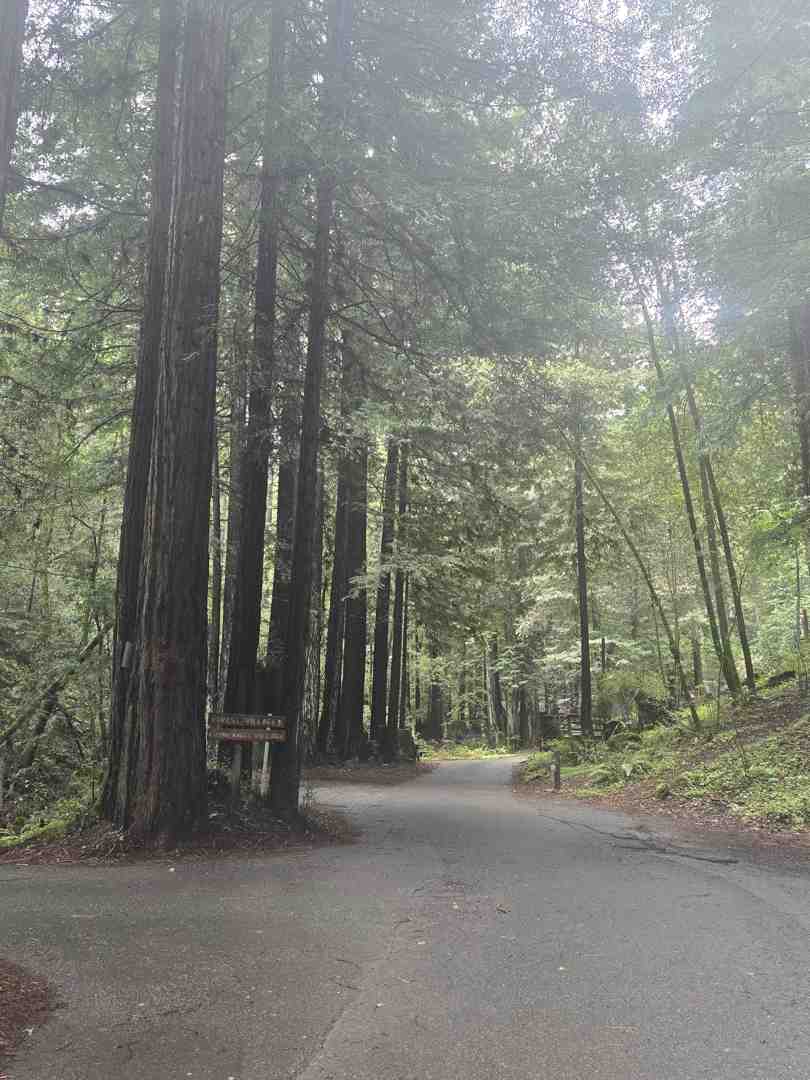
The beauty of the redwoods comes from far more than their extraordinary height, ancient lineage, and quiet forest presence. Coast redwoods are the tallest trees in the world, with some old-growth trees living for more than 2,000 years in cool coastal environments. They create cool, quiet, cathedral-like forest sanctuaries where ocean fog, filtered sunlight, ferns, and immense trunks help everyday distractions fade. For corporate retreat organizers, spiritual leaders, and outdoor educators, a redwood retreat offers a rare setting to slow down, build connection, and learn through direct experience in nature.
Coast Redwoods, scientifically classified as Sequoia sempervirens, flourish exclusively along a narrow, protected ecological ribbon of the Pacific Coast extending from Big Sur in Central California to the rugged southern border of Oregon. Their towering canopies collect moisture from coastal fog, their tannin-rich bark helps protect against fire and pests, and their dense wood makes coast redwood forests among the world’s most important carbon-storing ecosystems. Walking beneath these living monuments connects visitors to an unbroken lineage of ancient botanical history that has steadily endured across millions of years.
At Alliance Redwoods in Northern California, groups experience this profound sense of grand scale, physical wellness, and restorative stillness through forest-based retreats, experiential outdoor education, and shared group adventures. Guest groups regularly experience how the beauty of the redwoods can turn an ordinary gathering into a deeper connection with nature and community. Alliance Redwoods offers organizations a peaceful retreat setting surrounded by Northern California redwoods, forest trails, and spaces designed for connection.
The Primeval Majesty and Ecological Superpower of Coast Redwoods
To fully comprehend the breathtaking beauty of the Redwoods, one must look deep into natural history. Ancestors of modern Redwoods flourished during the Cretaceous period, roughly 145 to 66 million years ago, coexisting with ancient dinosaurs and weathering massive global climate shifts. Today, coast redwoods offer a living connection to ancient forest history, with biological adaptations that help them endure fire, fog, pests, and changing conditions.
These ancient trees have developed remarkable evolutionary defenses that ensure their astonishing longevity and resilience. Their fibrous outer bark can grow up to twelve inches thick and contains exceptionally high concentrations of natural polyphenolic tannins. These chemical compounds provide powerful natural resistance against insect infestations, wood-boring beetles, fungal rot, and destructive wildfires. Coast redwoods are adapted to many fire conditions, and low- to moderate-intensity fire can reduce competing vegetation, return nutrients to the soil, and create openings for new growth. Even when a trunk suffers severe fire cavities or burn scars, dormant burls beneath the bark sprout vibrant emerald shoots, clothing the darkened wood in lush, new green foliage and perpetuating the tree’s life cycle across generations.
| Botanical Feature | Coast Redwood (Sequoia sempervirens) | Giant Sequoia (Sequoiadendron giganteum) |
|---|---|---|
| Primary Natural Range | Foggy Pacific Coastline (Northern CA to Southern OR) | High-Elevation Sierra Nevada Mountains (CA) |
| Maximum Height | Exceeds 350 to 380 feet | Generally 250 to 310 feet |
| Trunk Profile | Slender, towering, elegant column | Massive, wide, conical base |
| Average Lifespan | 1,000 to 2,200+ years | 2,000 to 3,200+ years |
| Bark Adaptation | Fibrous, deeply grooved, rich in fire-deterring tannins | Spongy, thick, heavily ridged against mountain blazes |
| Primary Moisture Source | Pacific summer marine fog drip and coastal rain | Sierra winter snowpack melt and summer storms |
Ancient Giants: Size, Age, and the Mother Tree Network
Coast Redwoods are undisputed record-holders in the global botanical world. The tallest measured living specimen reaches an astonishing 380 feet (115 meters) into the sky—standing roughly 75 feet taller than the Statue of Liberty and surpassing modern thirty-story buildings. Standing at the base of an old-growth giant measuring 15 to 20 feet in diameter forces an immediate recalibration of human perspective, instilling a sense of reverence and wonder.
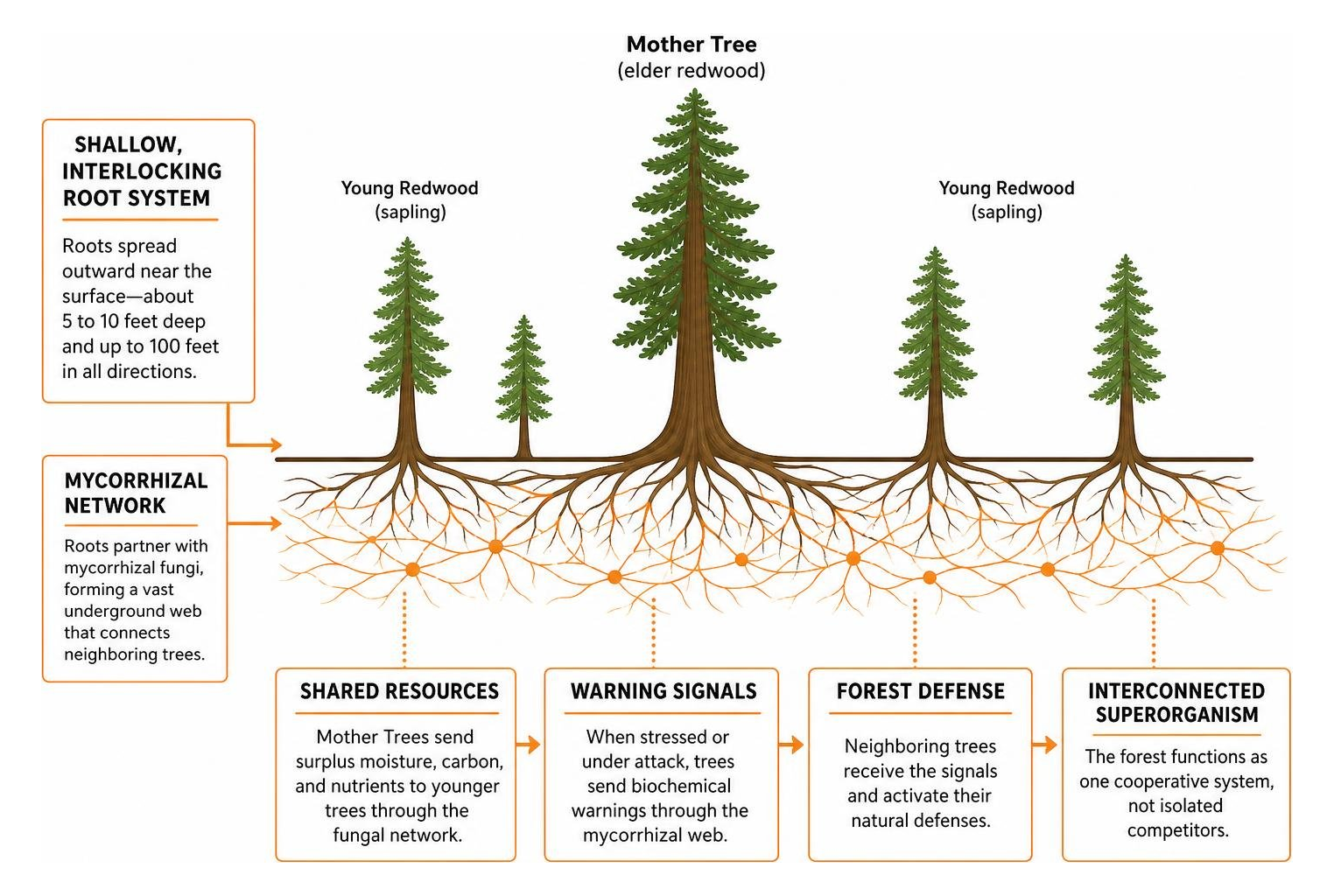
Despite their immense vertical stature, coast Redwoods do not possess deep taproots anchoring them into bedrock. Instead, their roots penetrate only five to ten feet beneath the forest floor, spreading outward horizontally up to 100 feet in all directions. These widespread, shallow root systems intertwine inextricably with neighboring Redwoods, weaving a subterranean matrix of structural stability that allows entire groves to withstand fierce Pacific storms and seasonal ground saturation.
Beneath the damp forest soil, this root architecture partners with specialized mycorrhizal fungal networks to create a sophisticated, cooperative forest community. Central elder trees—often referred to as Mother Trees—act as vital biological hubs, redistributing surplus moisture, carbon, and essential minerals to shaded younger saplings across the understory. When an elder tree faces environmental stress, pest attacks, or physical injury, it transmits biochemical warnings through this underground fungal web, enabling surrounding kin to proactively activate defensive tannins and protective compounds.
Nature’s Climate Warriors: Unrivaled Carbon Sequestration
Beyond their towering visual splendor and ecological complexity, coast Redwoods serve as Earth’s premier biological champions in mitigating global climate change. Because coast redwoods grow tall, live long, and resist decay, old-growth redwood forests can store extraordinary amounts of atmospheric carbon over time.
Old-growth coastal Redwoods store immense volumes of carbon within their dense heartwood, expansive limbs, and extensive root systems. Scientific research indicates that ancient Redwood groves can store up to five times more carbon per acre above ground than almost any other forest biome on Earth, significantly outperforming even the most dense tropical rainforests. Preserving and experiencing these ancient ecosystems remains one of the most vital educational and environmental experiences available today, showcasing the enduring power of intact forest ecology.
Experiencing the Spiritual and Sensory Beauty of the Redwoods
Stepping across the threshold of an ancient Redwood grove produces an immediate, noticeable emotional and physiological shift. The sheer verticality of the trees draws the human gaze upward toward an endless emerald canopy suspended hundreds of feet above the earth. The massive, fibrous trunks act as natural acoustic baffles, absorbing ambient environmental noise and replacing modern auditory clutter with a hushed, reverent quiet.
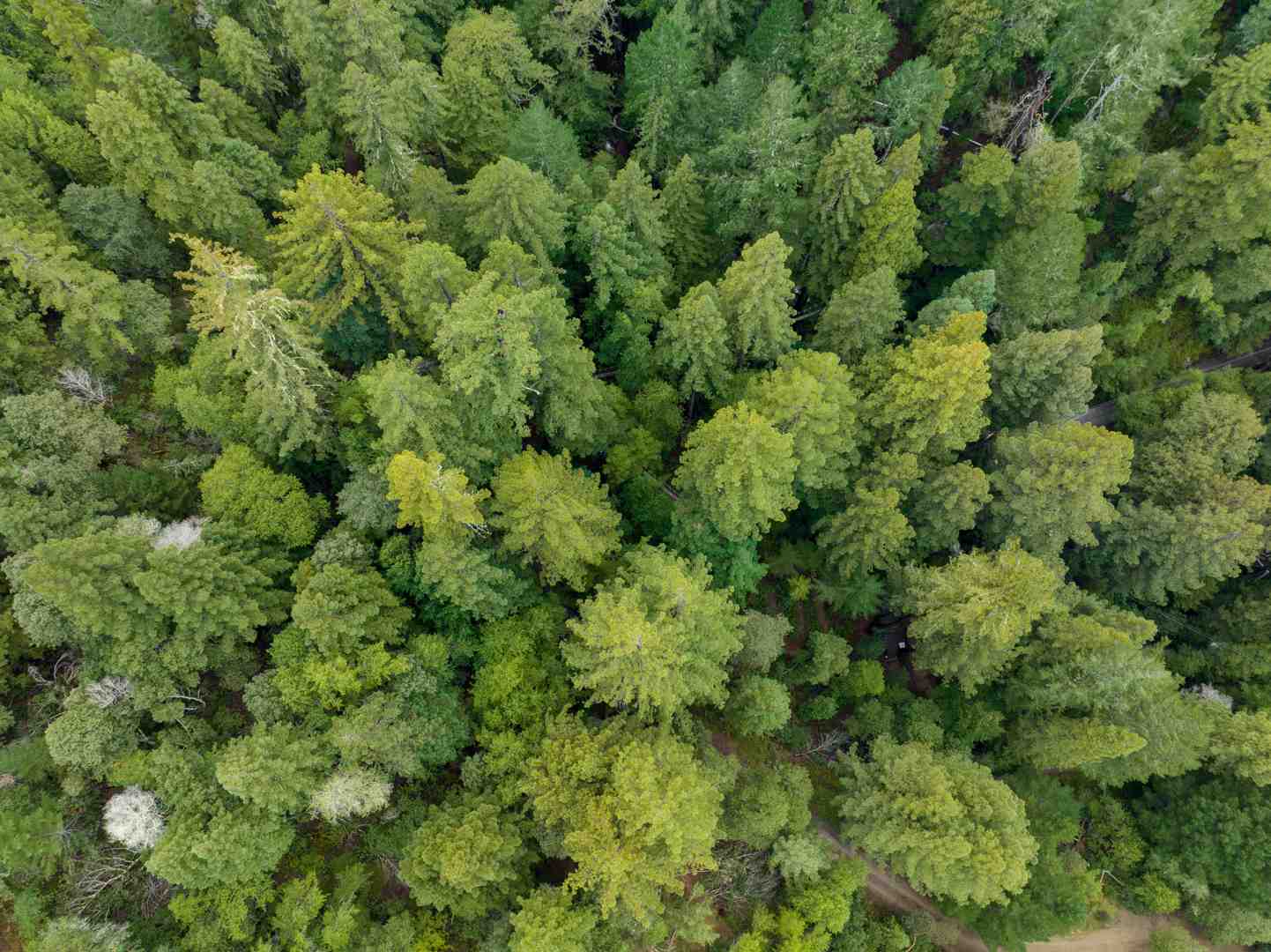
This stillness fosters a cathedral-like hush that calms overstimulated nervous systems. The physical scale of the trees naturally quiets mental chatter, invoking a sense of deep time and grounding contemplation. Visitors quickly realize that the ancient trees towering above them were already thriving centuries before modern cities and technologies were conceived, providing clarity, humility, renewed perspective, and a peaceful reminder of our place within a larger living world.
Forest Bathing and Sensory Rejuvenation Under the Canopy
The restorative feeling people experience beneath the redwoods is supported by research into forest bathing, sensory immersion, and human stress response. In Japan, mindful nature immersion is celebrated as Shinrin-yoku, or forest bathing. Walking among conifers like coast Redwoods allows visitors to inhale specialized airborne antimicrobial compounds known as phytoncides.
Phytoncides—including volatile organic compounds such as alpha-pinene, beta-pinene, and limonene—are naturally released by conifer needles, burls, and bark to protect the trees against airborne microbes, mold, and destructive insects. When humans breathe in these crisp, refreshing forest aromas, our bodies experience measurable physiological benefits:
- Stress Reduction: Inhaling conifer phytoncides significantly lowers salivary cortisol levels, reduces sympathetic fight-or-flight activity, and activates parasympathetic relaxation.
- Cardiovascular Health: Walking under ancient canopies gently reduces resting heart rate, improves heart rate variability, and lowers systemic blood pressure.
- Immune System Enhancement: Some forest bathing studies associate forest exposure with increased natural killer cell activity and reduced stress markers, though these benefits should be presented as research findings rather than guaranteed outcomes.
- Cognitive Clarity and Focus: The multisensory environment of damp earth, rustling needles, aromatic breezes, and gentle visual fractals alleviates mental fatigue, restores executive function, and sharpens creative thinking.
Light, Coastal Fog, and the Living Understory Ecosystem
The atmospheric visual signature of a Redwood forest is shaped fundamentally by coastal marine fog. During dry California summer months, dense fog banks roll inland from the cold Pacific Ocean. The high Redwood canopy acts as a giant comb, condensing microscopic water droplets from the air. This accumulated moisture falls to the forest floor as ‘fog drip,’ which research has shown can provide a meaningful share of summer water input for coast redwood ecosystems.
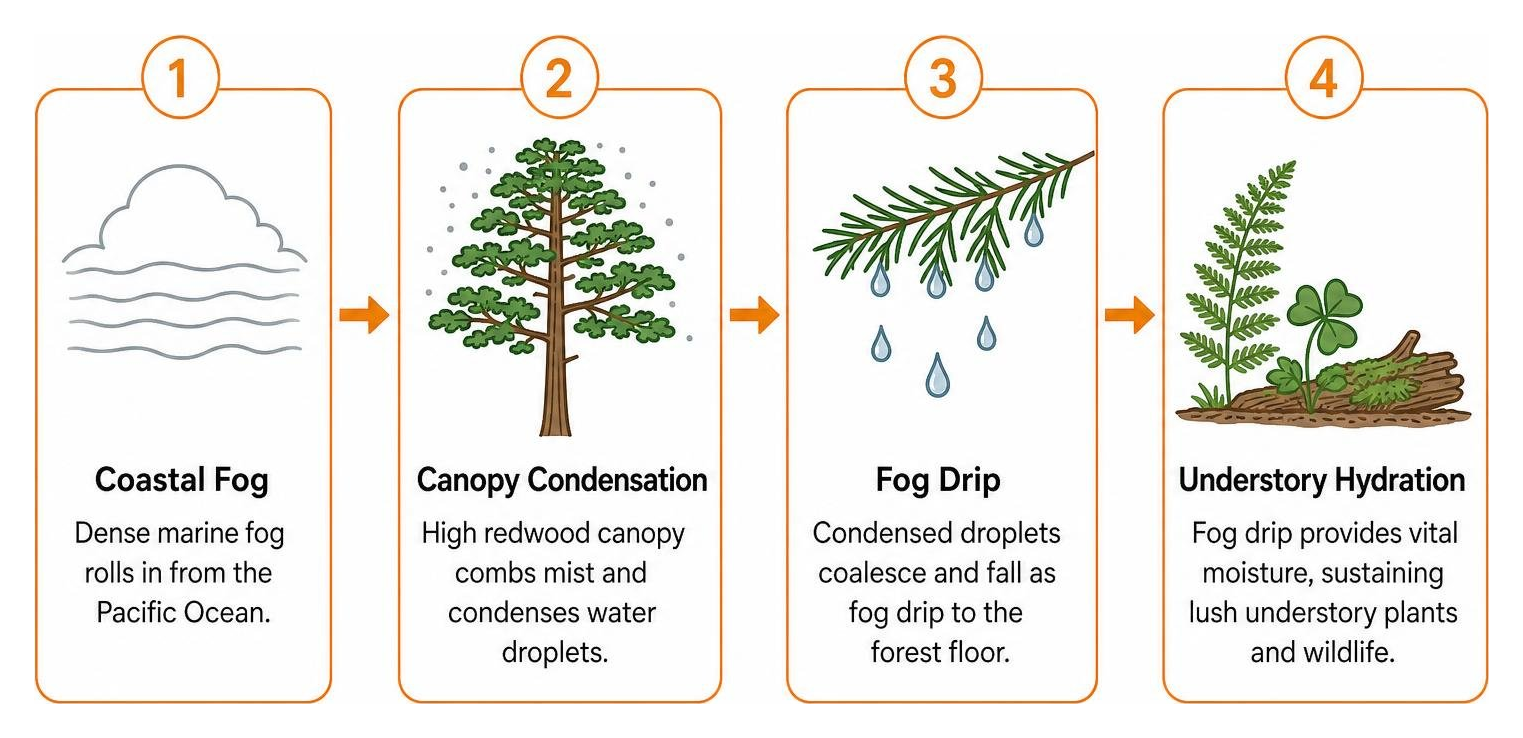
When morning sunlight pierces this marine fog layer, radiant sunbeams illuminate the mist in breathtaking shafts of gold, creating an ethereal interplay of light and shadow. This unique microclimate supports a vibrant, multi-tiered understory ecosystem teeming with specialized plant life. Lush carpets of Redwood sorrel (Oxalis oregana) blanket the shaded forest floor, delicate northern maidenhair ferns cling to damp ravines, and fragrant Western azaleas burst into vibrant bloom each spring.
This sheltered, moisture-rich understory supports specialized wildlife species:
- Roosevelt Elk: Majestic herbivores that browse along meadow borders and open forest clearings throughout coastal corridors.
- Banana Slugs: Vibrant yellow custodians of the forest floor that recycle decomposing organic plant matter into nutrient-dense soil.
- Northern Spotted Owls: Elusive, protected raptors that establish secure nesting sanctuaries high within old-growth canopies.
- Pacific Salamanders and Newts: Sensitive amphibians that thrive beneath damp nurse logs, relying on perennial moisture for survival.
Experiencing the Beauty of the Redwoods at Alliance Redwoods
Nestled within the scenic coastal hills of Sonoma County, Alliance Redwoods provides the ultimate sanctuary to experience the timeless wonder and restorative peace of Northern California’s ancient forest landscapes. Situated on a private 115-acre property in Occidental, California, our historic sanctuary has welcomed visitors since 1946, offering premier immersive nature experiences for schools, corporate teams, church congregations, and community organizations. Alliance Redwoods serves schools, churches, nonprofits, and corporate teams with forest-based retreats, outdoor education, and experiential leadership programming in Northern California.
The unique geography of Western Sonoma County combines cool Pacific marine air with sunny afternoon microclimates, creating an ideal ecological haven for thriving coastal Redwoods. Visiting our private forest enables groups to disconnect entirely from digital noise and daily stress, experiencing the grounding stillness of ancient groves in complete comfort and safety.
Sonoma County Forest Sanctuaries and Old-Growth Immersion
Sonoma County is celebrated for its breathtaking natural diversity, where winding river valleys, rolling coastal ridgelines, and towering conifer groves converge. Located just minutes from the Russian River and the dramatic Pacific coastline, Occidental sits directly at the heart of an ancient ecological corridor.
At Alliance Redwoods, our 115-acre forest preserve serves as both an outdoor living laboratory and a deeply restorative retreat haven. The grounds feature magnificent stands of mature Redwoods, sheltered ravines draped in emerald sword ferns, and tranquil year-round creeks that flow gently through the property. Because our grounds are privately stewarded and dedicated exclusively to our guests, visiting groups experience the serenity of the coastal forest without the disruptive crowds, traffic, or noise commonly encountered in public parks. The year-round mild climate ensures that every season offers an inspiring backdrop for productive team gatherings, outdoor education classes, and contemplative personal walks.
Forest Trails, Canopy Views, and Primeval Groves
Exploring the private grounds of Alliance Redwoods reveals an intricate network of well-maintained forest trails designed to showcase every ecological layer of the coastal conifer ecosystem:
- Valley Floor Nature Paths: Gently winding trails along the shaded forest floor that guide guests past massive Redwood trunks, lush fern corridors, and natural freshwater springs.
- Elevated Ridge Trails: Scenic hiking routes that ascend through mixed conifer and native oak woodlands, offering sweeping panoramic views across the sun-drenched forest canopy.
- Canopy Adventure Lines: For those seeking an exhilarating perspective high above the forest floor, our guided canopy adventure elements allow participants to observe the forest ecosystem from high among the branches.
- Quiet Contemplative Clearings: Specially designed gathering circles and seating areas nestled directly beneath ancient elder Redwoods, offering peaceful locations for group discussions, prayer, journaling, and guided reflection.
By walking these dedicated trails, visitors can observe mature nurse logs nurturing new generations of saplings, discover circular “fairy rings” of mature Redwoods that have sprouted around historical parent trees, and breathe in the refreshing, resinous scent of conifer foliage in an undisturbed natural environment.
Practical Guide to Immersing in the Beauty of the Redwoods
To make the most of your journey into the coastal Redwoods, thoughtful preparation is key. The microclimates of Northern California can shift quickly from cool, misty mornings wrapped in marine fog to warm, sunlit afternoons beneath the canopy. Planning your seasonal timing, understanding gear requirements, and practicing respectful forest stewardship will ensure a seamless, memorable, and safe experience for every member of your group.
Planning Your Visit: Seasons, Essentials, and Lodging Comfort
Each season brings a distinct atmosphere and unique beauty to the coastal Redwoods:
- Spring (March to May): Rushing forest creeks, blooming Western azaleas, vibrant new emerald needle growth, and mild hiking temperatures make spring an invigorating season for outdoor learning and exploration.
- Summer (June to August): Classic coastal morning fog burns off into warm, sunny afternoons, providing an ideal climate for challenge course adventures, canopy zip-lining, and evening gatherings beneath starry skies.
- Autumn (September to November): Crisp, clear air, golden afternoon light filtering through the conifer branches, and peaceful forest stillness create the ultimate setting for strategic planning and executive reflection.
- Winter (December to February): Seasonal Pacific rains bring the forest to its most vibrant, lush state, recharging natural streams, moss-covered ravines, and damp understory flora.
When packing for your visit, consider these essential items:
- Layered Clothing: Moisture-wicking base layers paired with an insulating fleece and a high-performance waterproof outer shell to adapt easily to shifting microclimates.
- Sturdy Footwear: Closed-toe trail shoes or supportive hiking boots with slip-resistant tread designed for damp trails and uneven forest pathways.
- Hydration and Personal Gear: A durable, refillable water bottle, a small daypack, personal journals, and outdoor essentials.
- Comfortable Overnight Accommodations: Selecting the best California Redwoods accommodations for the family ensures everyone enjoys a restful, refreshing night surrounded by towering trees in premier lodging facilities.
Preserving Old-Growth Groves: Conservation and Restoration
The majestic beauty of today’s Redwoods exists because of dedicated conservation, active stewardship, and mindful forestry management. Over the past 150 years, historical commercial logging altered much of California’s coastal landscape, leaving behind dense second-growth stands that require intentional care.
Modern forest stewardship focuses on proactive conservation and ecological restoration. Professional land managers utilize selective ecological thinning to reduce overgrowth, mitigate excess fuel loads, and allow the healthiest trees to mature into resilient old-growth structures. Planting native saplings during wet winter months accelerates forest recovery and stabilizes critical watersheds.
When visiting these delicate environments, practicing mindful forest etiquette preserves the ecosystem for future generations:
- Stay on established trails to avoid compacting the shallow, delicate root systems of mature Redwoods.
- Never carve, peel, or damage the protective, tannin-rich bark of living trees.
- Pack out all personal items and food waste to protect native wildlife habitats.
- Respect the natural silence and tranquility of the grove so all visitors can fully experience the peace of the forest.
Immersive Group Retreats and Forest Immersion
The towering scale of the Redwoods creates an unmatched natural environment for human connection, shared learning, team unity, and organizational renewal. When teams step away from office screens, daily pressures, and crowded urban settings into a serene 115-acre forest sanctuary, communication barriers dissolve naturally. The peaceful canopy encourages honest reflection, creative problem-solving, and meaningful community bonding.
As Northern California’s definitive answer for organization-wide gatherings, Alliance Redwoods specializes in designing complete group retreat experiences tailored to your goals. We proudly serve organizations throughout San Francisco, Oakland, San Jose, Sacramento, Santa Rosa, and across Northern California, providing tailored environments where teams recharge, build trust, and grow together. Discovering unique corporate retreats locations is often the first step toward transforming organizational culture, and our dedicated staff works closely with event planners to craft impactful corporate retreats that leave participants inspired, unified, and energized.
Connecting Groups Through Nature and Adventure
At Alliance Redwoods, we combine experiential outdoor education and thrilling team adventures with comfortable amenities to provide an unforgettable group experience. Whether hosting school groups, church ministries, non-profit leadership teams, or corporate organizations, our private property is fully equipped to meet your group’s objectives:
- Outdoor Education & Experiential Learning: Students gain hands-on knowledge of conifer ecology, watershed dynamics, forest biodiversity, and earth sciences. Educators can discover all about outdoor education through our curriculum-aligned outdoor education programs, widely recognized among the best experiential learning opportunities in Northern California.
- Team Building and Challenge Courses: Guided high-ropes elements, canopy zip lines, vertical climbing features, and ground-based problem-solving initiatives foster deep trust, resilience, and collaboration among team members.
- Meeting Venues and Gathering Spaces: Fully equipped indoor conference halls with audio-visual capabilities and outdoor amphitheaters accommodate both large assemblies and intimate breakout sessions directly beneath the Redwoods.
- Comfortable Forest Accommodations: Our property features versatile lodging options designed with rustic luxury in mind. Groups can explore cabin rentals in the redwood forest or group lodges for retreats, with lodging and dining options designed to support a comfortable group experience.
Frequently Asked Questions about the Redwoods
How old and tall do coastal Redwoods get?
Coast Redwoods (Sequoia sempervirens) are the undisputed tallest living organisms on Earth. The tallest recorded specimen, known as Hyperion, reaches an astonishing 380 feet (115 meters) in height, standing significantly taller than a 30-story skyscraper and surpassing the Statue of Liberty. On average, mature old-growth Redwoods reach heights between 200 and 350 feet with trunk diameters spanning 12 to 20 feet across.
In terms of longevity, individual coast Redwoods regularly live between 1,000 and 2,200 years, with some botanical experts estimating that select ancient specimens may exceed 3,000 years of age. Their extraordinary lifespan is made possible by their thick, tannin-rich bark that naturally resists insect damage, fungal rot, and wildfire, as well as their vigorous burl-sprouting reproductive capacity.
Why is coastal fog vital to the Redwood ecosystem?
Coastal marine fog is absolutely essential for the survival and growth of coast Redwoods during Northern California’s dry summer months. Because coast Redwoods grow to such immense vertical heights, pulling hundreds of gallons of water daily against gravity from the soil up to their highest needles requires immense hydrostatic pressure and energy.
During rainless summers, dense marine fog blankets the forest canopy. The needles absorb moisture directly from the air, while condensed fog drips continuously from high branches to nourish the shallow root system and understory plants below. This fog drip accounts for up to 40% of the forest’s annual water intake, buffering the grove against drought and maintaining the cool, humid microclimate that coast Redwoods require to flourish.
What is the difference between coast Redwoods and giant sequoias?
While both species belong to the cypress family (Cupressaceae) and share ancient evolutionary lineages, they are distinct trees adapted to different California environments:
- Coast Redwoods (Sequoia sempervirens): Native exclusively to the foggy, low-elevation coastal strip extending from Central California to Southern Oregon. They are the world’s tallest trees, characterized by slender, towering trunks, flat needle-like foliage, and rich reddish-brown, fibrous bark.
- Giant Sequoias (Sequoiadendron giganteum): Native exclusively to the subalpine, inland elevations (5,000 to 7,000 feet) along the western slopes of the Sierra Nevada mountains. While shorter than coast Redwoods (typically reaching 250 to 300 feet), Giant Sequoias are the largest trees on Earth by total wood volume, possessing massive, stout trunks with thick, spongy bark adapted to heavy winter snowpack and intense mountain blazes.
Experience the Wonder of the Redwoods
The enduring beauty of the Redwoods offers an unmatched natural setting for restoration, creative inspiration, and meaningful community building. Beneath these ancient coastal canopies, the rush and distractions of modern life fade away, replaced by the calming, grounding presence of trees that have stood strong for centuries.
At Alliance Redwoods, we are dedicated to sharing the majesty of this 115-acre private forest sanctuary with your group. Whether you are organizing an executive corporate retreat, a multi-day school outdoor science trip, a youth ministry camp, or a weekend community gathering, our historic Occidental grounds provide the ideal combination of natural wilderness, guided adventure challenge courses, meeting spaces, and rustic luxury lodging.
Contact Alliance Redwoods today to plan a redwood retreat rooted in the beauty of the redwoods. Our team can help you create a group experience with forest lodging, meeting spaces, guided activities, and time beneath the Northern California canopy designed for renewal, connection, and lasting impact.

