
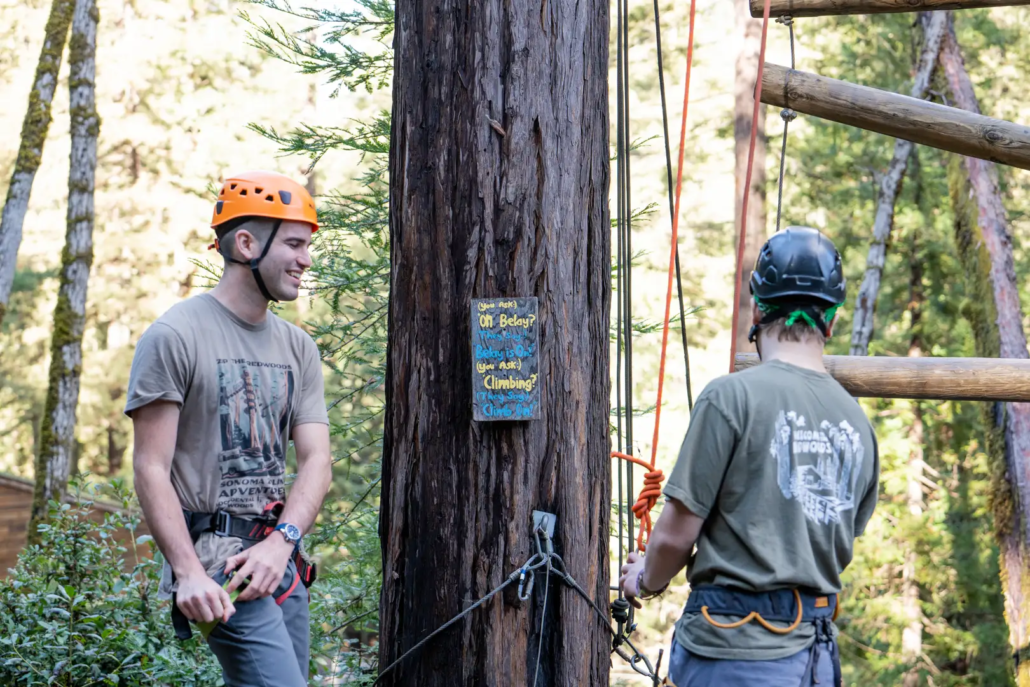
Men’s Discipleship in the Redwoods: A Retreat Guide for Church Leaders
Why Men’s Discipleship Matters Now
Men’s discipleship is the intentional process of helping men follow Jesus in everyday life, grow in biblical character, build honest relationships, and eventually help other men do the same.
It is more than a Bible study, a large event, or a weekly meeting. Effective discipleship combines sound teaching with real-life example, prayer, accountability, service, and trusted relationships.
Many churches see a gap between men who attend services and men who are deeply engaged in men’s discipleship. Pastors and ministry leaders often recognize disciple-making as an ongoing area for growth, especially as men face isolation, passivity, pressure to perform, and a lack of healthy spiritual mentors. A well-planned retreat or group experience creates space to step away from noise, have honest conversations, and begin building those relationships.
For leaders planning a church retreat, conference, multi-day gathering, or Redwood Retreat, the goal is not simply a memorable weekend. It is to help men take a next step toward lasting transformation and spiritual multiplication. For men who are ready to take a practical next step, Alliance Redwoods also hosts an upcoming Men’s Retreat designed to strengthen Christlike leadership, discipleship, and spiritual growth in a focused retreat setting.
I’m Joy Ferguson, a tourism and group-experience professional with a background in communications, guest engagement, and outdoor programs at Alliance Redwoods. My work supporting meaningful group experiences in the Redwoods shapes this practical perspective on how a shared setting can strengthen men’s discipleship beyond the event itself.
Related retreat planning resources:
Core Biblical Principles of Men’s Discipleship
To build an enduring framework for men’s discipleship, local churches must look beyond temporary trends and ground their strategy in timeless biblical patterns. Scripture provides clear paradigms for how men are called to grow, lead, and invest in the next generation. Throughout the New Testament, Christian formation relies on two operating pillars: the pattern of sound teaching (doctrinal depth) and the pattern of godly living (life-on-life example). When either pillar is neglected, discipleship falters.
Historically, men’s discipleship was never intended to be an isolated intellectual exercise. Paul’s instruction to Timothy emphasizes passing down truth to faithful men who will be able to teach others also. This chain of spiritual fatherhood relies on relational proximity: inviting men into daily life so they can see how faith functions under real-world pressure.
Across the Bay Area, men face competing priorities from work, family, church, and community life. Establishing core biblical principles ensures that men learn to anchor their identity in Christ rather than their professional performance or societal status.
Developing Biblical Character and Spiritual Fatherhood
At the heart of men’s discipleship is the development of Christlike character. Scripture sets a high standard for male spiritual leadership, not just for ordained pastors, but for every Christian man. The leadership qualifications outlined in 1 Timothy 3 – such as being sober-minded, self-controlled, respectable, hospitable, and managing one’s household well – serve as a universal roadmap for biblical manhood.
Developing this character requires deliberate spiritual habits. Men grow when they move from passive sermon consumption to active obedience to God’s Word. Key spiritual disciplines include:
- Scripture Engagement: Moving beyond superficial reading to deep study, meditation, and memorization. Saturating the mind with truth builds discernment against modern cultural lies.
- Conversational and Spontaneous Prayer: Training men to engage in ongoing dialogue with God throughout their workday, practicing silent prayer in high-pressure moments just as Nehemiah did before speaking to the king.
- Authentic Mentorship: Pairing younger or newer believers with spiritually mature men who serve as spiritual fathers, offering wisdom, guidance, and transparent encouragement.
- Practical Service: Translating theological understanding into unapplauded acts of service at home, within the local church, and across the local community.
Spiritual fatherhood is the natural outcome of mature discipleship. When a man experiences the consistent grace and instruction of God, he develops a natural desire to pour into others. This dynamic bridges generational divides within the church, pairing seasoned leaders with young adults in places like Berkeley or Oakland to navigate the complexities of faith in a complex world.
Overcoming Failure Modes in Men’s Discipleship
Despite noble intentions, many church initiatives stall because they fail to address the common spiritual traps and failure modes that men encounter. Recognizing these hazards allows church leaders to construct proactive safeguards within their discipleship frameworks.
The two primary failure modes of male leadership are tyranny and abdication. Tyranny manifests as aggressive, authoritarian control, where a man uses his position or authority for self-serving ends rather than sacrificial service. However, in modern church culture, abdication – passive retreat – is far more prevalent. Many church leaders connect this pattern to Genesis 3, where Adam’s silence illustrates the danger of spiritual passivity.
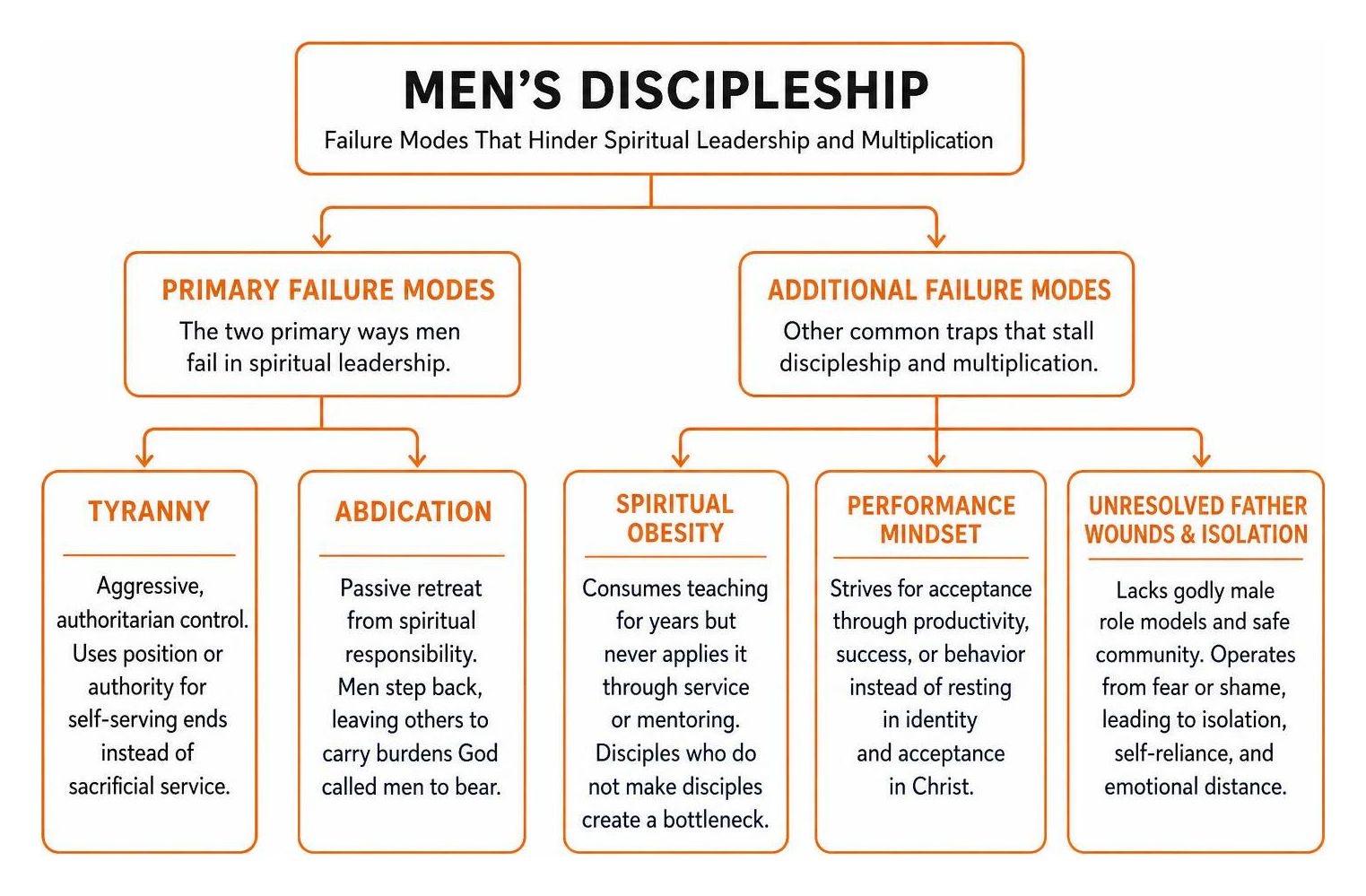
Other significant failure modes hinder spiritual multiplication:
- Passive Consumption: This occurs when men consistently receive theological teaching but rarely apply it through service, accountability, or mentoring others.
- Performance Mindset: Many men struggle under the weight of striving, viewing their acceptance by God and peers through the lens of productivity, career success, or behavioral modification rather than resting in their secure identity in Christ.
- Unresolved Father Wounds and Isolation: Men who grew up without godly male role models often operate from an orphan spirit, isolating themselves out of fear or shame. Without safe environments to confess struggles and process deep emotional wounds, these men default to self-reliance and emotional distance.
Overcoming these failure modes requires transitioning men from isolated performers into transparent brothers who commit to regular fellowship, practical accountability, and life-on-life mentorship.
Strategic Frameworks for Modern Church Ministry
Moving a congregation from passive Sunday attendance to an active culture of disciple-making requires a clear, repeatable architecture. Churches cannot rely on disconnected events or random announcements; they need a structured pathway that guides a man from his first point of contact to becoming an active mentor.
A comprehensive strategy links large gatherings, mid-sized cohorts, small accountability groups, and one-on-one relationships into an integrated pipeline. By creating low-barrier entry points that naturally flow into higher-commitment spaces, church leaders ensure that no man gets left behind or overlooked on the church’s fringe.
Designing a Sustainable Men’s Discipleship Pathway
A sustainable men’s discipleship pathway focuses on intentional progression. Rather than offering endless, uncoordinated options, effective ministries structure their efforts around progressive learning modules and peer guidance.
Many churches use short-term cohorts or yearlong pathways to give men a clear rhythm of teaching, accountability, and practice. Equipping laymen as peer guides allows ordinary church members to facilitate small groups without needing formal seminary training. Multi-week intensive cohorts guide men through defined phases: gaining insight, experiencing emotional healing, anchoring identity in Christ, and stepping into spiritual fatherhood.
To make a discipleship pathway sustainable across diverse Bay Area congregations—whether in San Jose, Fremont, or Santa Rosa—churches should adopt a structured four-stage multiplication process:
- Engage: Welcome men through low-pressure gatherings, outreach projects, and seasonal retreats.
- Establish: Ground men in foundational Bible doctrine, daily spiritual habits, and active identity in Christ.
- Equip: Train men in practical ministry skills, leadership character, and peer accountability methods.
- Empower: Send equipped men out to mentor others, lead small groups, and step into spiritual fatherhood.
By intentionally guiding men through these steps, churches prevent stagnation and continually build a healthy leadership pipeline.
Integrating Events, Small Groups, and One-on-One Mentoring
A mature men’s discipleship ecosystem recognizes that events, small groups, and one-on-one relationships are not competing formats; they are complementary stages of spiritual growth. Large events generate momentum and cast vision, small groups foster community and biblical application, and one-on-one mentoring provides deep, personal accountability.
| Discipleship Format | Primary Focus | Best Used For | Key Advantage |
|---|---|---|---|
| Large Events & Rallies | Vision casting, inspiration, broad outreach | Annual kickoffs, joint regional gatherings, retreats | Builds collective momentum and lowers entry barriers for new men |
| Small Groups (4-8 Men) | Biblical application, mutual accountability, life sharing | Weekly or bi-weekly Bible studies, book series, cohorts | Creates safe space for vulnerability and sustained peer community |
| One-on-One Mentoring | Deep spiritual formation, personal life shadow, tailored guidance | Pairing mature leaders with newer believers | Allows for transparent feedback, custom prayer, and direct life-on-life modeling |
| Outdoor Immersive Retreats | Environmental shift, physical challenge, deep fellowship | Annual church retreats, leadership intensives | Removes daily distractions to accelerate trust and spiritual breakthroughs |
While weekly small groups provide consistent fellowship, taking men out of their everyday environment can create focused space for reflection, prayer, and honest conversation. When planning these crucial getaway experiences, evaluating the right setting makes all the difference; explore The Definitive Guide to Men’s Retreat Options to understand how setting directly impacts spiritual outcomes.
Structured tools also help churches build long-term alignment across all formats. Leaders can leverage systematic study modules and actionable devotions to maintain a steady, sustainable pace for small group discussions and one-on-one mentoring pairings.
Tailoring Discipleship across Spiritual Stages and Formats
Men entering a church community are not all at the same spiritual stage. They come from vastly different backgrounds, carry unique emotional burdens, and possess varying degrees of biblical literacy. A one-size-fits-all discipleship program often fails to address the full range of men’s spiritual needs. Effective ministry leaders must learn to assess men accurately and tailor their discipleship approach accordingly.
To assess where the men in your congregation stand, church leadership teams can execute a straightforward assessment process:
- Map Church Engagement: Audit attendance patterns across Sunday services, service teams, and casual church events to identify active versus fringe participants.
- Conduct Personal Interviews: Schedule casual, one-on-one coffee meetings to ask men direct questions about their spiritual habits, home life, and current struggles.
- Evaluate Leadership Readiness: Identify men who demonstrate consistent character and willingness to serve, assessing them against biblical standards for mentorship.
- Categorize Spiritual Needs: Group men into foundational stages (Natural, Cultural, Hurting, Biblical, Servant Leader) to match them with appropriate group environments.
- Review and Adjust Pathways: Regularly check in on participant progress to ensure men are moving forward into growth and leadership rather than remaining stuck in one stage.
Meeting Men at Their Specific Spiritual Stage
Men in any church community generally fall into five distinct categories. Meeting them where they are requires specific relational strategies:
- The Natural Man: This man has no personal relationship with Christ and may hold little to no interest in church. Reaching him requires building organic friendships outside church walls, engaging in common hobbies, working shoulder-to-shoulder on community service projects, and presenting the Gospel clearly without religious jargon.
- The Cultural Christian: He attends church out of tradition, social expectation, or family obligation, but his faith does not shape his daily decisions, business ethics, or private habits. Discipling him requires gentle conviction, vision-casting, and showing him the joy of authentic, wholehearted surrender to Jesus.
- The Hurting Man: Facing career collapse, marital crisis, addiction, grief, or personal burnout, this man is in survival mode. He does not need heavy theological lectures; he needs immediate care, practical support, empathetic prayer, and safe brotherhood where he can drop his facade without fear of judgment.
- The Biblical Christian: This man actively seeks to grow in his faith, reads Scripture, and desires to honor God in his daily life. He thrives in structured Bible studies, high-accountability cohorts, and challenging reading schedules that push him toward spiritual maturity.
- The Servant Leader: Already mature in character and faith, this man actively serves others and carries leadership burdens. His primary need is ongoing encouragement, prevention of burnout, and practical training on how to disciple and multiply his life into the next generation.
Churches across Northern California—from San Francisco and Oakland to Silicon Valley and Sacramento—actively implement tailored outreach strategies to connect with each of these group stages and encourage lasting spiritual growth.
Leveraging Immersive Retreats for Life Transformation
While weekly meetings build consistent habits, immersive outdoor retreats can help accelerate trust, reflection, and spiritual openness. Taking men out of their everyday routines and placing them into creation disrupts normal defense mechanisms, allowing deep conversations and self-reflection to happen far more quickly than in a standard classroom setting.
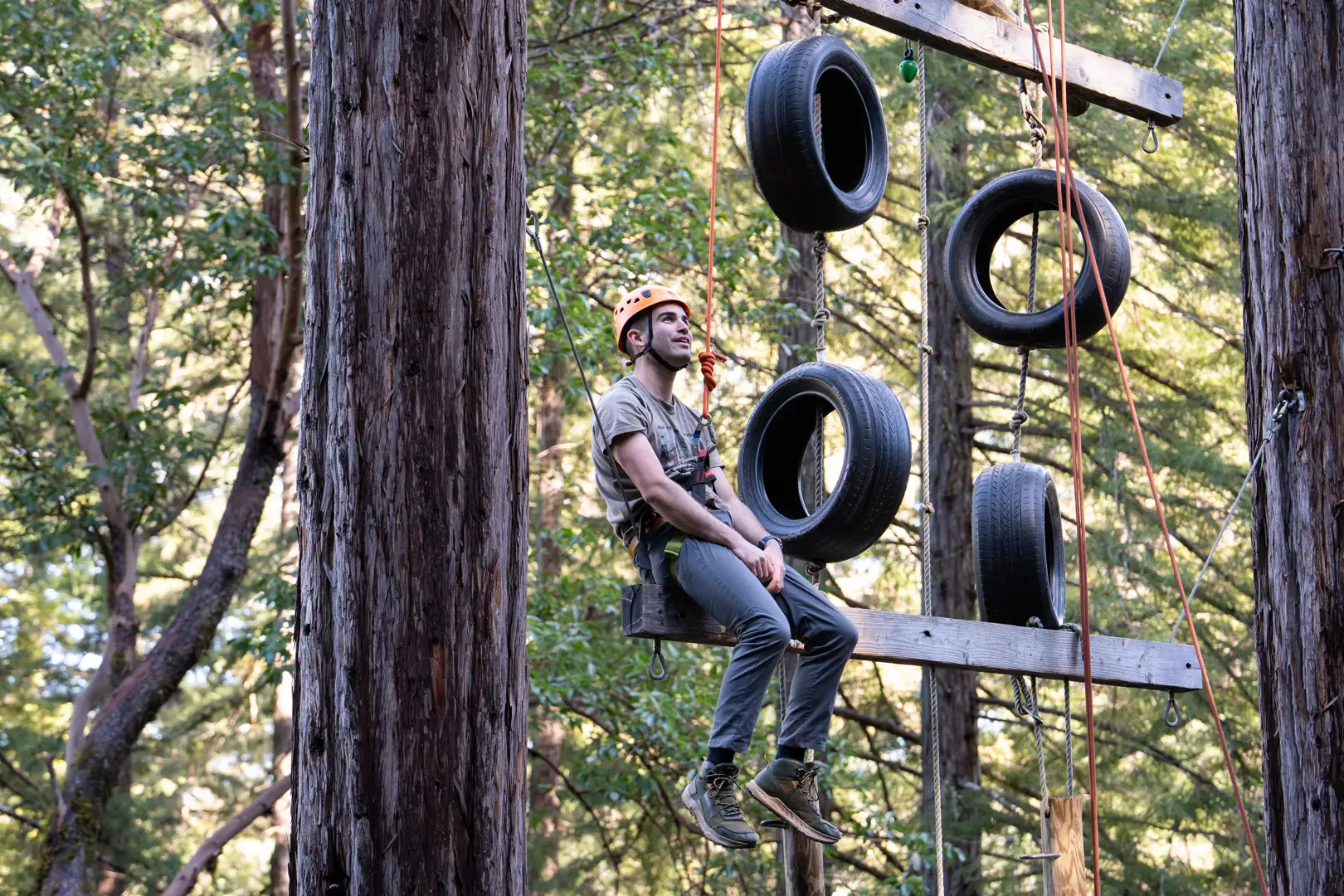
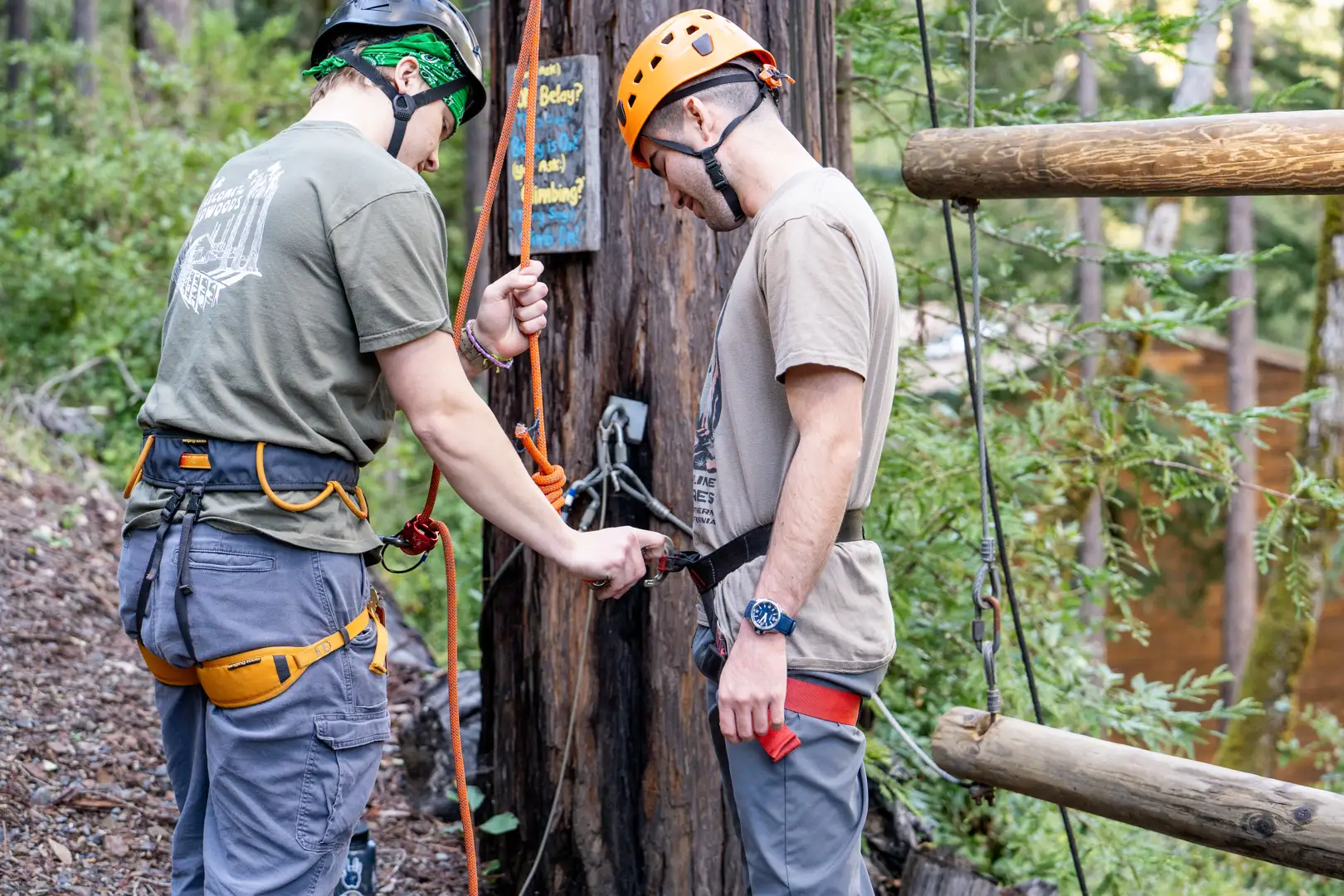
When men step away from digital notifications, work pressures, and domestic routines, their focus shifts. Physical challenges—such as low-ropes team building, hiking, or zip-lining—require mutual interdependence, breaking down social walls and building instant trust among brothers. Sitting around a campfire under towering trees creates a natural atmosphere for late-night vulnerability where men finally share their true struggles.
For church groups planning a men’s discipleship retreat in the Redwoods, Alliance Redwoods offers a focused Northern California setting for worship, teaching, outdoor connection, and brotherhood. Located in Occidental within Sonoma County, our 115-acre property, nestled among towering Redwoods provides an unparalleled natural sanctuary for spiritual renewal and brotherhood.
Church groups at Alliance Redwoods can stay in comfortable lodge accommodations that keep participants close to nature while supporting rest, conversation, and retreat rhythms. Our dedicated meeting venues, tailored dining services, and exhilarating outdoor adventure activities—including high-ropes courses and team-building challenges—create the ideal backdrop for life-changing ministry.
Whether your church is hosting a small leadership retreat or a large multi-generational gathering, our team works directly with ministry leaders to ensure every detail supports your discipleship objectives. Discover how dedicated environments elevate spiritual growth by exploring Men’s Spiritual Retreats and learn more about tailored hosting opportunities through our Church Retreats planning portal.
Frequently Asked Questions About Discipling Men
How do church leaders engage passive men in active discipleship?
Engaging passive men begins with changing the entry point and framing of ministry invitations. Men are rarely motivated by vague requests to sit in a circle and share feelings; they respond to clear vision, practical purpose, and shoulder-to-shoulder action.
To break passivity, leaders should create low-barrier entry points focused on shared interests, activity groups, or hands-on service projects (such as facility maintenance or community outreach). Working alongside other men builds organic trust. Once a foundation of friendship is established, leaders can invite men into higher-commitment spaces like small groups or short-term cohorts.
Furthermore, pastors must cast a compelling vision of biblical manhood that calls men to noble, heroic responsibility in their homes and communities, helping them realize that passive retreat is a direct threat to their spiritual health.
What is the difference between a men’s Bible study and a discipleship group?
While both formats center on God’s Word, their primary goals, dynamics, and accountability metrics differ significantly:
- Men’s Bible Study: Focuses primarily on information transfer, textual interpretation, and biblical knowledge. Meetings often feature a leader delivering content followed by Q&A. Success is typically measured by attendance, lesson completion, and theological comprehension.
- Discipleship Group: Focuses primarily on life transformation, mutual accountability, character application, and spiritual multiplication. While Scripture is central, the group spends extensive time discussing practical application, confessing personal struggles, praying specifically for one another’s marriages and families, and holding members accountable to daily spiritual habits.
A discipleship group is explicit about its goal: training participants to become disciple-makers who will eventually lead and mentor others.
How can small groups transition men into disciple-makers?
Transitioning men from consumers to disciple-makers requires intentional delegation and an established leadership pipeline within the small group structure.
Group facilitators should avoid doing all the teaching and leading themselves. Instead, they should systematically share leadership responsibilities with group members:
- Rotate Facilitation: Assign individual men to lead specific discussion weeks or guide prayer times.
- Appoint Apprentice Leaders: Pair each small group leader with an apprentice who co-facilitates the group and helps oversee pastoral care for members.
- Encourage Micro-Groups: Transition mature group members into 1-on-1 or 1-on-3 accountability pairings outside regular group meeting times to practice direct mentoring.
- Multiply the Group: When a small group reaches 8 to 10 regular attendees, split the group intentionally, sending out trained apprentice leaders to launch new groups.
By embedding the expectation of multiplication from day one, group members understand that receiving spiritual investment carries a joyful obligation to invest in others.
Conclusion
Building a thriving culture of men’s discipleship is one of the most important commitments a church can make for long-term spiritual health and community impact. When men are discipled, marriages are strengthened, children inherit a legacy of faith, churches gain courageous leaders, and communities experience practical compassion.
Moving men from passive attendance to dynamic spiritual multiplication requires a clear plan: grounding ministry in core biblical principles, constructing structured pathways, meeting men at their specific spiritual stage, and utilizing high-impact retreats to forge deep brotherhood.
At Alliance Redwoods, the Redwood Retreat setting gives churches space to strengthen men’s discipleship through worship, teaching, prayer, and honest brotherhood. Nestled among the majestic Redwoods of Northern California, our center provides the ultimate setting for men to unplug from daily noise, encounter God’s Word, build honest relationships, and return home equipped to lead.
With comfortable lodging, flexible meeting spaces, shared meals, and guided outdoor activities, Alliance Redwoods helps churches create a focused retreat environment for spiritual growth.
Ready to strengthen men’s discipleship in a focused retreat setting? Explore the upcoming Men’s Retreat at Alliance Redwoods, or contact Alliance Redwoods today to start planning a custom retreat experience for your church or ministry.

